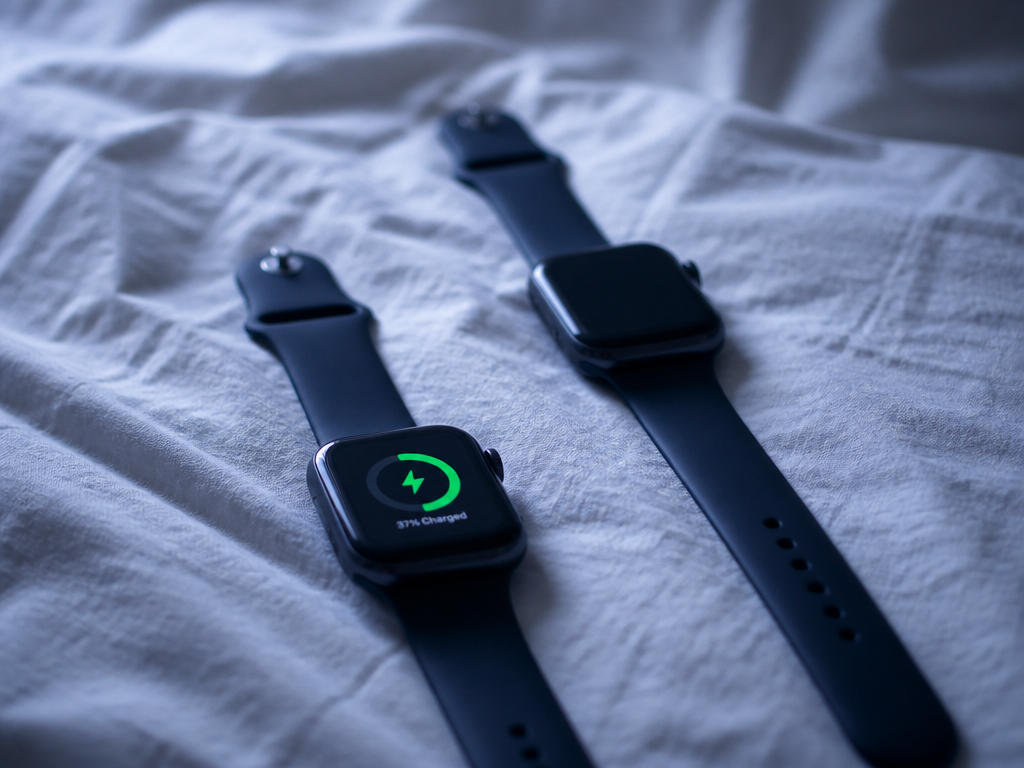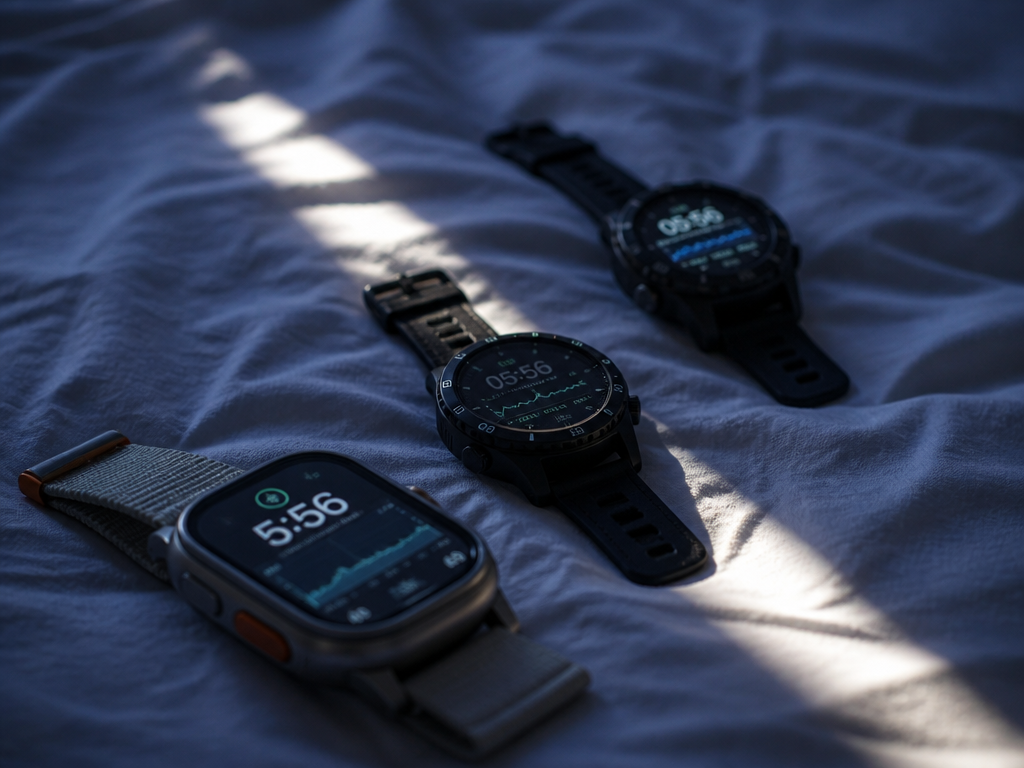
The question I actually wanted answered was narrow, and I suspect it's yours too: can a $399 watch settle the argument I have with myself every afternoon about the 4 p.m. coffee? Most smartwatch comparison writing answers a different question — which chip, which case material, which band — and then hands you a sleep chart as an afterthought. So I ran it the other way round. I wore an Apple Watch Series 11 for 43 consecutive nights, kept a paper log on the nightstand, and for eleven of those nights strapped a borrowed Galaxy Watch 8 to the other wrist.
The verdict: the Series 11 is the best sleep-tracking watch Apple has shipped, it still cannot tell you when you fell asleep, and it is nonetheless consistent enough about everything else to catch a caffeine effect you would otherwise argue yourself out of.
What I actually did
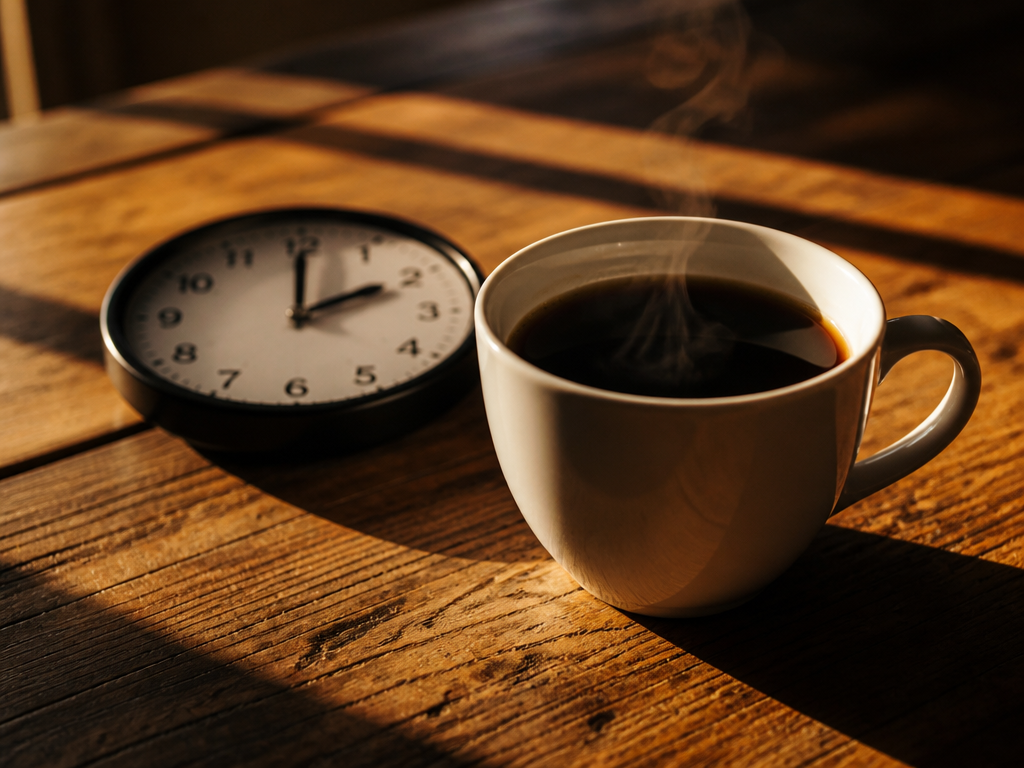
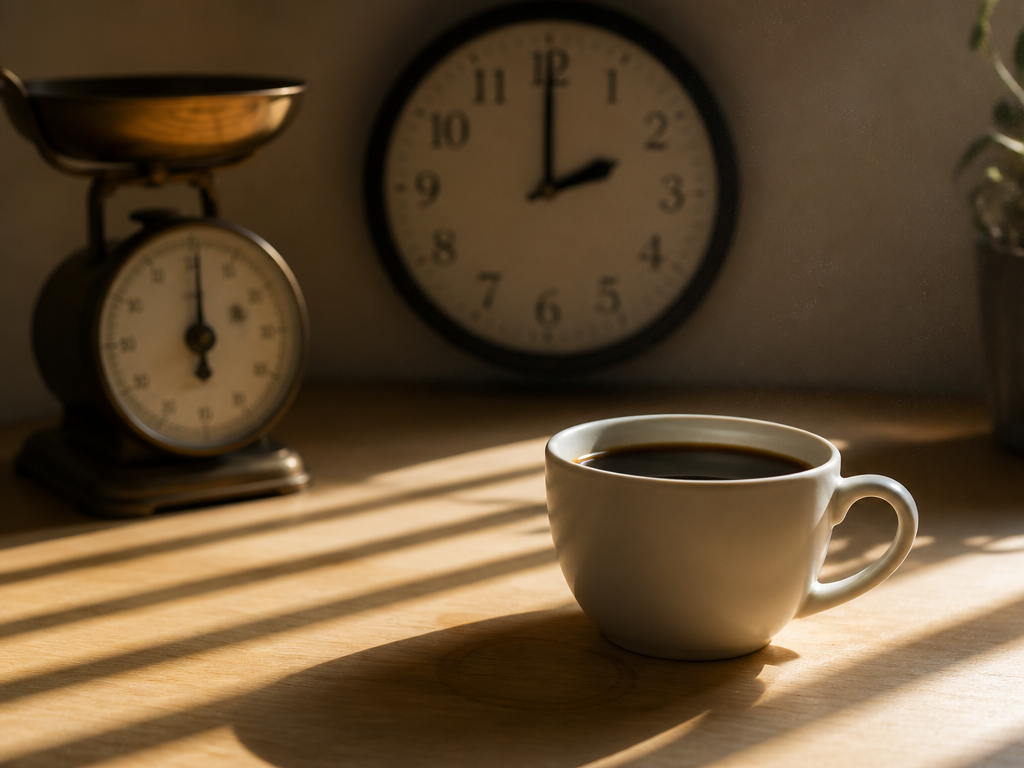
June 24 to August 5, 2026. Two conditions, alternating week by week. In condition A, my last caffeine of the day was at 12:30 p.m. In condition B, it was at 4:30 p.m. The dose was held constant: two cups daily, same beans, 22 g on the same scale, same flat-bottom brewer, which puts each cup somewhere in the region of 180–200 mg. Only the clock changed.
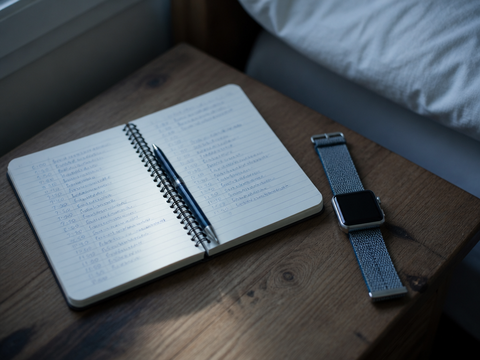
The paper log recorded two things I could actually know: the minute the light went off, and the minute I picked up the pen in the morning. I did not try to log sleep onset, because I can't — nobody can from inside their own head, and that turns out to be the whole problem with reviewing this watch.
A caveat before the numbers, because it matters more than any of them: this is n=1, unblinded, and I knew which week I was in every single night. I was also, for eight of the 43 nights, drinking wine with dinner, which I logged and have flagged where it distorts things. Treat what follows as one person's careful log, not evidence about you.
Three watches, five numbers
My old Series 9 numbers come from the eight weeks before the test, logged the same way. The Galaxy Watch 8 overlapped for eleven nights only, which is a thin sample and I'm not going to pretend otherwise.
| Measure | Series 11 | Series 9 (mine, prior) | Galaxy Watch 8 (11 nights) |
|---|---|---|---|
| Battery remaining at 7 a.m. | 41% | 12% | 34% |
| Wake-time error vs. notebook | 4 min (mean) | 7 min | 6 min |
| Nights it logged no sleep at all | 0 of 43 | 3 of 56 | 1 of 11 |
| Charge to 80% | ~30 min | ~45 min | ~35 min |
| Price as tested | $399 | — | $349 |
The battery row is the one that changes behaviour. On the Series 9 I had a nightly decision to make — track sleep or start tomorrow with a charged watch — and I resolved it in favour of charging often enough to blow three nights of data. On the Series 11 I put it on the puck while I made coffee and it was full before I'd finished the cup. That's not a feature so much as the removal of an obstacle, and it's why the data set is clean.
Where the Series 11 earns it
Wake detection is genuinely good. Four minutes' mean error against a notebook I picked up while still half-conscious is about as close as I can measure, and the errors were unbiased — it was as likely to guess early as late. If the number you care about is total time in bed and when the night ended, the watch is telling you something true.
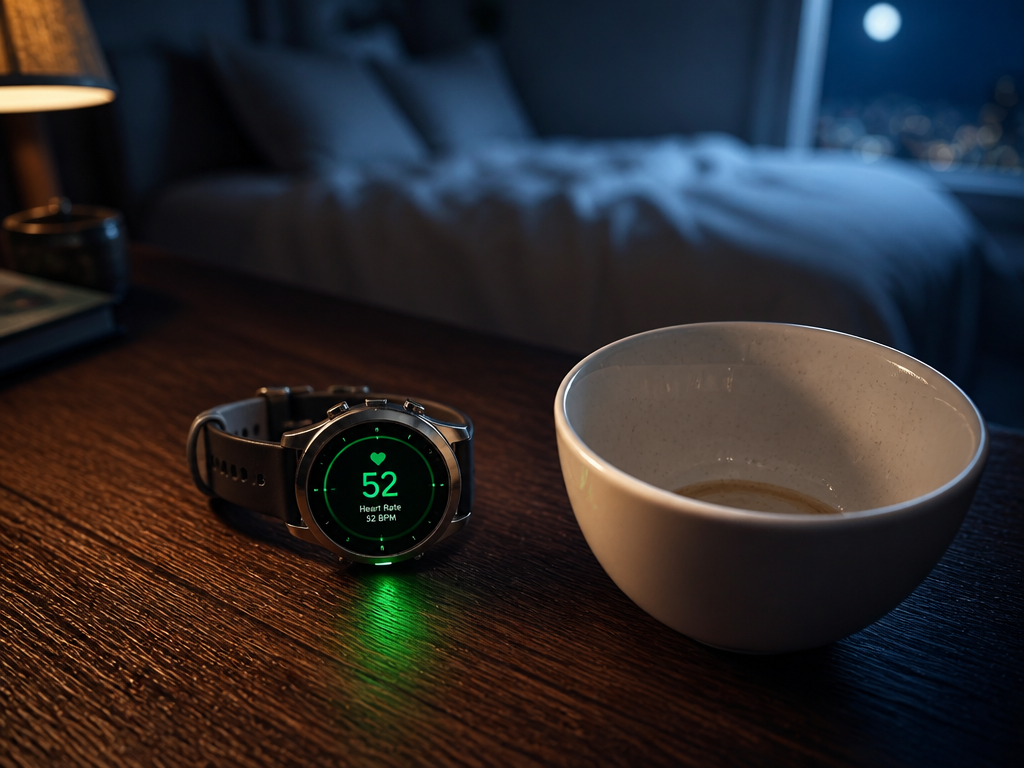
Overnight resting heart rate is the other thing I'd trust. Mine sat at a mean of 52 bpm across the 12:30 weeks and 56 bpm across the 4:30 weeks, and the night-to-night scatter was tight enough that a four-beat gap reads as real rather than noise. Wrist temperature moved in the same direction but more slowly and with more wobble; I'd use it as a weekly trend, not a nightly readout.
One honest deflation: the Sleep Score, the 1–100 number that gets all the marketing attention, is a watchOS 26 feature and it landed on my Series 9 too. If sleep scoring is your reason to upgrade, you probably already have it. Buy the Series 11 for the battery that lets you wear it overnight without negotiation, not for the number on the screen.
Where it's guessing

The watch told me I fell asleep a mean of 14 minutes after lights out, with a standard deviation of six minutes. That number is too tidy to be true. My own experience across those weeks ranged from unconscious-before-the-page-turned to lying there long enough to hear the neighbour's car, and a 43-night spread that narrow means the device is reporting something other than sleep. What it's reporting is stillness. Lying quietly with your eyes shut and a caffeine half-life still working through you looks, to an accelerometer, a lot like being asleep.
Sleep stages are the same problem one level deeper. No wrist device measures brain activity; deep, core and REM are inferred from movement and heart-rate variability. I couldn't find a published stage-by-stage validation of Apple's specific model against polysomnography, and I have no way to run one at a kitchen table. So I logged the stage minutes, watched them move in plausible directions, and declined to draw conclusions from them. If you're making decisions off your REM number, you're making decisions off a model's opinion.
So — does it settle the coffee question?
Partly. Across the 4:30 p.m. weeks the watch flagged a mean of 5.4 wake events per night versus 3.1 on the 12:30 weeks, and logged 6 h 44 min of sleep versus 7 h 02 min. Strip out the eight wine nights, which were fragmented under both conditions, and the gap narrows but survives: 4.9 versus 3.2, and about fourteen minutes of duration.
That's the useful finding, and note where it isn't. The effect did not show up in the sleep-onset number, which is exactly what you'd predict if that number is measuring stillness. It showed up in fragmentation — in how much the night came apart after I was already in it. My subjective sense had always been the opposite; I'd have told you late coffee kept me up, not that it woke me at 3 a.m. The watch disagreed with me consistently for six weeks, and I now think the watch was right.
Here's the it depends, and it's a large one. Caffeine clearance varies enormously between people, and I have no idea where I sit on that distribution — no consumer watch measures it. If you're already sleep-restricted, pressure to sleep will bulldoze a caffeine effect this size and you'll see nothing. And I knew which week I was in, which means some of that 5.4 could be me sleeping worse because I expected to. I can't rule that out. What I can say is that the fragmentation gap was larger than the watch's own night-to-night noise on that measure, which is more than I could say for any other number it gave me.
The parts that aren't about sleep
GPS: I ran the same 6.2 km river loop nine times, half of it under tree cover. Mean time to lock was about eight seconds from a cold start, and the distances came back between 6.14 and 6.28 km — a spread of roughly ±1.1%, which is tighter than my phone managed on the same route and good enough that I stopped checking.
Durability after 43 days of ordinary wear, including two sessions of pulling a wetsuit sleeve over it: one hairline scuff on the aluminium case edge, screen clean. That's not a stress test and I won't dress it up as one.
The hypertension notifications are the headline health feature, and I have nothing to report — mine never fired after the 30-day baseline period elapsed. That's the correct outcome for me and a completely useless data point for you. I can't review a feature that stayed silent, and reviews that imply otherwise are guessing.
Who this is for — and who should skip it
Buy it if you're on a Series 8 or older, or wearing nothing, and you want overnight data you'll actually collect rather than data you'll collect four nights a week. The charging speed and the battery headroom are the difference between a sleep tracker and a sleep tracker you keep using in March.
Skip it if you own a Series 9 or 10. You already have the software, your wake detection is within a few minutes of mine, and you'd be spending $399 to stop babysitting a charger.
Look elsewhere if you want sleep-stage precision. Nothing on a wrist delivers that, and in any watch-to-watch comparison the honest tie-breaker is battery and consistency, not who draws the prettier hypnogram.
The line worth screenshotting: if you own a Series 9 or later and you're upgrading for sleep, save your money — the only thing that genuinely changed is that the battery no longer makes you choose.
So, tonight: ignore the sleep score, write down the time of your last caffeine on paper, and compare seven nights against seven — because this watch is far better at showing you a pattern across a week than telling you the truth about one night.