For eleven years I did not drink coffee after 2 p.m. If you had asked me why, I'd have said it was the cheapest sleep improvement on offer: everyone knows caffeine has a long tail, everyone knows the afternoon cup is the one you pay for at 3 a.m. Then I went looking for the study underneath the rule and found twelve people in a Michigan lab.
The verdict: across 48 tracked nights, moving my last cup earlier did almost nothing I could measure. Halving my total daily dose — from about 400 mg to under 200 mg — cut my long night wakes from roughly two a night to one.
The rule has a birthday, and it isn't 2 p.m.
Sleep hygiene as a formal list dates to Peter Hauri, who in 1977 collected the behavioural advice insomnia patients were already getting piecemeal into a short clinical pamphlet: regular hours, no clock-watching, exercise early, limit caffeine. "Limit caffeine" was, at that point, a sensible-sounding item on a list. It carried no hour.
The hour arrived later, and mostly from one paper. In 2013, Christopher Drake and colleagues published a small double-blind trial in the Journal of Clinical Sleep Medicine: twelve healthy sleepers, 400 mg of caffeine or a placebo, taken at bedtime, three hours before bed, and six hours before bed. The headline was that even the six-hour dose measurably damaged sleep — on the order of an hour lost, by wrist monitor — and, more unsettling, that the participants couldn't tell. Their own ratings didn't flag the six-hour nights.
That is a genuinely useful finding. It is also twelve people, one dose, one dosing pattern, all screened as normal sleepers, in a lab. And notice what the design can and can't say. Six hours was the longest gap tested. It was the edge of the experiment, not a threshold the experiment found. Nobody in that study drank coffee nine hours before bed and slept badly, because nobody in that study drank coffee nine hours before bed.
Then the rule travelled, and — this is the part I find strange — it got stricter. Six hours before an 11 p.m. bedtime is a 5 p.m. cutoff. The advice that reached me, through a decade of health columns and app onboarding screens, was 2 p.m. Somewhere between the paper and my kitchen, three hours of margin were added by people who were not measuring anything.
The other load-bearing number is caffeine's half-life, usually quoted as five or six hours as if it were a physical constant. It isn't. Clearance runs mainly through the CYP1A2 enzyme, and the spread across healthy adults is wide — some people are done with a cup in under two hours, some are still working on it nine hours later. Oral contraceptives roughly double it. Smoking roughly halves it. Any rule expressed in hours quietly assumes you sit at the population median, and roughly half of everyone doesn't.
So I stopped assuming.
What I actually ran
Ten weeks, four arms, twelve nights each, with a three-night washout between arms that I discarded. Bedtime held at 11 p.m. ± 20 minutes. Same room, same 18°C, same blackout blinds.
- Arm A — habitual. No rule at all. My natural pattern, which turned out to be a median last cup at 4:40 p.m.
- Arm B — the 2 p.m. rule. Nothing after 2 p.m., same total intake compressed into the morning.
- Arm C — the six-hour rule. Nothing after 5 p.m. Deliberately looser than B, to test the interval that was actually studied.
- Arm D — dose cap. Under 200 mg a day, no timing rule whatsoever. Last cup wherever it landed.
Dose was estimated, not assayed. I weighed every dry coffee dose and used 12 mg of caffeine per gram of arabica, a reasonable central figure that is probably wrong by ±30% on any given morning depending on bean and extraction. Tea and one weekly Coke went in at label values.
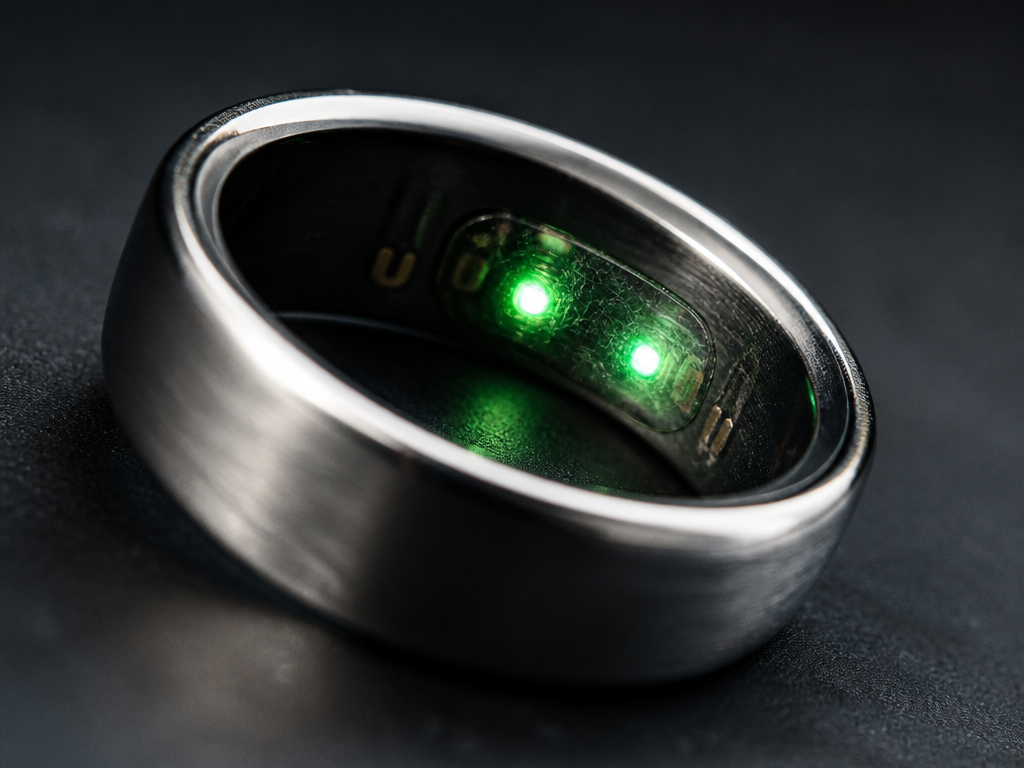
Sleep numbers came from an Oura ring plus a paper log. I'm using three of them: onset latency, minutes awake after falling asleep, and count of wakes longer than five minutes. I'm ignoring everything the ring says about deep and REM sleep — consumer wearables track total sleep time decently against polysomnography and stage it poorly, and I'm not going to build an argument on the part I already know is weak. Morning grogginess is my own 1–5 rating, written down before opening the app.
The numbers

| Arm | Median mg/day | Onset latency | Wakes >5 min | Awake mid-night | Grogginess (1–5) |
|---|---|---|---|---|---|
| A — habitual | 415 | 21 min | 2.1 | 44 min | 3.4 |
| B — 2 p.m. cutoff | 390 | 19 min | 1.9 | 39 min | 3.1 |
| C — 5 p.m. cutoff | 405 | 22 min | 2.0 | 41 min | 3.3 |
| D — under 200 mg | 185 | 17 min | 1.1 | 22 min | 2.2 |
Arms A, B and C are, at twelve nights each, the same arm. The spread between them is smaller than the spread inside any one of them: my worst night on the 2 p.m. rule was worse than my best night with no rule at all. Arm D is not the same arm. Halving the dose halved the long wakes and took 22 minutes off the time I spent looking at the ceiling at 3-something.
If one line survives this piece: the dose moved my nights, the clock didn't.
Everything wrong with the above
I wasn't blinded. I knew which arm I was in every night, I had a hypothesis by week four, and I was the person rating my own mornings. That is sufficient to manufacture this entire result, and I can't rule it out.
The arms ran in order, February to April, at a latitude where that means sunrise moved about ninety minutes earlier by the end. Arm D got the most morning daylight. Light exposure is not a minor variable in a story about 3 a.m. wake-ups, and it is perfectly confounded with my headline finding.
The dose-cap arm also opened with three days of withdrawal — a dull frontal headache, flat afternoons — which I excluded as washout. That's a defensible call. It is also the call that most flatters the arm that won.
And 48 nights of one 41-year-old is 48 nights of one 41-year-old. If I happen to be a fast metaboliser, the timing arms should have come out identical, and this is a fact about my liver rather than about the rule.
Who this is for, and who it isn't
If you already keep a caffeine cutoff and still wake at 3 a.m., this is for you. The testable claim is that you've been adjusting the variable that doesn't move and leaving the one that does. Cutting total intake is a much harder ask than sliding a cup earlier — which may be precisely why the timing version of this advice spread so well. The sleep improvement people recommend is usually the one that's easiest to comply with, not the one that works.
If you drink one cup a day and sleep badly, this isn't for you. There's no dose to halve, and the answer lives somewhere else: light, alcohol, a partner, a thyroid.
If you drink four cups and sleep fine, also not for you. Nothing here says you have a problem. Wide clearance variation cuts both ways, and some people simply have the enzyme for it.
What I didn't answer
Three things, ranked by how much they bother me.
I never separated dose from dosing pattern. Arm D was less caffeine and also fewer, smaller cups. One 180 mg cup at 8 a.m. and four 45 mg cups spread to 4 p.m. are the same daily total and possibly very different nights. That's the arm I should have run first.
I never got my CYP1A2 genotype, which leaves this an anecdote about an unmeasured enzyme. A consumer panel costs less than a month of my coffee habit, and I skipped it out of — honestly — a suspicion that I wouldn't enjoy the answer.
And I never validated the onset-latency figure I built a table on. The published error on wearable onset estimates is wide enough to swallow the differences between arms A, B and C entirely. So the defensible sentence isn't "the timing rules did nothing." It's "the timing rules did nothing my instrument can see."
Where I'd look next, in this order. Pull the Drake paper itself rather than anyone's summary of it, mine included — it's short, and its own limitations section says most of what I've said here. Then read the clearance literature, because that's where the interesting variation actually lives and where a rule stated in hours falls apart. Then, if you're going to run this on yourself, run the dosing-pattern arm I skipped, and get someone else to rate your mornings.