The most expensive thing about a portable CPAP machine is the number printed on the box.
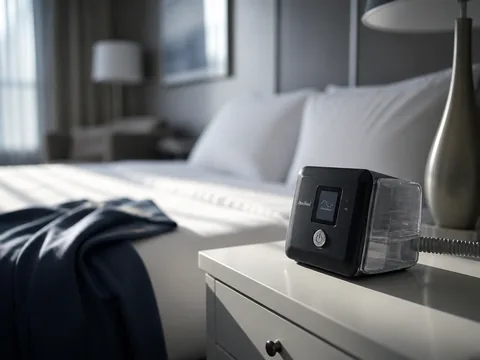
I bought a ResMed AirMini listed at $899. Over the fourteen months I've owned it, it has cost me a little over $2,400. Nobody lied to me. No dealer padded an invoice. The gap between those two numbers is just the part of the transaction that nobody advertises, because it isn't a single purchase — it's a slow one, spread across cushions, filters, a companion app, and the specific way American insurance decides what a "portable" machine is.
The verdict, up front
If you already have a working bedside CPAP and you want portable CPAP machines for travel, buy the AirMini in cash, ignore your insurance, and budget roughly $40–60 a month in consumables on top of the sticker price. If you need this as your only machine, the compact travel unit is the wrong place to start, and running it through insurance will cost you more, not less, than you expect. Everything below is me earning the right to say that.
What I actually bought, and why
I've had diagnosed obstructive sleep apnea since 2019 and a bedside AirSense 10 that my insurance covered through the usual rent-to-own arrangement. The AirMini was a deliberate second machine — something that fits in a jacket pocket for flights and hotel nights, where hauling the full unit and hunting for distilled water is its own small misery.
That context matters for the money, and I'll flag it now: I never tried to make the AirMini my primary therapy device. My data on it comes from roughly forty nights away from home over fourteen months, plus every receipt I kept. It's a real sample, but it's a travel sample. If you sleep on a portable machine 365 nights a year, your consumable math will be worse than mine, not better.
The line items nobody totals for you
Here is the actual ledger. Prices are what I paid in U.S. dollars; yours will differ, but the categories won't.
| Item | What it cost me | Notes |
|---|---|---|
| AirMini unit | $899 | Cash, one dealer of three quoted |
| AirFit P10 for AirMini mask | $115 | The mask is machine-specific — see below |
| HumidX cartridges | $410 over 14 mo. | Waterless humidification, consumable |
| Replacement cushions + filters | $190 over 14 mo. | Every 2–4 weeks with use |
| Hard travel case | $40 | Optional, but the soft bag is flimsy |
| "Insurance attempt" | ~$750 | Explained below — this is the ugly one |
| Running total | ~$2,404 | — |
The unit is 37 percent of what I've spent. The other 63 percent arrived quietly.
Why "insurance covered it" made it more expensive
This is the counterintuitive part, and it's specific to how these devices are billed. My insurer would cover a portable machine — but only as a replacement for my bedside unit, not as a second device, and only after a fresh compliance-documentation cycle: a new sleep-data review, a new prescription, and a 90-day rental period before the machine converted to a purchase.
I started that process before I understood it. The rental billed at roughly $250/month against a plan where my deductible hadn't been met. Three months in, I'd paid about $750 and owned nothing, because I hadn't hit the coverage threshold that would have made the fourth month "free." I stopped, ate the loss, and bought the AirMini outright from a cash dealer for less than the remaining rental would have totaled.
The lesson isn't "insurance is a scam." It's narrower and more useful: for a second or travel machine, the cash price is frequently lower than the insured price, because insurance for durable medical equipment is built around replacing your one covered device, not supplementing it. If the machine is your first and only one, and your deductible is already met, insurance likely wins. Run your own numbers against your own plan before you assume "covered" means "cheaper." It often doesn't.

The consumable trap is the whole game
The waterless humidification is genuinely clever — no tank, no distilled water in your carry-on. But "waterless" means "cartridge," and a cartridge is a thing you buy again. HumidX ran me about $30 a month with regular travel use. Push that to daily use and you're closer to $50–70. Cushions and filters add another $10–15.
None of this is hidden. All of it is easy to not think about when you're staring at the $899 number and deciding whether you can afford it. So think about it now: the ongoing cost of a compact CPAP is a subscription you enter by buying the hardware. Over a five-year device lifespan, consumables will likely exceed the machine's purchase price.
One more specific: the mask ecosystem is closed. The AirMini uses masks built for the AirMini — the tubing and micro-humidifier are integrated differently than on a standard unit. Your existing bedside masks will not fit. Budget for a new mask, and know that your options are narrower than the full CPAP catalog.
AirMini vs. your existing machine vs. renting
Three honest paths for a traveler with diagnosed apnea:
- Keep using your bedside machine on the road. Cost: $0 extra hardware. Cost in reality: a device the size of a lunchbox, a water tank you can't fill with tap water, and TSA questions. This is the cheapest option and the most annoying one.
- Buy the AirMini in cash. Cost: ~$900 up front, ~$40–60/month after. Wins on packability and hotel convenience. Loses on consumable creep and mask lock-in.
- Rent a portable unit through a specialty travel service. Cost: I was quoted $50–90/week. Sensible if you travel a few weeks a year total; absurd if you travel monthly. I didn't test this myself — I'm reporting the quotes, not the experience.
The AirMini earns its place only in the middle case: frequent-enough travel that renting adds up, but not so much sleeping-on-it that consumables balloon.
Who this is for, and who it isn't
Buy the portable machine if: - You already own a working primary CPAP and want a travel companion. - You fly or hotel more than a handful of nights a month. - You can pay cash and would rather skip the rental cycle. - Packing light genuinely changes whether you use therapy at all when traveling.
Don't start here if: - This would be your only machine and your deductible is already met — get a covered bedside unit first. - You're on a fixed budget and the recurring cartridge cost isn't something you can absorb. - You're attached to a specific mask that isn't offered in the AirMini range. - You travel two weeks a year total. Rent, or just pack the big one.
The line you can screenshot
For travel as a second machine, buy the AirMini in cash and skip insurance entirely; for your only machine, do the opposite. The device is excellent hardware. The mistake is treating its price as its cost.
Back to the numbers
I opened with $899 and $2,400, and I stand by the gap. But reframe it: the $899 bought a machine that has never once failed me on the road, that fits where nothing else does, and that removed the single biggest reason I used to skip therapy in hotels. The extra $1,500 bought fourteen months of actually using it — cartridges, cushions, and one expensive lesson about rental cycles that I'm passing to you so you don't repeat it.
The sticker price was honest about the machine. It just wasn't the whole invoice. Portable CPAP machines are worth owning; they are not worth misunderstanding. Know which number you're actually agreeing to before you sign, and the $2,400 stops being a surprise and starts being a plan.