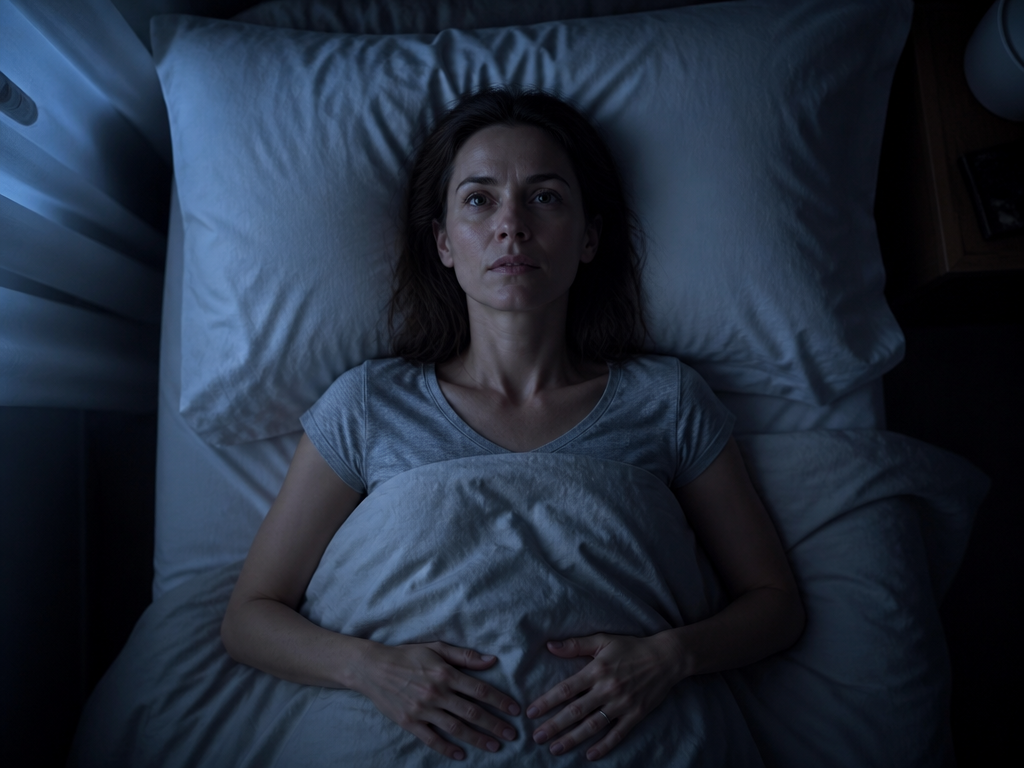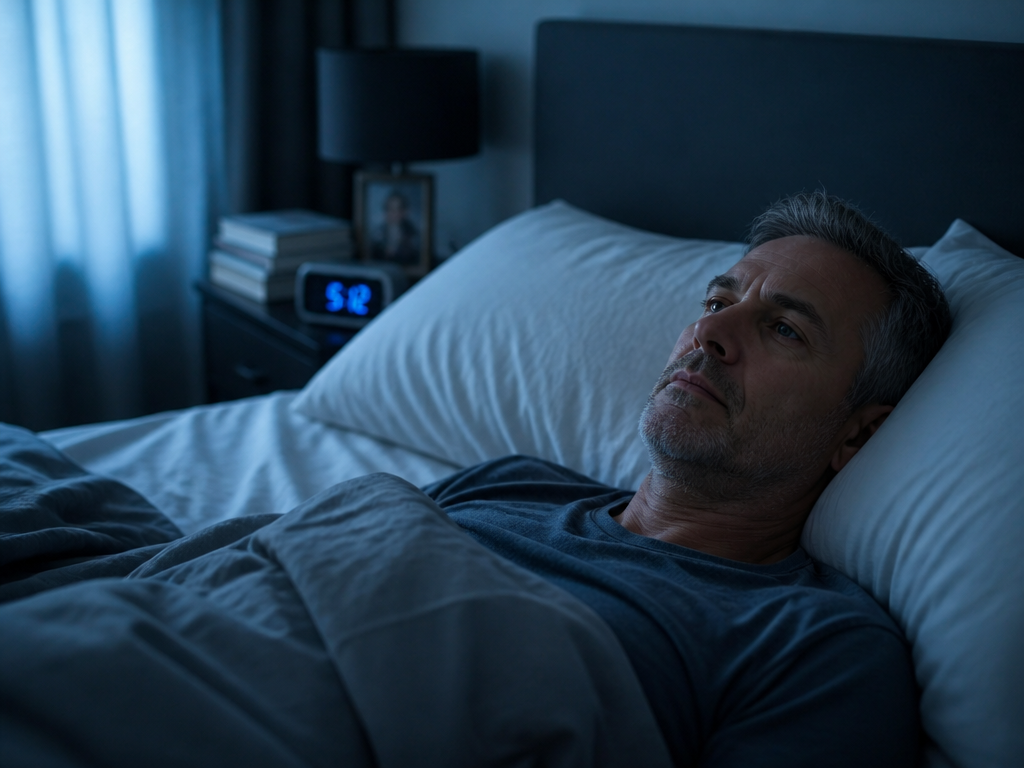
At 3:07 in the morning you are awake, and the question arrives fully formed: is this a problem? Not the tiredness — you've made a kind of peace with the tiredness. The question is whether your sleep patterns are quietly reporting on something a blood test won't find for another decade.
It's a reasonable question, and it has a real answer, which is more than most 3 a.m. questions can manage. Sleep is one of the few things the body does for eight hours a night, every night, and it runs through the brainstem, the autonomic nervous system, the upper airway, and the hormonal machinery keeping 24-hour time. When one of those breaks, sleep is often the first place it shows.
But here is what gets lost between the morning-TV segment and the magnesium ad: most of what wakes you at 3 a.m. is not a disease. It is architecture. And the small number of sleep changes that genuinely are early warnings are mostly not the ones people lie awake worrying about.
So — what's worth mentioning to a GP, what's worth a referral, and what's just Tuesday?
Should I see a doctor about my sleep?
Plainly, and first: book an appointment if you snore and someone has watched you stop breathing; if you fall asleep during the day when you don't intend to; if you physically act out your dreams; or if you've had trouble sleeping at least three nights a week for three months or more. Those four have the strongest evidence behind them and the clearest treatment pathways. Nearly everything else — the bad fortnight, the 3 a.m. surfacing, the night your brain wouldn't stop drafting emails — is ordinary sleep behaving ordinarily.
The reason to be this specific is that the base rates are lopsided. Poor sleep is close to universal; serious sleep pathology is not. Australian survey work commissioned by the Sleep Health Foundation has repeatedly found that somewhere between a third and a half of adults report a significant sleep problem in any given month, which tells you that "I slept badly" carries almost no diagnostic information on its own. What carries information is the shape of the problem, and whether it has persisted.
It also helps to know what the system is actually looking for. As the Medicare rules currently stand, a GP-referred sleep study needs more than a complaint about tiredness: you generally need a score of 8 or higher on the Epworth Sleepiness Scale — the eight-item questionnaire Murray Johns developed at Epworth Hospital in Melbourne and published in Sleep in 1991, asking how likely you are to doze while reading, watching television, or stopped in traffic — plus a high-risk result on a screening tool such as STOP-BANG (Chung et al., 2008, Anesthesiology). Both take about ninety seconds. If you're going to raise your sleep with a doctor, filling them in beforehand is the single most useful thing you can do.
A night, in the order it happens
Before deciding whether your night is abnormal, it's worth knowing what a normal one is supposed to look like — because the thing most people describe as broken sleep is, mechanically, the system working.
From lights-out to 3 a.m.
All day, adenosine accumulates in the brain as a by-product of cellular energy use, binding to A1 and A2A receptors and progressively dampening arousal circuits. That's the pressure you feel by evening. Roughly two hours before your habitual bedtime, assuming the lights are low, the pineal gland begins releasing melatonin — not a sedative, but a timing signal telling the rest of the body that biological night has started.
You fall asleep, and the first cycle runs deep. Slow-wave sleep dominates the first third of the night; this is when adenosine gets cleared fastest and when growth hormone is released in its largest pulse. Cycles run about 90 minutes on average, though the honest range is closer to 70 to 120.
By about 4 a.m. — the timing tracks your own schedule, not the clock — core body temperature reaches its lowest point of the 24-hour cycle, typically a degree or so below your daytime peak. Around the same time, REM episodes are getting longer. The first REM period of the night might last ten minutes; the last can run past thirty. REM makes up about a fifth to a quarter of total sleep, and it is heavily loaded into the back half of the night.
And then, some time after 3 a.m., cortisol starts climbing. The rise begins two to three hours before waking and is one of the most reliable rhythms in human physiology. So by 3:07 a.m. you have already discharged most of your sleep pressure, you are cycling through lighter and more dream-heavy stages, and your stress-axis is spooling up for morning. Brief arousals at that hour are not a malfunction. Healthy sleepers have plenty of them; they simply don't remember most.
What makes them memorable is what happens next. If you surface, check the clock, and start calculating how many hours are left, the arithmetic itself is arousing. That's the loop worth interrupting — not the waking.1

The three patterns that earn an appointment
Breathing that stops
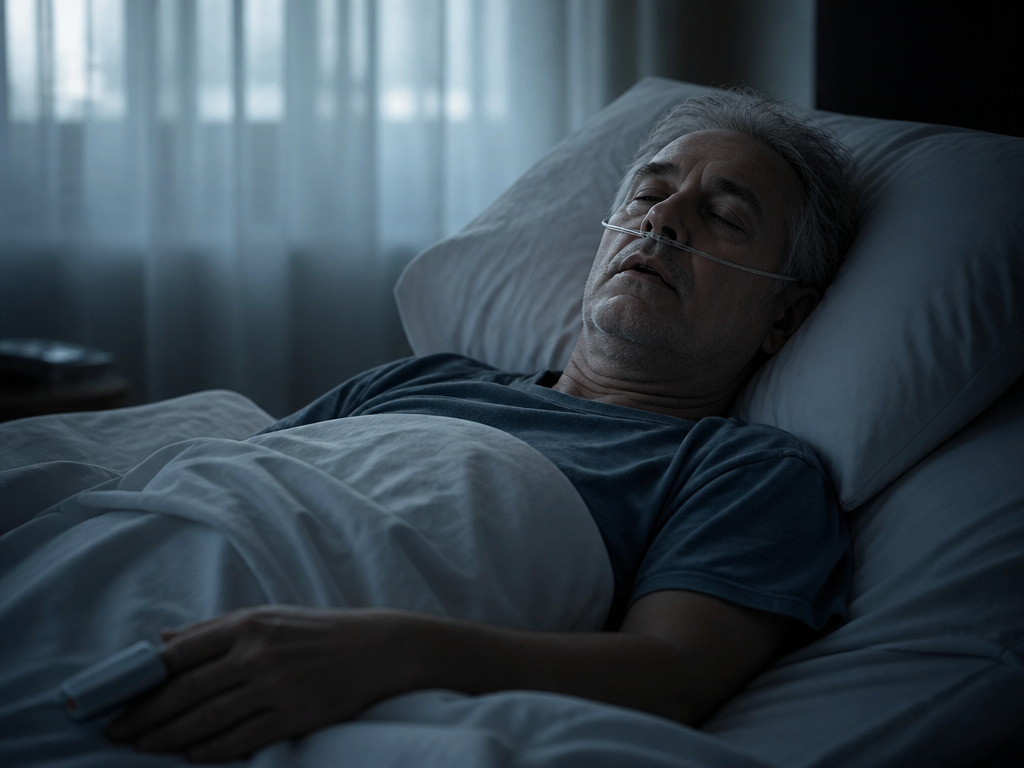
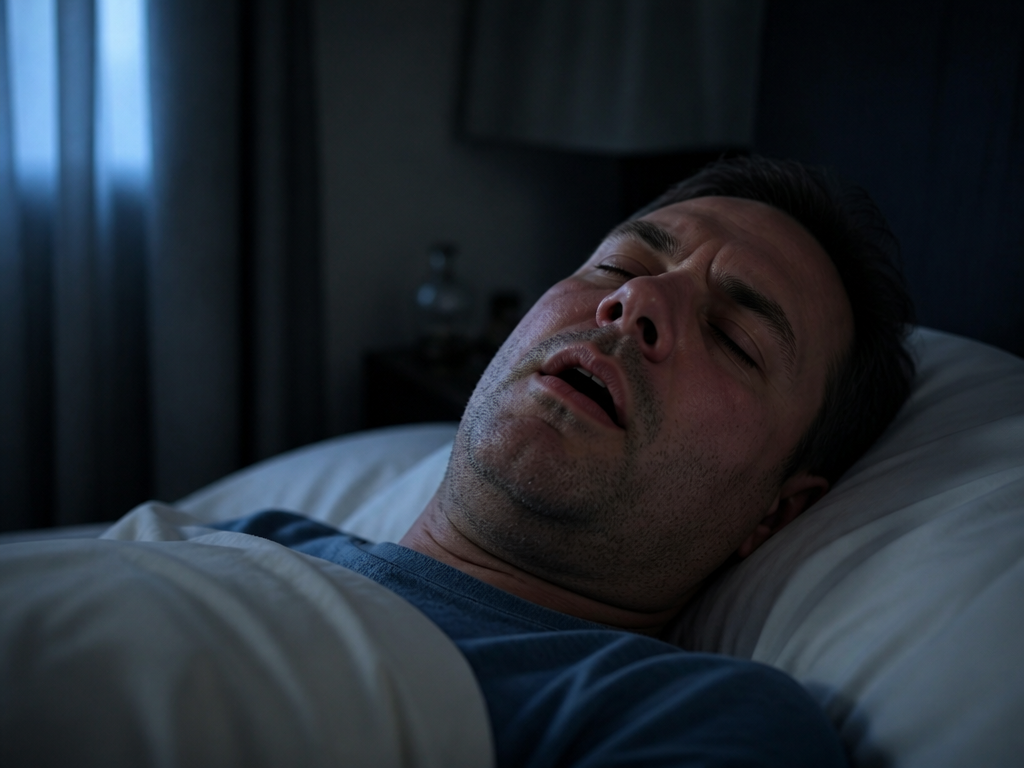
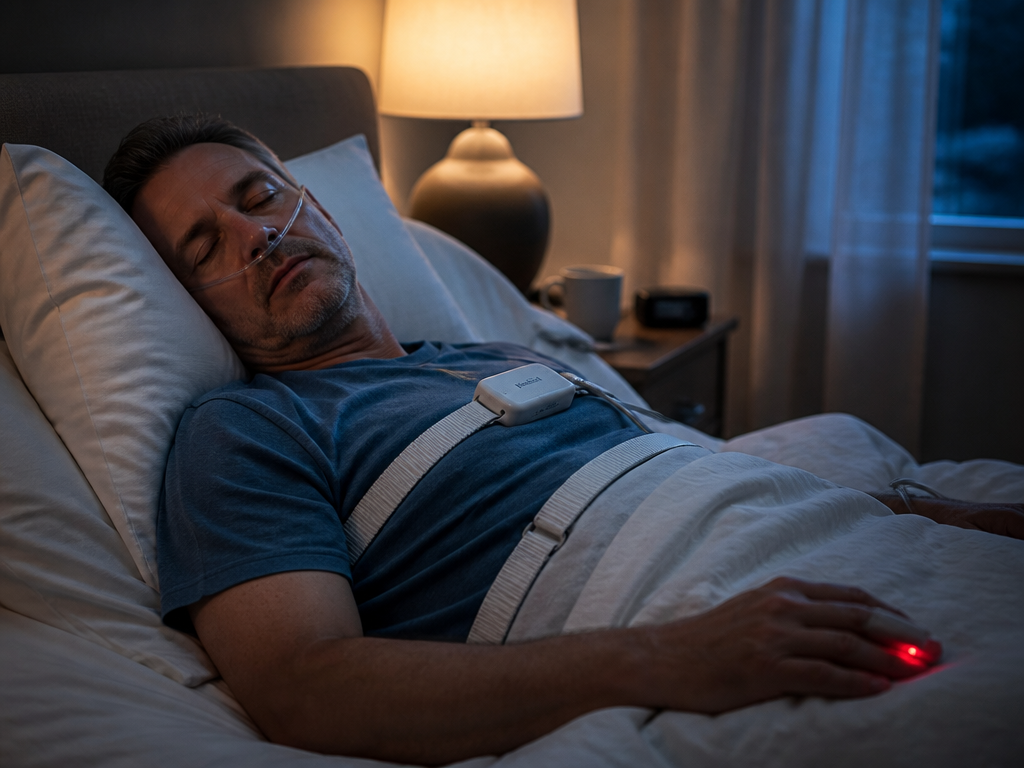
Obstructive sleep apnoea is the condition where a sleep pattern is most clearly a cardiovascular problem in disguise. During sleep, the muscles holding the pharynx open lose tone; in a susceptible airway, the tissue collapses inward, airflow drops or stops, oxygen falls, and the brain triggers a micro-arousal to reopen it. Repeat this dozens of times an hour and you get fragmented sleep, repeated surges of sympathetic activity, and blood pressure that doesn't dip overnight the way it should.
The prevalence numbers are genuinely large. Peppard et al. (2013), American Journal of Epidemiology, using the Wisconsin Sleep Cohort, estimated that about 26 percent of adults aged 30 to 70 have at least mild sleep-disordered breathing, with moderate-to-severe disease in roughly 13 percent of men and 6 percent of women. Earlier work from the same group (Young et al., 1997, Sleep) found that around 82 percent of men and 93 percent of women with moderate-to-severe disease were undiagnosed. Screening has improved since, but the gap has not closed.
One underrated clue: getting up twice or more a night to urinate. When the airway collapses against a closed throat, the chest generates strong negative pressure, the heart's atria stretch, and atrial natriuretic peptide is released — which tells the kidneys to produce urine. Nocturia has other causes, obviously, including prostate enlargement, diabetes, and heart failure, all of which are also worth a conversation. But snoring plus nocturia plus daytime sleepiness is a combination that should not be filed under "getting older."
Dreams that get acted out
This is the one almost nobody knows about, and it is the strongest single example of sleep as an early warning. During normal REM sleep, the brainstem actively paralyses skeletal muscle — you dream of running and your legs stay still. In REM sleep behaviour disorder, that paralysis fails, and the sleeper enacts the dream: punching, kicking, shouting, leaping out of bed. Bed partners usually notice long before the sleeper does.
Postuma et al. (2019), Brain, followed 1,280 people with idiopathic RBD across 24 international centres. Conversion to an overt neurodegenerative disease — Parkinson's disease, dementia with Lewy bodies, or multiple system atrophy — ran at about 6.3 percent per year, reaching roughly 73 percent at twelve years. That is not a subtle association. It is closer to a prodrome: the same alpha-synuclein pathology, showing up in the brainstem circuits that control REM atonia a decade or more before it reaches the parts of the brain that control movement.
Two caveats that matter. Idiopathic RBD is uncommon — the usual estimate is around one percent of adults over 60. And dream enactment is not the same as talking in your sleep, sleepwalking, restless legs, or a child's night terror, all of which arise from non-REM sleep and carry none of this significance. But if a partner tells you that you fight in your sleep, that belongs in front of a doctor, not in a funny story at dinner.
Insomnia that won't quit
The clinical threshold is worth knowing because it's more forgiving than people assume: difficulty falling or staying asleep at least three nights a week, for at least three months, with a daytime consequence. Below that, you have bad nights. Above it, you have a condition with a first-line treatment — cognitive behavioural therapy for insomnia — that outperforms sleeping tablets over the long run and is available in Australia through psychologists, several digital programs, and a growing number of GPs.
The preventative-health case is stronger than most people realise. Baglioni et al. (2011), Journal of Affective Disorders, pooled 21 longitudinal studies and found that people with insomnia at baseline had roughly twice the odds of developing depression later. The direction of that arrow is the interesting part: insomnia isn't only a symptom of low mood, it appears to precede and predict it. Treating the sleep may be one of the few available levers on the mood.
The finding that surprised the field: regularity beat duration
For thirty years the public health message about sleep was a number of hours. Then Windred and colleagues at Monash University published an analysis in Sleep in 2024 using accelerometer data from 60,977 UK Biobank participants, followed for around eight years. They computed a Sleep Regularity Index — essentially, how likely you are to be in the same state (asleep or awake) at the same clock time on two consecutive days — and compared it against total sleep duration as a predictor of death.
Regularity won. The most regular sleepers had roughly 20 to 48 percent lower all-cause mortality risk than the least regular, depending on the cause of death examined, and the association survived adjustment for how long people actually slept.
This is observational data, and the usual warning applies with force: people whose sleep timing is chaotic differ from people whose sleep timing is stable in a hundred ways an analysis can't fully control for — shift work, illness, caring responsibilities, income. Nobody has randomised people to irregular schedules for eight years, and nobody will. But the finding is consistent with what we know mechanistically about circadian misalignment, and it points at something more actionable than "get eight hours," because the variance in your bedtime is more under your control than the total.

What your watch knows, and what it's guessing
A wearable measures movement, and usually heart rate and its beat-to-beat variability. From those it infers everything else. Chinoy et al. (2021) tested seven consumer devices against laboratory polysomnography in 34 healthy adults and found the general pattern: the devices are decent at telling sleep from wake, and considerably worse at staging. Most tend to over-call sleep — if you lie still, you get scored as asleep.
The practical implication is that your deep-sleep percentage is an estimate built on an estimate, and chasing it is a good way to acquire a new anxiety. What wearables are genuinely good at is the thing the mortality data cares about: timing. Your recorded sleep-onset and wake times over a month are reasonably accurate, and the variability in them is real information.
Apnoea-detection features are a partial exception. Apple's sleep apnoea notification, cleared by the US FDA in 2024, uses accelerometer-derived breathing disturbance to flag possible moderate-to-severe disease. Treat a positive result as a prompt to see a GP, not as a diagnosis — and a negative result as no reassurance at all.
Where the answer is honestly "it depends"
Sleep duration and mortality is the classic example. Cappuccio et al. (2010), Sleep, pooled prospective studies covering more than 1.3 million people and found a U-shaped curve: short sleepers had about 12 percent higher mortality risk, long sleepers about 30 percent higher. The short-sleep end is fairly well supported. The long-sleep end is a mess of reverse causation — cancer, heart failure, depression, and undiagnosed apnoea all lengthen time in bed.2 "Sleeping nine hours is dangerous" is a claim stated far more confidently than the data supports.
The sleep-and-dementia story sits in the same category. Xie et al. (2013), Science, showed in mice that the interstitial space of the brain expands by around 60 percent during sleep, roughly doubling clearance of amyloid-beta — an elegant result, in mice. In humans, Ju et al. (2017), Brain, disrupted slow-wave sleep for a single night in seventeen adults and measured a rise in cerebrospinal fluid amyloid-beta. Seventeen people, one night, a biomarker rather than an outcome. The mechanism is plausible and the direction is consistent. It is not the same as knowing that better sleep prevents Alzheimer's disease, and the gap between those two statements is where a lot of supplement marketing lives.
And individual sleep need genuinely varies. The 7-to-9-hour recommendation (Hirshkowitz et al., 2015, Sleep Health) is a population range, not a prescription. True short sleepers — people carrying rare variants in genes such as DEC2 or ADRB1, identified by Ying-Hui Fu's group in a handful of families — do exist and thrive on six hours. Almost certainly you are not one of them; the trait is vanishingly rare, and the far more common condition is chronic restriction that you've stopped noticing.
A short, honest checklist
| What you've noticed | What it might mean | How solid the evidence is |
|---|---|---|
| Loud snoring + witnessed pauses + daytime sleepiness | Obstructive sleep apnoea | Well established; screen and refer |
| Acting out dreams — punching, shouting, leaping | REM sleep behaviour disorder | Well established, uncommon; see a doctor |
| Trouble sleeping 3+ nights/week for 3+ months | Chronic insomnia; raised later depression risk | Well established; CBT-I first line |
| Bedtime that swings 2+ hours night to night | Circadian irregularity | Plausible and strengthening; observational |
| Waking briefly at 3 a.m. and going back to sleep | Normal sleep architecture | Expected; not a symptom |
The honest rule of thumb: pick a wake time you can hold on a Sunday as easily as a Wednesday, set it for tomorrow, and let bedtime drift to meet it — regularity is the one variable you can change tonight that the evidence actually rewards.
Most nights, your sleep is not trying to tell you anything; the nights that are trying to tell you something tend to say it out loud, to the person lying next to you.
-
The historical claim that humans once slept in two shifts — Roger Ekirch's "first sleep" and "second sleep," documented in At Day's Close (2005) — is often used to reassure people about night waking. Wehr (1992), Journal of Sleep Research, found that subjects kept in 14 hours of darkness did drift into a bimodal pattern. It's suggestive rather than settled, and it doesn't mean your broken night is ancestral. It does mean continuous eight-hour sleep is less of a biological law than the marketing implies. ↩
-
This is why long-sleep findings should always be read for what the study did about pre-existing illness. Analyses that exclude deaths in the first few years of follow-up tend to see the long-sleep risk shrink — which is roughly what you'd expect if illness is causing the sleep rather than the reverse. ↩