Your tired teenager is probably not lazy, and probably not staying up out of defiance. The most likely explanation is duller and more biological than either: their internal clock has shifted later, and your school's first bell hasn't moved to meet it.
That's the counterintuitive part of sleep deprivation in teenagers. We tend to read a sixteen-year-old who can't fall asleep before midnight and can't get up before noon as a willpower failure — too much phone, too little discipline. Some of that is real. But underneath it is a documented, hormonally driven shift in the timing of sleep, and it arrives whether or not anyone is being responsible.
Let me earn the claim.
What actually changes at puberty
The relevant mechanism is circadian phase delay. In adolescence, the brain's master clock — the suprachiasmatic nucleus — starts releasing the sleep-onset signal later in the evening.
The cleanest way to measure this is dim-light melatonin onset, or DLMO: the clock time at which melatonin begins to rise in the evening once you remove bright light from the equation. Mary Carskadon's lab at Brown spent years on this. In her work tracking adolescents through puberty, DLMO moved measurably later as kids matured — the body's "go to sleep" cue arriving an hour or more after where it sat in childhood. The teen who says "I'm just not tired yet" at 10:30 p.m. is, in a real physiological sense, telling the truth.
There's a second piece. Adolescents also build up sleep pressure — the adenosine-driven drive to sleep — more slowly than younger children. So even at the end of a long day, the brakes come on later. The late bedtime isn't only preference. It's two clocks, one hormonal and one chemical, both pushing the same direction.
What the research actually measured
Here's the question parents ask first, answered plainly: teenagers need 8 to 10 hours of sleep per night, and most American teens get well under that on school nights.
The 8-to-10 figure is the consensus recommendation from the American Academy of Sleep Medicine (Paruthi et al., 2016), reached by an expert panel reviewing the evidence on sleep duration and health outcomes in adolescents. The shortfall is just as well documented. The CDC's Youth Risk Behavior Survey has for years found that roughly 7 in 10 high school students report fewer than 8 hours on an average school night. Not a fringe group. The majority.
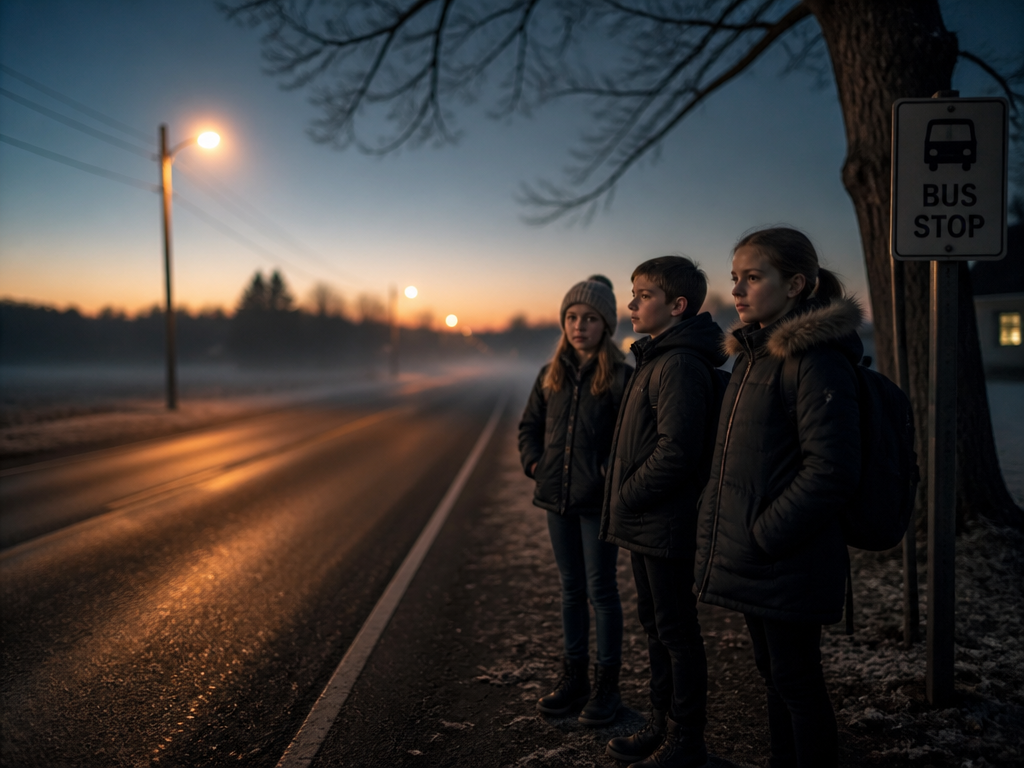
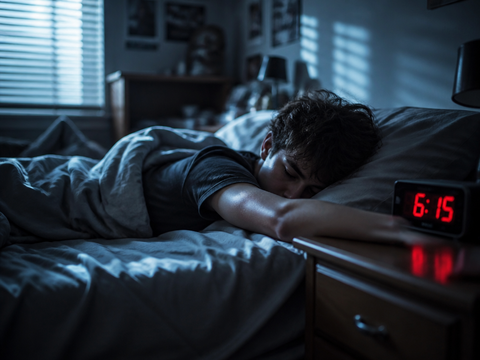
Now combine that with the phase delay above and an average U.S. high school start time near 8:00 a.m. — earlier in many districts. A clock that wants sleep at midnight, a body that needs nine hours, and an alarm at 6:15. The math doesn't close. The deficit is structural before your kid touches a screen.
When Seattle high schools pushed start times from 7:50 to 8:45 a.m., Dunster et al. (2018), published in Science Advances, used wrist actigraphy on students before and after the change and found they gained about 34 minutes of sleep per night — and median grades rose. It's one of the better natural experiments we have, because it measured behavior instead of asking teenagers to estimate it, which they do badly.
The part that isn't just grades
Chronic short sleep in this age group tracks with more than a sluggish first period. The associations run through mood — irritability, blunted affect, higher reported rates of depressive symptoms — and through the unglamorous machinery of attention and reaction time. A sleep-restricted teenager behind the wheel is the version of this that should worry a parent most.
I want to be careful about the direction of these arrows. Much of the mood-and-sleep data is correlational, and poor sleep and low mood feed each other in a loop that's genuinely hard to untangle. The honest statement is that they travel together, reliably, and that improving sleep is one of the few levers in that loop a family can actually pull.
When the tiredness might be something else
Most adolescent fatigue is the ordinary mismatch above. But not all of it. If your teen sleeps a full eight or nine hours and still wakes unrefreshed — especially with loud snoring, witnessed pauses in breathing, or morning headaches — that's a different conversation. Obstructive sleep apnea is less common in teens than in middle-aged adults, but it exists, it's treatable, and it doesn't respond to an earlier bedtime.
The distinction that matters: a clock problem improves when the schedule improves. A breathing problem doesn't. If you've genuinely protected the sleep window and the exhaustion persists, that's the signal to ask a pediatrician rather than buy another alarm clock.
An honest rule of thumb
You will not out-discipline puberty. What you can do is stop fighting the clock and start protecting the hours your teen does have.
Tonight's version: count backward 9 hours from the alarm, and treat the 60 minutes before that target as a hard dimming window — overhead lights off, screens dimmed or down, nothing that demands a reply.
Light is the lever because light is what sets the clock. Bright evening light pushes DLMO even later; morning light pulls it earlier. So the morning move matters as much as the evening one.
| If the alarm is... | Aim to be asleep by... | And get bright light around... |
|---|---|---|
| 6:15 a.m. | 9:15–10:15 p.m. | within an hour of waking |
| 7:00 a.m. | 10:00–11:00 p.m. | within an hour of waking |
| Weekend, sleeping in | keep it within ~2 hrs of the weekday wake time | go outside after |
That last row is the one families skip. A 3-hour weekend sleep-in resets the clock later again — what researchers call social jetlag — and you spend Monday paying it back.
What a school night actually does to the body
Walk it forward. At 10 p.m. your teen feels alert; melatonin hasn't risen, adenosine pressure is still climbing. Phone light hits the eyes, the clock reads it as "still daytime," and the melatonin signal slides later. Sleep finally arrives near midnight. The alarm fires at 6:15 — mid-cycle, well short of the 9 hours needed — and pulls them out of sleep the brain wasn't finished using. The grogginess at breakfast isn't drama. It's sleep inertia, interrupted on the body's terms, not the schedule's.
Repeat five nights. By Friday the deficit is real, the weekend "catch-up" delays the clock again, and Monday restarts the cycle.
The question we can't fully answer yet
Here's where the science stops short. We know teenagers can recover acutely — a few good nights restore alertness and reaction time. What we don't yet know is whether years of accumulated adolescent sleep debt, layered onto a developing brain, leave a lasting mark on mood regulation or learning, or whether the brain pays it all back once the schedule finally loosens in adulthood. The follow-up studies long enough to answer that don't really exist yet. So the better question to sit with isn't whether your teen is sleeping enough tonight — it's what we're quietly betting they can recover from later.