The advice is standard enough now that hotels print it on the notepad: no screens for an hour before bed. Dim the lamps. Buy the amber glasses. Protect your circadian rhythm from the lit rectangle you have been holding thirty centimetres from your face since seven in the morning, and the 3 a.m. wake-ups will stop.
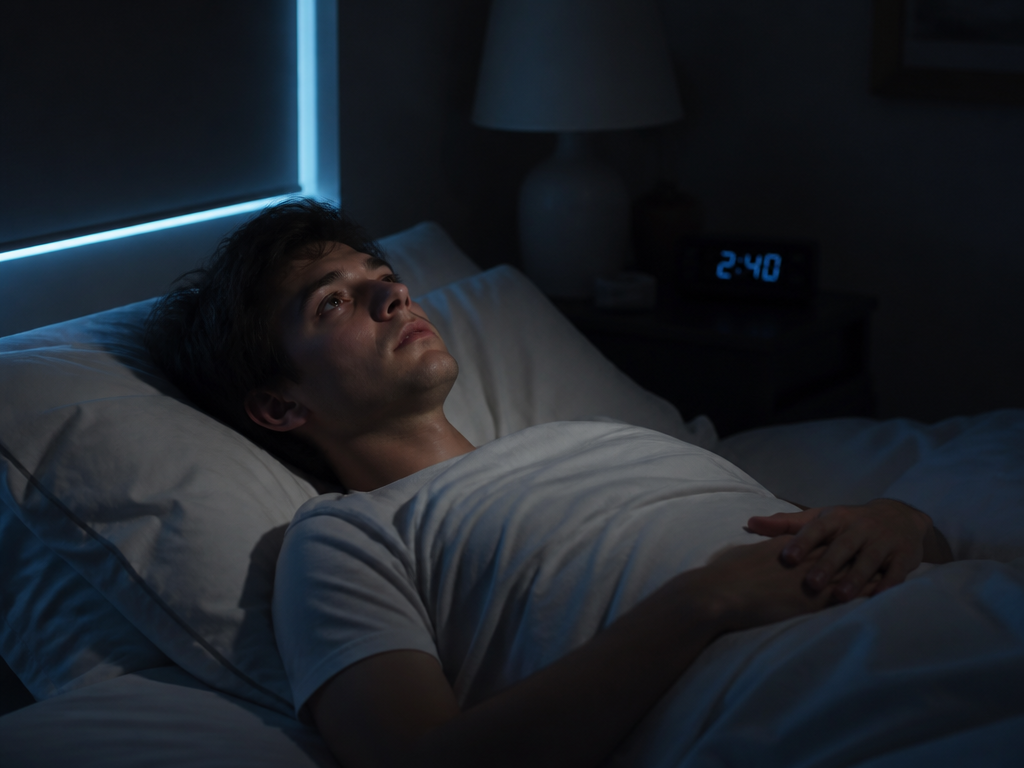
I have given that advice in print, under my own name, to people paying money to read it. I have also, for something like four years, woken at 3:40 most nights and lain there doing arithmetic on the hours remaining, then spent the following morning unable to hold a sentence in my head long enough to finish it. Both of those things are true at once, and the second is the reason for this piece.
So in May I ran the maximal version of the advice on myself for three weeks, using the Amish as the template — not because they are quaint or virtuous, but because they are the nearest available population living in a light environment that roughly resembles the one our biology was assembled in.
The verdict: the evening half of the advice is real but small. The morning half — the half nobody gives you, because it asks you to add something rather than forbid something — did about three times as much work.
What the Amish actually do, and what we imagine they do
The popular image is a house that goes dark at sundown. That image is directionally right and factually sloppy.
Old Order households generally refuse grid electricity, but "no grid" is not "no light." Propane mantle lamps are genuinely bright — bright enough to sew by, bright enough to read fine print. Battery LEDs show up in buggies and barns. What is different is the geometry and the total: a couple of pooled light sources at table height, not a ceiling grid throwing light down into your eyes from above, and no glowing surface held at reading distance for four hours after supper.
But the evening is the less interesting half of the comparison. The part that gets skipped, because it is inconvenient, is the day. A much-cited pedometer study of Old Order Amish adults put the men somewhere around 18,000 steps a day, most of them outdoors, most of them under an open sky. Ten to fourteen hours of exposure to daylight that is, on an overcast afternoon, still fifty to a hundred times brighter than a well-lit office. Meals at fixed hours. A community schedule that does not negotiate with your inbox.
And — this being a magazine about coffee — the pre-modern-purity story falls apart in the kitchen. Coffee is not a modern intrusion in Amish households. It is percolated, it is strong, it is drunk at breakfast and again mid-morning, and kaffee supp — bread torn into hot sweetened coffee — is a real Pennsylvania Dutch breakfast, not a tourist invention. Whatever is protecting Amish sleep, it is not caffeine abstinence.
Which means the way we usually copy them is backwards. We copy the subtraction, because subtraction is free and can be done at 9 p.m. from the sofa. We skip the addition, because the addition requires being outdoors at a specific time on a Tuesday.
How I set this up
Twenty-one consecutive nights, three arms of seven, no washout between them, in that order:
Arm A — baseline. Ordinary life, ordinary evenings, no changes at all. I only measured.
Arm B — the standard advice. Phone in a kitchen drawer at 9:00 p.m. No laptop, no television after 9:00. Everything else identical to baseline: same overhead lights, same bedtime, same mornings.
Arm C — full amplitude. Forty-five minutes minimum outdoors starting within twenty minutes of waking, no sunglasses. Fifteen minutes outdoors at lunch. Every overhead fixture in the house off at sunset, replaced by a single 2700K lamp sitting on the floor. Screens still off after 9:00. Lights out inside a fixed window, 10:15 to 10:45.
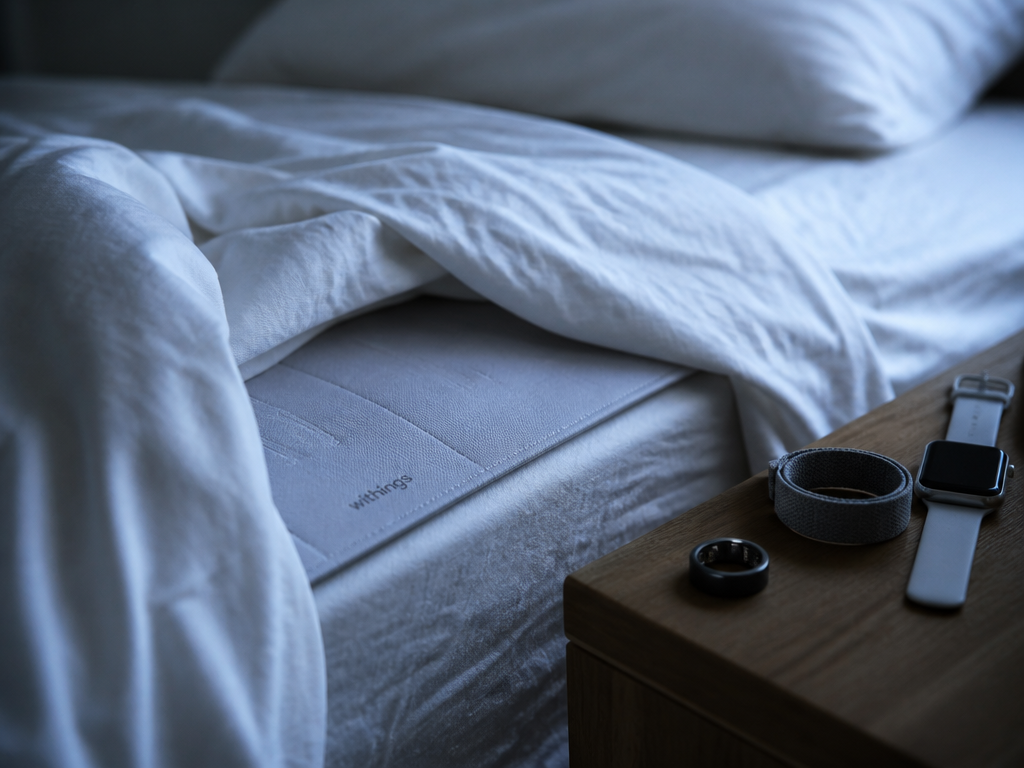
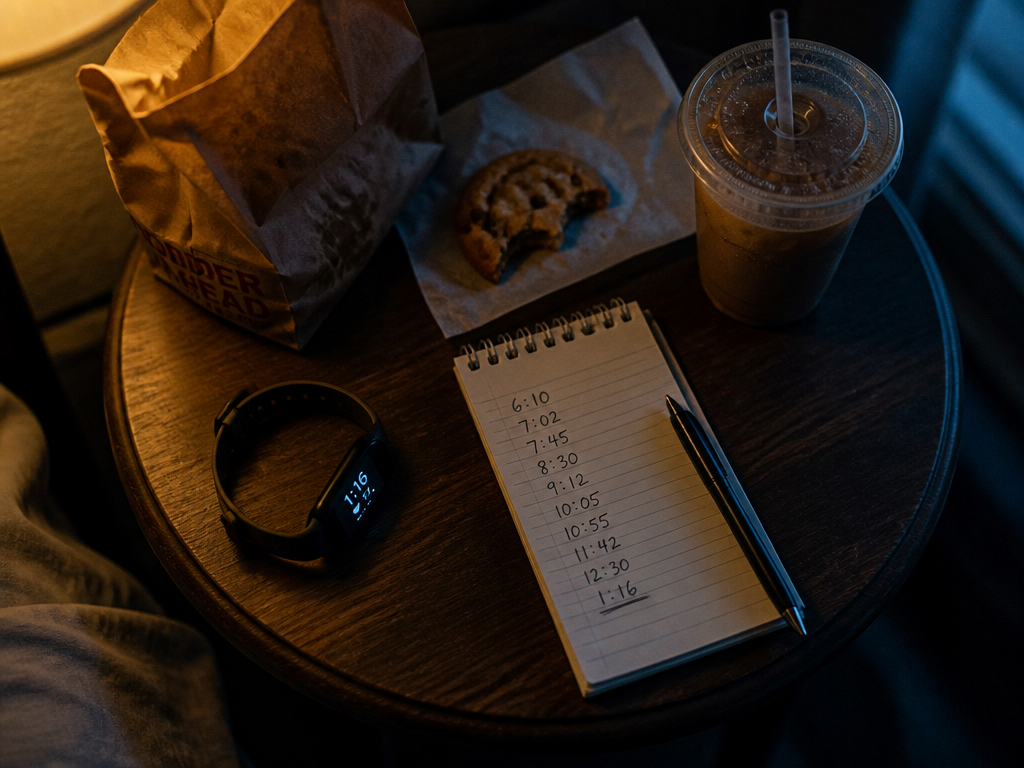
Instruments: an actigraphy ring for onset, wake-after-sleep-onset and total sleep time, and — after four days of a phone app giving me readings that shifted by 60 percent depending on which way I tilted it — a £31 handheld lux meter, held at eye height, facing the direction I was actually looking. I logged a subjective fog score at 10 a.m. daily, 1 to 10, low being clear.
Controls: caffeine fixed at two cups a day, roughly 190 mg total, last one before 11 a.m., same beans, same 1:16 ratio throughout. No alcohol for all 21 days. Bedroom blackout blinds and 18.5°C, unchanged. Backup alarm at 6:35 every morning, because I did not trust this to work and was not willing to find out by missing a school run.
The obvious confound, stated now rather than buried: this ran across late spring. Sunrise moved from 5:42 to 5:19 over the three weeks, and the arms were sequential, not randomised. Arm C had the best light available to it by simple accident of calendar. I'll come back to how much that might be worth.
Week one: baseline, and the fixture I had never measured
The numbers were worse than my self-image. Mean sleep onset 34 minutes. Mean wake-after-sleep-onset 61 minutes. A wake between 3 and 4 a.m. on five of seven nights. Total sleep 6 hours 11 minutes. Fog score averaged 6.9, which in practice meant re-reading the same paragraph of a transcript three times before it registered.
The useful finding of week one had nothing to do with sleep. On the Wednesday I walked around the house at 9:30 p.m. with the meter at eye height and wrote down what I found.
Phone at reading distance, brightness at my usual evening setting: 38 lux. Laptop at desk distance: 61 lux. The kitchen ceiling spots, which are on from six until we go up: 274 lux. The bathroom vanity, where I stand for four minutes brushing my teeth immediately before bed: 410 lux.

I had spent four years defending myself against the 38-lux object while standing under the 410-lux one every night, on purpose, at the worst possible moment.
Week two: the curfew, done properly and honestly
I want to be fair to the standard advice, because I have dispensed it. I did not half-run this arm. The phone went in the drawer at 9:00 on all seven nights, including the Friday, and the drawer stayed shut.
Onset came down to 27 minutes. WASO to 54. Three-a.m. wakes on four of seven nights instead of five. Total sleep 6 hours 28 minutes. Fog 6.3.
That is a real improvement. Seventeen extra minutes of sleep and seven fewer minutes staring at the ceiling is not nothing, and anyone telling you the screen curfew does literally nothing is overcorrecting. But after seven nights of genuine compliance I would not have been able to tell you it was working without the log. It was under the noise of how I felt.
Two details from that week matter more than the averages. First, the two worst nights — 3 a.m. wakes, both — followed evenings where I had read work email at 8:45, inside the rules, and then dutifully put the phone away. Compliant, and useless. Whatever those messages did to me was not photometric.
Second, my measured evening light barely moved. Removing a 38-lux object from a room lit to 274 lux is a rounding error. I had followed the instruction precisely and changed the thing the instruction is nominally about by almost nothing.
Week three: full amplitude
This is where it stopped being subtle.
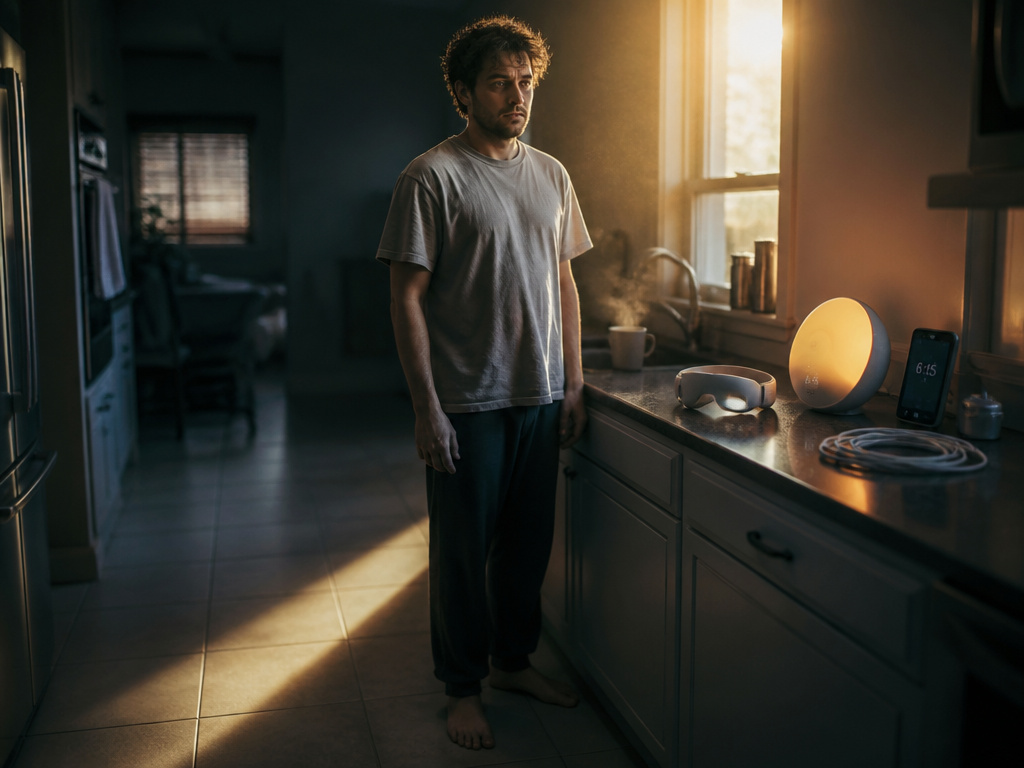
The mornings were the whole experiment. Out of the door by 6:10 or so, forty-five to sixty minutes walking, coffee taken with me. The meter read between 6,800 lux under heavy cloud and 31,400 in direct sun; the seven-day average of my morning exposure came out near 14,000 lux for 47 minutes. Compare that to baseline: about 180 lux for 12 minutes, which is to say a kitchen and a car.
The evenings dropped to a genuinely different order. One 2700K bulb on the floor, everything overhead off: 9 lux at eye height in the sitting room, 14 in the kitchen. I put a 15-watt bulb in the bathroom, which brought that 410 down to 31 and made shaving a slight gamble.
Onset: 14 minutes. WASO: 22 minutes. One 3 a.m. wake in seven nights. Total sleep 7 hours 22 minutes. Fog: 3.4.
The subjective changes were odder than the numbers. By Wednesday I was hungry at 9 p.m., reliably, which had not happened in years. By Thursday I wanted to be in bed at 9:40 and had to hold myself to the 10:15 window. On Friday I woke at 5:55 before the backup alarm and felt — this is the sentence I wrote in the log, and I'll leave it as it was — actually awake, not just conscious.
And then Thursday night was bad anyway. An argument at seven about an unsigned school form, in the dark, under nine lux, and I was up at 3:20 for fifty minutes. The protocol did not protect me from my own household. That night is included in the averages above; I mention it because a week of clean results with the bad night quietly dropped is how this kind of writing usually gets done, and it is how you end up with advice that fails everyone the moment their life gets normal.
The three arms side by side
| Metric (7-night mean) | Baseline | Screen curfew | Full amplitude |
|---|---|---|---|
| Sleep onset latency | 34 min | 27 min | 14 min |
| Awake after sleep onset | 61 min | 54 min | 22 min |
| Nights with a 3 a.m. wake | 5 of 7 | 4 of 7 | 1 of 7 |
| Total sleep time | 6h 11m | 6h 28m | 7h 22m |
| 10 a.m. fog score (1–10, lower is better) | 6.9 | 6.3 | 3.4 |
| Light before 9 a.m. | ~180 lux / 12 min | ~180 lux / 11 min | ~14,000 lux / 47 min |
Read the last row against the fourth. The arm that did nothing to my mornings bought 17 minutes. The arm that changed my mornings by roughly two orders of magnitude bought 71.
Where the standard advice breaks down
It treats light as a toxin rather than a signal
The curfew framing implies light is something to be minimised, like salt. But the clock does not run on how little light you got; it runs on contrast — the difference between your brightest hours and your darkest ones. My baseline day had a ratio of maybe 30:1 between noon indoors and 10 p.m. indoors. Week three's was closer to 1,500:1. You cannot get a ratio like that by subtracting alone, because there is a floor: the darkest your evening can be is dark, and I was already fairly close.
It aims at the wrong fixture
The phone is the villain because the phone is the thing we feel guilty about. But the phone is 38 lux held in your hand while the ceiling is throwing 274 into your upper visual field, where the receptors that report daylight to your body clock are densest. If you do one thing in your evening, it is not putting the phone down. It is turning off the light above your head and putting a lamp on the floor.
It confuses photons with arousal
On my log, the best predictor of a 3 a.m. wake was not evening lux. It was whether I had opened work email after 8 p.m. That is a small sample and I would not defend it as an effect, but it points at something the light framing can't see: a phone at midnight reading a novel and a phone at 8:45 reading a message from a client are the same photometric event and completely different physiological ones. The curfew treats them identically, which is why people who follow it and still lie awake conclude that sleep hygiene is nonsense.

It copies the subtraction and skips the addition
This is the Amish misreading in one line. What is unusual about that life is not the dark evening — plenty of us can produce a dark evening. It is fourteen waking hours of outdoor light, physical work, and a schedule set by other people. When we import the lifestyle, we import the one piece that costs nothing and requires no daylight, and then we are surprised it doesn't do much.
The coffee question
I held caffeine fixed on purpose, so I have no clean result here. But two things are worth putting down.
The first is that the whole "go back in time" premise assumes the past was unstimulated, and in Amish kitchens it plainly isn't. Strong percolator coffee, twice a morning, in households that sleep well by every account we have. Whatever is going on, the mechanism is not abstinence.
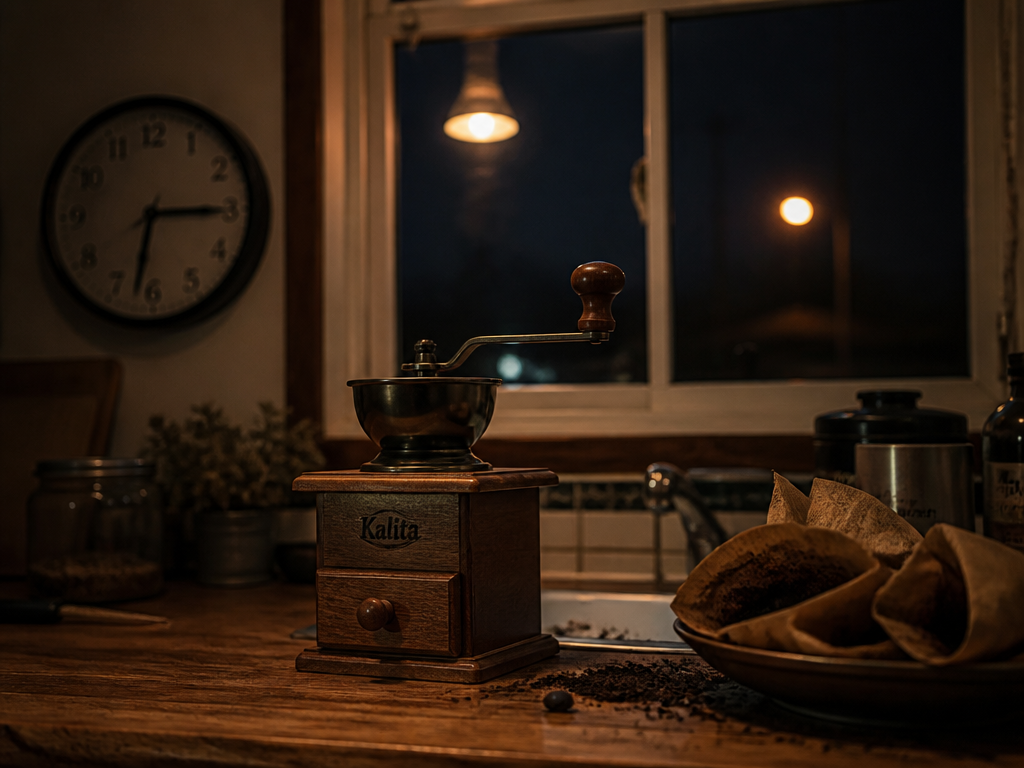
The second is a side-test I ran in week three, four days each, badly controlled: same two cups, same timing, but drunk outdoors on the step versus drunk indoors at the table. Onset was 11 minutes on the outdoor days and 16 on the indoor ones. That difference is smaller than my night-to-night variation and I would not publish it as a finding. What I will say is that pairing the first cup with going outside solved my compliance problem entirely. I did not have to remember to get light. I had to remember to drink coffee, which I have never once failed to do.
The other thing I noticed, and can't prove: by the end of week three, the 11 a.m. cutoff felt less like a sacrifice. I was not reaching for a third cup at two in the afternoon, because there was nothing to paper over. Caffeine timing rules are much easier to keep when you are not using caffeine as a substitute for a functioning morning.
What I can't claim
One subject. Twenty-one nights. Unblinded — I knew which week I was in and I wanted week three to work, which is exactly the condition under which subjective fog scores become worthless. Treat that 3.4 with suspicion; the onset and WASO figures are less contaminated but not clean.
The arms ran in sequence, in a season where daylight was lengthening, so some of week three's advantage belongs to the calendar. I'd guess a small amount. I can't quantify it, and anyone who tells you they can from an N of one is selling something.
Arm C changed four variables at once — morning light, midday light, evening light, and bedtime regularity. I can't tell you which did the work. My honest read, from the fact that week two moved evening light almost not at all and still bought 17 minutes, is that evening is worth something and morning is worth more. That is an inference, not a measurement.
And I ignored every sleep-stage number the ring produced. Consumer actigraphy is decent at "asleep or awake" and I do not believe it about deep sleep percentages, so I did not use them and neither should you.
Who this is for, and who it isn't
This is for you if you are desk-bound, wake in the small hours, have already done the obvious things — cool room, dark room, no wine, no late coffee — and found them insufficient. It is for you especially if you commute in a car, work under a ceiling grid, and could not say when you last spent forty-five continuous minutes outdoors on a weekday morning. That was me, and the gap between my day and my evening was the smallest thing about my life that I had never once measured.
This is not for you if you snore, wake gasping, or have been told you stop breathing. Light does not open an airway, and three weeks of sunrise walks would have wasted three weeks you should have spent getting a sleep study. It is not for shift workers, for whom the whole contrast logic inverts and needs actual clinical guidance. It is not a substitute for CBT-I if what you have is insomnia disorder rather than a badly built day — the tell is roughly whether the problem is your schedule or your relationship with the bed itself.
And it is materially harder in a northern winter, where a 6:10 walk is a walk in the dark. I don't have data on the 10,000-lux desk lamps people use instead, because I haven't run that arm. I'll run it in January.
A more honest version of the rule
Not: no screens for an hour before bed.
Instead: make your day brighter than your evening by a margin you can feel — and if you can only defend one hour, defend the first one, not the last. Then treat your evening as two separate problems: the light above your head, which is photometric and fixable with a switch, and what you let into your head, which is arousal and is not fixed by a curfew ten minutes after the message arrives.
The Amish comparison holds up, but not as an argument for going back. It holds up as a demonstration of amplitude — of what a body does when its days and nights are unmistakably different from each other. You can borrow the amplitude without borrowing the century.
The kitchen ceiling spots have been off since May; there's a lamp on the floor by the radiator now, and my husband has stopped mentioning it. The bathroom still has the 15-watt bulb and I have cut myself shaving twice. And at 6:05 most mornings I take the first cup out to the back step and stand there for eleven minutes, not walking, not doing anything, while it goes cold faster than I would like.