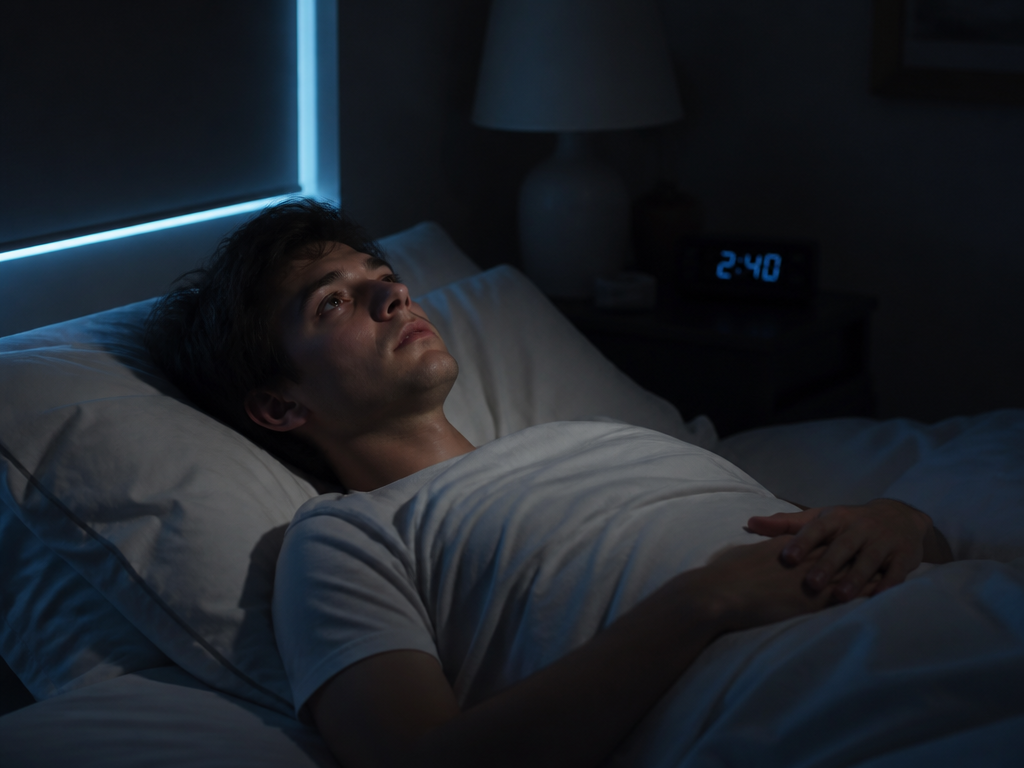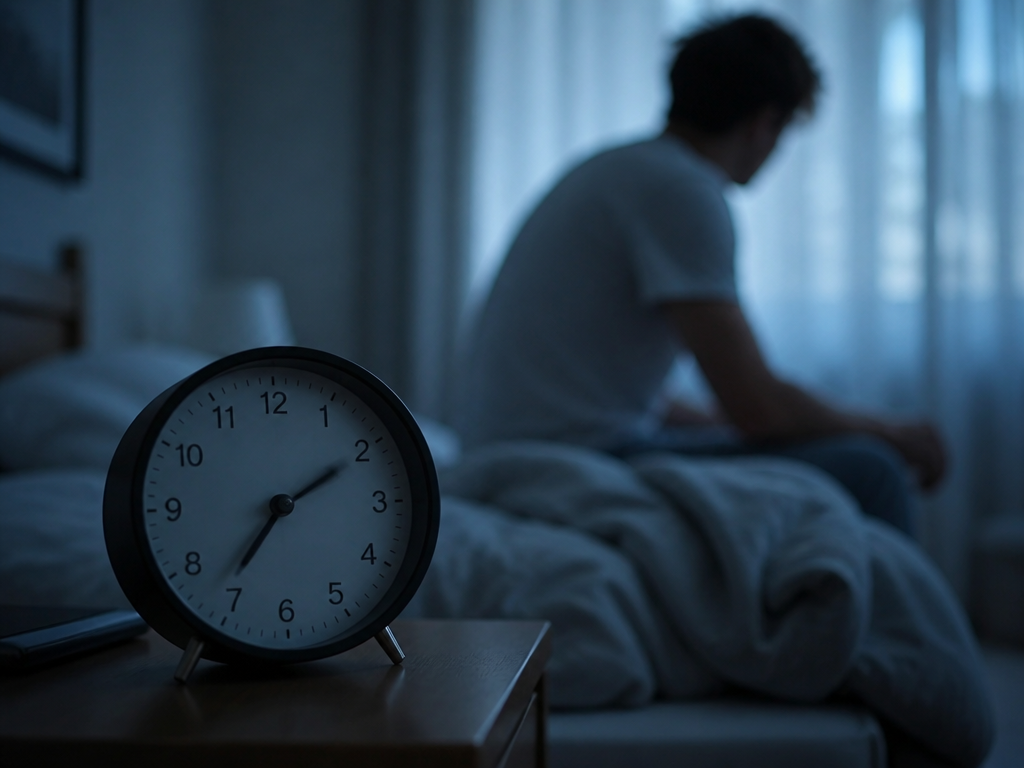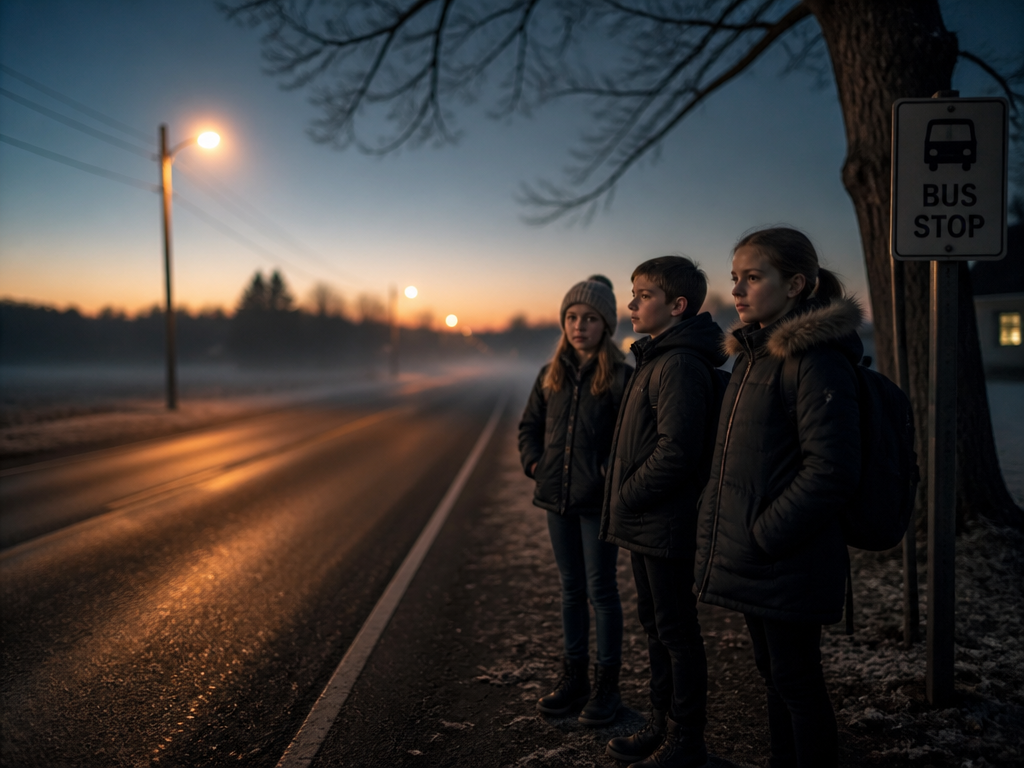
On January 5, the sun comes up over Tyler at 7:26 in the morning. That is already late. Under permanent daylight saving time — the version of the clock Congress keeps almost passing — it would come up at 8:26, which is after first bell at a fair number of East Texas high schools.
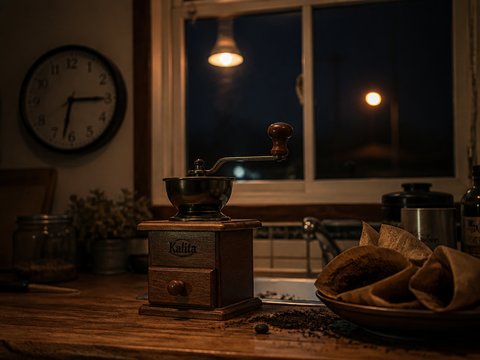
I wanted to know what that actually does to a body, so last winter I gave myself six weeks of it. The thing that told on me wasn't how tired I felt. It was how much coffee I was grinding.
What most people do
Most of us treat the clock change as a two-day inconvenience. You move the microwave forward on a Sunday, you feel flattened Monday, and by Thursday nobody mentions it. The standard advice — shift bedtime fifteen minutes earlier for four nights running — is good advice that almost nobody follows.
What most people also do, without filing it under sleep, is adjust the caffeine. The 6:15 cup gets bigger. A second one appears in the early afternoon where there wasn't one before. Nobody writes it down, so nobody sees the trend.
And most people, asked directly, like the idea of ending the switch. I understand that. Year-round evening light would mean a 6:20 sunset in December instead of 5:20 — more daylight for practice, for the drive home, for the hours people actually choose how to spend. The argument is a real one. The bill just gets charged to a different hour.
Does permanent daylight saving time really mean darker mornings in East Texas?
Yes. The clock moves; the sun doesn't. Permanent daylight saving time doesn't manufacture daylight — it relabels it, taking an hour off the morning and stapling it to the evening. Tyler sits at 32.4° north and 95.3° west, well toward the western edge of the Central time zone, which already makes its sunrises late. The effect lands squarely on the school run.
| Date | Sunrise, standard time | Sunrise, permanent DST |
|---|---|---|
| Dec 1 | 7:00 a.m. | 8:00 a.m. |
| Jan 5 | 7:26 a.m. | 8:26 a.m. |
| Feb 1 | 7:16 a.m. | 8:16 a.m. |
| Mar 1 | 6:48 a.m. | 7:48 a.m. |
Approximate, for Tyler. Add a few minutes heading west toward Athens or Palestine; subtract a few heading east toward Marshall.
Civil twilight begins roughly 25 minutes before sunrise, so there's usable gray earlier than the table suggests. But a 6:40 a.m. bus stop in January would sit in real dark, not gray, for most of the winter.
What the evidence suggests
Start with the clearest signal. The American Academy of Sleep Medicine's 2020 position statement (Rishi et al., Journal of Clinical Sleep Medicine) recommends permanent standard time, not permanent daylight saving time. The reasoning is circadian rather than political: morning light does more clock work than evening light does.
Why it does is the interesting part. Kantermann, Juda, Merrow, and Roenneberg (2007), Current Biology, surveyed roughly 55,000 people in Central Europe and tracked how sleep timing drifted across the seasons. Under standard time, sleep timing followed dawn. Under summer time, that tracking broke — and the mismatch persisted for weeks, worst in late chronotypes. Not one bad Monday. A season-long misalignment.
Wright et al. (2013), also Current Biology, took eight people camping in the Rockies for a week with no electric light. Melatonin onset moved about two hours earlier. Eight people — a tiny study that gets cited like a large one. It shows the size of the effect natural morning light can have, not how often anyone gets it.
On stakes: Fritz et al. (2020) found roughly a 6% rise in fatal crash risk in the week after each spring forward, across two decades of U.S. data. Read the caveat alongside the number. That is a finding about the transition, which permanent time of either kind would abolish. It says nothing about which permanent clock is safer.
The nearest thing to an answer comes from school start times. Dunster et al. (2018), Science Advances, used wrist actigraphy on about 170 Seattle sophomores before and after their district moved first bell from 7:50 to 8:45. Sleep duration rose by roughly 34 minutes a night, with modest grade improvements. Later mornings helped teenagers. Permanent DST is that arithmetic run backwards.
So: well-established that morning light sets the clock, and that American teenagers are chronically short of sleep. Plausible but thin that a year-round evening-light regime would measurably move school performance in Smith County. Folk wisdom that you can simply go to bed earlier to absorb it — see below, where I couldn't.
How the morning signal actually works
Light hits the retina. Alongside rods and cones sits a third receptor, melanopsin, in a small population of retinal ganglion cells tuned to about 480-nanometer blue. They function as a light meter, not an image sensor. Their signal travels the retinohypothalamic tract to the suprachiasmatic nucleus — a paired cluster of roughly 20,000 neurons in the hypothalamus, and the master clock.
Timing decides the direction. Light in the hours just after your core body temperature bottoms out, usually one to three hours before habitual waking, pulls the clock earlier. The same light twelve hours later pushes it later. The SCN then tells the pineal gland to stop producing melatonin, and 30 to 45 minutes after waking, cortisol peaks. The cascade needs a bright input to run cleanly. An overcast morning outdoors is 1,000 to 10,000 lux. A well-lit kitchen is 100 to 300.
Caffeine works in an entirely separate system, which is exactly why it hides the problem. Adenosine accumulates across the waking day and binds A1 and A2A receptors, producing sleep pressure. Caffeine is a competitive antagonist: it occupies the receptor without activating it. The adenosine is still there. You just stop hearing it. With a half-life near five hours in most adults, 200 mg at 2 p.m. leaves roughly 100 mg circulating at 7. Drake et al. (2013), Journal of Clinical Sleep Medicine, gave 12 subjects 400 mg at 0, 3, and 6 hours before bed; even the six-hour dose cost more than an hour of objective sleep. Burke et al. (2015), Science Translational Medicine, found 200 mg three hours before bed delayed melatonin onset by about 40 minutes. Caffeine doesn't only mask the clock. It moves it.
What I actually do
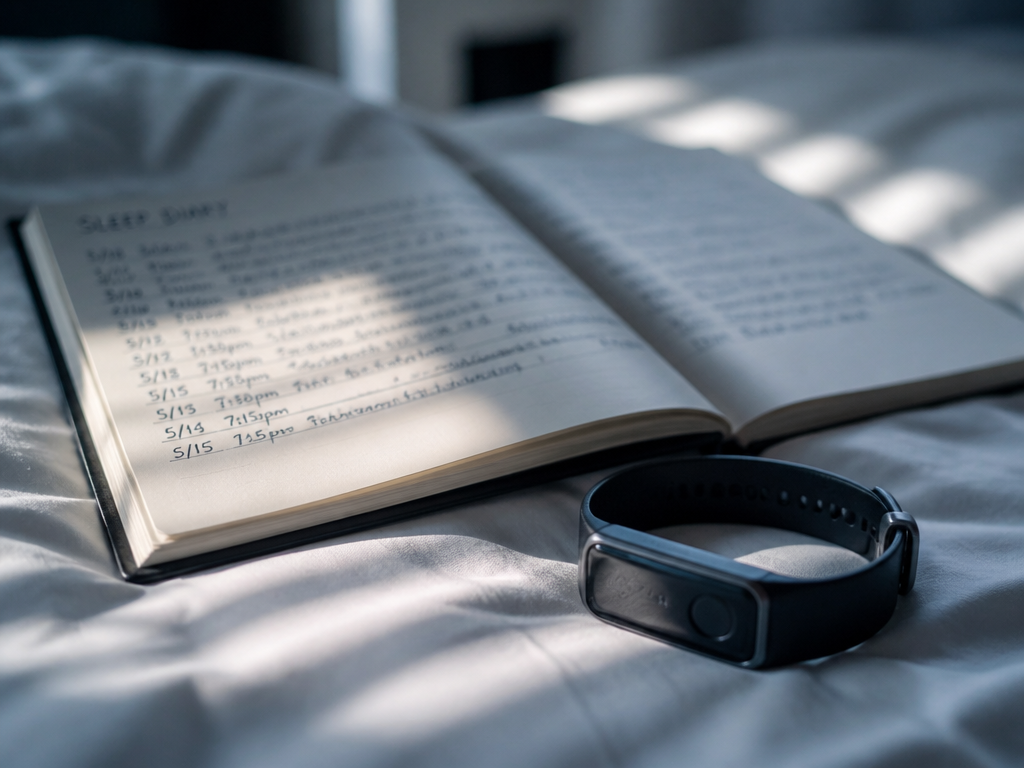
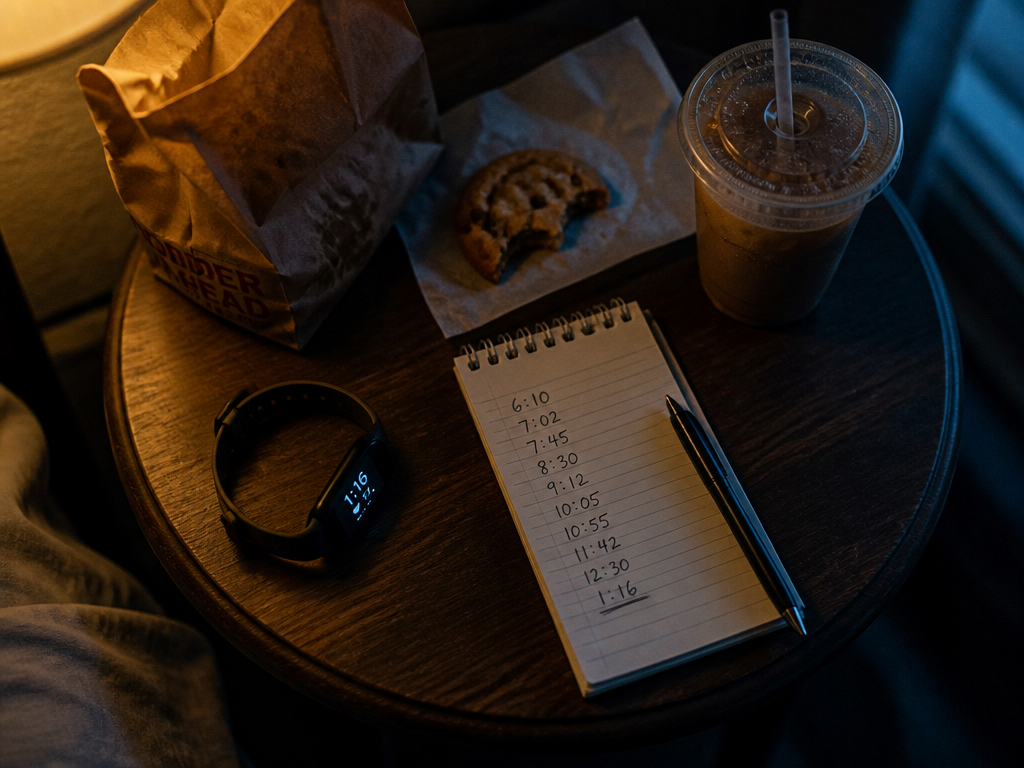
Last January and February I ran it on myself: 24 weekdays with the alarm at 5:40 a.m. instead of 6:40, to approximate what a permanent-DST winter asks of a morning. I logged bedtime, wake time, wearable-estimated sleep duration, and — this part was new for me — caffeine by weight, in milligrams, on a kitchen scale.
Baseline, the two weeks prior: about 180 mg a day, all of it before 10 a.m.
Week three: about 310 mg. The second cup had migrated from 9:40 in the morning to 1:15 in the afternoon, and had stopped being optional.
The sleep arithmetic was worse than it felt. I intended to go to bed an hour earlier. I went to bed 18 minutes earlier on average while waking 60 minutes earlier — a net loss of roughly 40 minutes a night, about three and a half hours across a school week. My subjective tiredness scores barely moved. The grinder kept better records than I did.
For weeks four through six I changed one variable: 20 minutes at a 10,000-lux light box at 6:05 a.m., before dawn. Bedtime moved another 25 minutes earlier. Caffeine settled near 240 mg, and the second cup drifted back toward noon.
All of this is n=1 and unblinded. I knew what I expected to find. Consumer wearables are passable at total sleep time and poor at staging, so I used duration only. And I wanted the light box to work — which is precisely the condition under which light boxes tend to work.
The honest rule of thumb
Tonight, do one thing: put your last caffeine at least eight hours before you intend to be asleep, and write down the time you actually managed. If eight hours is impossible without the afternoon collapsing, that's your result. You're borrowing morning from evening, and the interest compounds.
For kids, also one thing: outdoor-facing light within 30 minutes of waking. Not a lamp — the back porch, the walk to the stop, the passenger window with the visor up. Overcast counts. It is the cheapest intervention in this entire subject.
What this doesn't settle
Quite a lot. I control my own bell schedule; a fifteen-year-old in Whitehouse or Chapel Hill controls nothing about their morning and can't opt into a light box at 6:05. My experiment measured what happens when a motivated adult tries hard, which is the least interesting population in the question. Nor can I tell you whether the caffeine compensation I recorded is a harm or merely an honest instrument — a marker of a debt being carried rather than proof of a cost being paid.
And the crash literature still misses the point at issue. Everything solid we have concerns the switch, not the destination.
Where to look next: the AASM's 2020 statement, which is short and readable; Till Roenneberg's Internal Time for the chronotype case; and, more useful than either, your own district's bus pickup times set beside a January sunrise. When the next bill moves, read one line — whether it makes standard time or summer time permanent. That single word is the entire argument.
We can rename 7 a.m. whatever we like. The sun will keep its appointment, and the grinder will keep the score.