The line outside the new cookie counter on Wyndham started forming at 10:40 p.m. on a Friday — a local business opening timed, deliberately, for the hour when most kitchens in this city are already scraping down their flat-tops. I stood in it for twenty-two minutes. Then I went home and spent the next fourteen nights ordering late-night delivery in Guelph and timing how long it took me to fall asleep afterward.
The verdict: the food arriving at 12:40 a.m. barely moved my sleep at all. The drink I ordered alongside it cost me an average of 39 extra minutes to fall asleep.
The myth worth testing
Every version of this I've heard goes the same way: the late-night order is the villain. Your body can't digest at 1 a.m. Your metabolism is asleep. Eating that close to bed is why you lie there.
It isn't a stupid claim. A large, greasy meal genuinely does things to reflux and to how comfortable you are lying flat, and nobody who has eaten a full shawarma platter at 12:50 a.m. needs a citation for that. But the version people repeat treats food as the variable — as if the cookie is the problem and the thing you washed it down with is neutral.
I could not make the food the variable. Something else kept swamping it, night after night, by a margin too large to argue with.
What I did, and what's wrong with how I did it
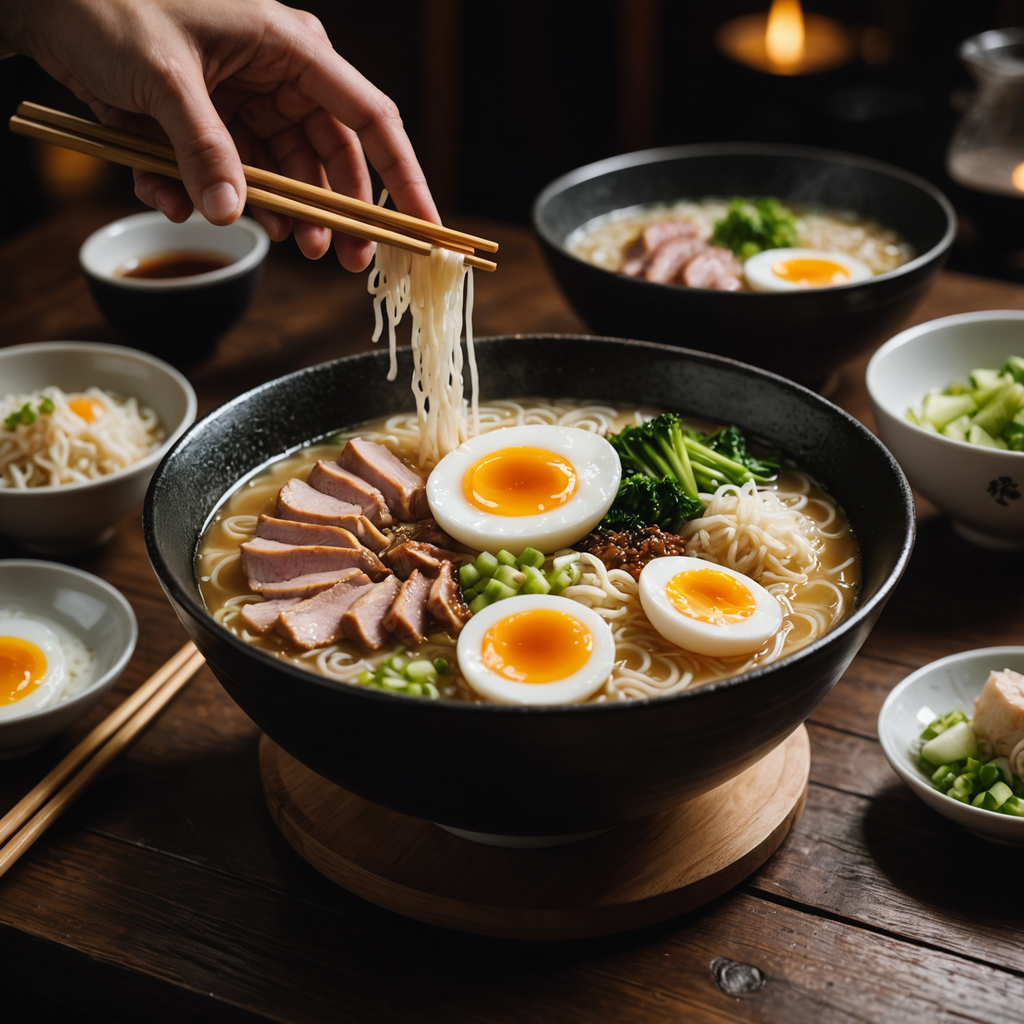
Fourteen consecutive nights in June. Orders placed between 11:05 p.m. and 1:15 a.m., rotating across four late-night operations: the new cookie counter downtown, a shawarma place near Stone Road, an app-only wings brand operating out of a shared kitchen, and a pho-and-dumpling spot that quietly stays open to 1 a.m. and always has.
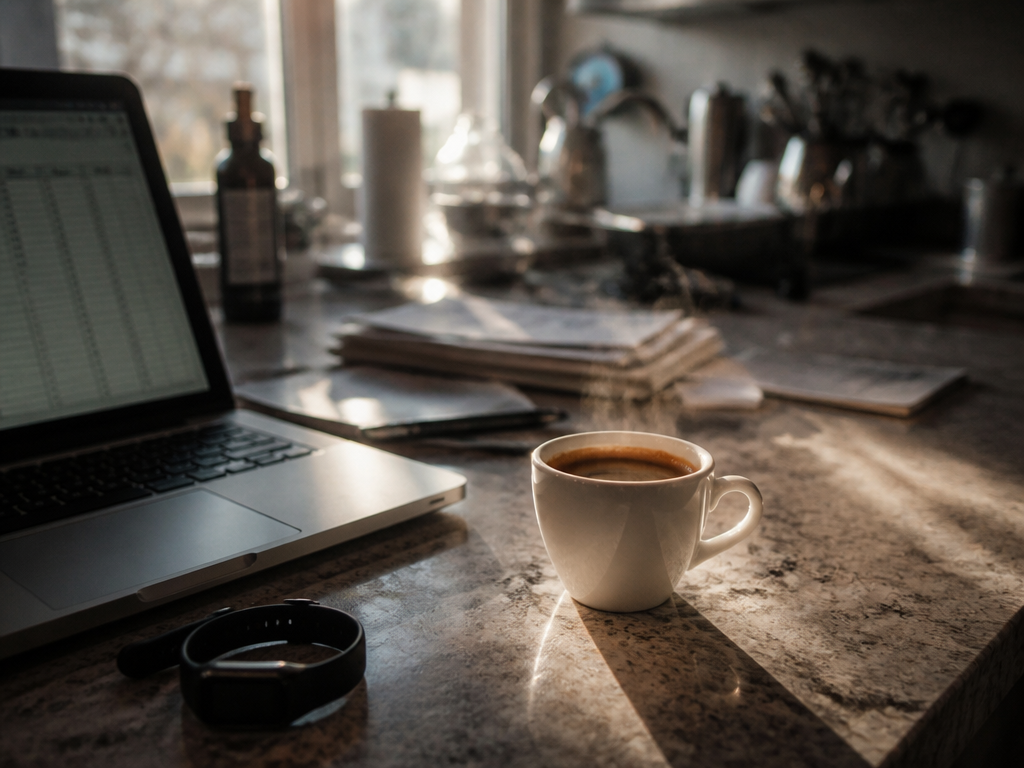
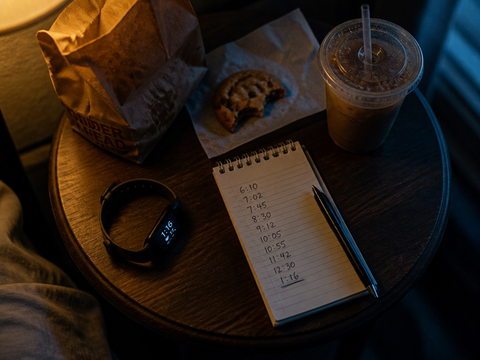
Lights out within 45 minutes of the last bite. Sleep onset latency came from a wrist wearable, cross-checked against a bedside notepad where I wrote the time I last remembered being awake. Baseline came from the previous two weeks on the same device, same room, same bedtime window.
Here is what's wrong with that. It's one person, one palate, one body. Nothing was blinded — I knew exactly what I'd ordered, and I am not neutral about cold brew. Nothing was randomized; I picked each night's order the way anyone picks, by craving. Wearable sleep-onset estimates are soft, plausibly ±10 minutes, which means small differences in this data mean nothing. I threw out two nights that involved a beer. Fourteen nights is a fortnight, not a study.
I'm reporting it anyway because the effect I found isn't small.
The numbers
| Night type | Nights | Median arrival | Caffeine ordered | Median sleep onset |
|---|---|---|---|---|
| No delivery (baseline) | 14 | — | 0 mg | 17 min |
| Food only, no drink | 6 | 26 min | 0 mg | 22 min |
| Food + decaf or hot chocolate | 3 | 24 min | ~10 mg | 24 min |
| Food + coffee, chai, or matcha | 5 | 33 min | 65–205 mg | 58 min |
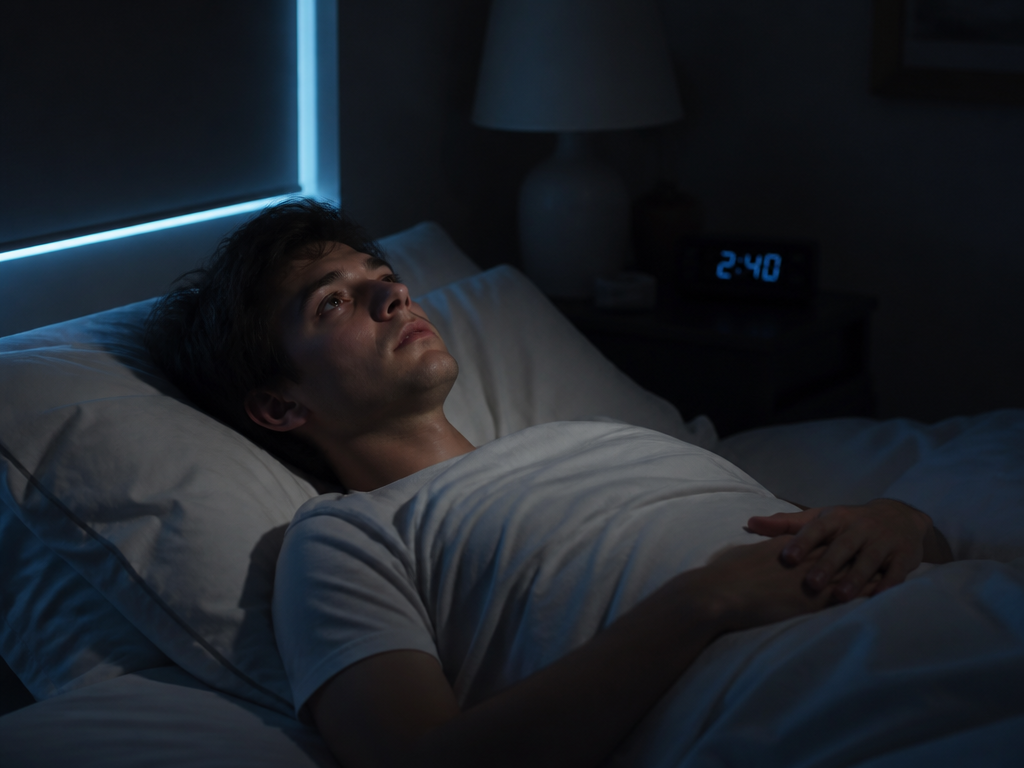
Food-only nights cost me five minutes against baseline, which is inside the noise. Decaf nights cost me seven, also inside the noise. The nights I ordered something with caffeine in it cost me forty-one minutes, and the worst single night — a 12 oz cold brew at 11:50 p.m., roughly 205 mg — put me at 94 minutes staring at the ceiling with a completely settled stomach.
The mechanism, which is boring
Caffeine's half-life sits around five hours in most adults. That 205 mg cold brew at 11:50 p.m. still had something in the neighbourhood of 100 mg circulating at 4:50 a.m. The cookies were digested. The coffee was still working.
What surprised me was the middle tier. I'd mentally filed the dessert drinks as harmless — they arrive in the same bag as the cookies, they're sweet, they read as a treat rather than a stimulant. A large chai latte ran about 70 mg on the menu board. A matcha, about 65 mg. Those nights weren't as bad as the cold brew nights, but they weren't clean either: 43 and 47 minutes to sleep, both well outside my baseline range.
There's a third thing I can describe but can't quantify. The doorbell at 12:40 a.m., the hallway light, the phone in my hand tracking a driver for the last four blocks — that's an arousal sequence, and it happens on every delivery night regardless of what's in the bag. It's probably folded into that five-minute food-only penalty. I have no way to separate it out, and I'm not going to pretend otherwise.
Four operations, four different failure modes
Judged on the things that actually matter after midnight — arrival honesty, temperature on the doorstep, and what they push at checkout:
The cookie counter runs its own drivers inside a tight radius and stays open to 2 a.m. Median arrival 24 minutes, no order over 31. I probed one delivery at 51°C, which is genuinely warm, not warm-adjacent. "The whole model only works if the last order of the night is as good as the first," the manager told me on a Tuesday, restocking a case at 12:15 a.m. It's the best delivery of the four and the worst checkout: they ask about coffee every single time, and at $4.25 a cookie or $22 for six plus a $3.99 fee, the drink is the easiest upsell on the menu.
The shawarma place uses platform drivers. Median 38 minutes, food at 44°C, one platter at $16.50 that arrived legitimately cold. It wins on sleep by pure omission — there is no coffee to order.
The wings brand exists only inside an app. Median 47 minutes, one order at 71, and a 31°C delivery I ate standing over the sink out of spite. Nobody at that address is accountable to you in any way you can find.
The pho spot was the quiet competent one: median 33 minutes, soup still hot enough to steam the lid, and the only caffeinated option is jasmine tea at maybe 25 mg.
The winner
Order from the place that owns its drivers. Decline whatever they offer you to drink with it.
The cookie counter is the best late-night delivery in this city right now and the one most likely to cost you an hour of sleep, and those two facts are not in tension — they're the same fact. It's good at the last-order-of-the-night business, and part of being good at that business is selling you a coffee at midnight.
Who this is for
If you order late two or more nights a week and you have an 8:30 lab, this is worth ninety seconds of your attention: the swap costs you nothing. Same food, same hour, decaf or nothing, and you buy back most of an hour.
If you order once a month, don't restructure anything. One 58-minute night in thirty is not a problem worth solving.
If you already fall asleep in eleven minutes regardless of what you've eaten — some of you do, and I resent you — this changes nothing for you.
And if your real late-night issue is the screen rather than the cup, this piece is a distraction from your actual problem.
What I couldn't test
I trusted menu boards for caffeine figures and never measured a cup myself; decaf in particular ranges roughly 3 to 18 mg depending on the shop, and I have no idea where any of these land. I never once ordered a caffeinated drink without food, so I can't separate the caffeine effect from a sugar effect. Every night was June — snow will wreck all four of those arrival numbers, and the ghost kitchen has the least slack to absorb it. I didn't test weekends against weekdays. And a fourteen-night sample from a single sleeper is a story, not a finding.
The honest takeaway
The new counter downtown is a good addition to a city that has been badly served after midnight, and its arrival numbers back that up. Every new opening in this category will be judged on temperature and timing, and this one passes both.
But the thing people warn each other about at 1 a.m. is the wrong thing. I ate cookies, wings, soup and shawarma at hours I'd been told would ruin me, and slept about as well as always — right up until the nights something arrived in a cup.
The cookie was never the problem. The cup beside it was.