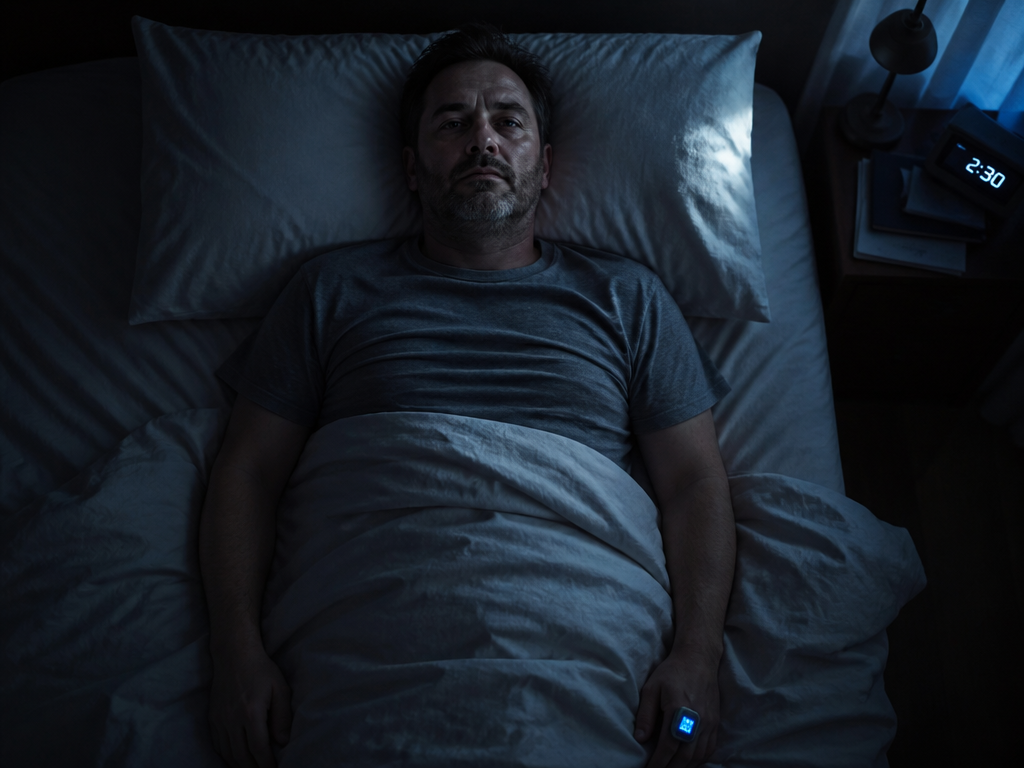
If you wake up tired after eight hours in bed, snap at people before noon, and lose the thread of sentences halfway through, a sleep apnea diagnosis is the thing standing between you and an explanation. I went looking for mine. Over six weeks I did both tests doctors order — the at-home version and the full in-lab study — and tracked what each one actually measured, what it cost me in sleep and dignity, and what the numbers said.
Here is the verdict in one sentence: for most people with classic snoring-and-fatigue symptoms, the home test is the faster, cheaper, less miserable way to get diagnosed — but it can only confirm apnea, never rule it out, and that distinction is the whole game.
The rest of this is the long version, organized the way I came to understand it: not by test brand or price, but by following a single breath through the body and watching where each sensor clips on.
Start with the breath, because the tests do
Sleep apnea is not a mystery disease. It is a plumbing problem that happens to occur while you are unconscious. The reason there are two different tests — and the reason one is more thorough than the other — is that the failure can happen at several points along the airway, and each point leaves a different fingerprint.
So follow the air.
Stage one: air enters
A breath starts at the nose or mouth. This is the first thing both tests measure, and it surprised me how crudely. The home device gave me a soft plastic cannula — the same nasal prong you'd see on hospital oxygen, except this one doesn't deliver anything. It reads pressure changes as you inhale and exhale. The in-lab study added a second sensor, a thermistor, a tiny temperature wire that sits below the nostrils and detects the warmth of exhaled air. Two sensors for the same job, because airflow is the headline number and they want redundancy.
What they are watching for here is simple: does air actually move? A complete stop in airflow for ten seconds or longer is an apnea. A partial drop — airflow down by at least 30% — paired with a consequence downstream is a hypopnea. The "ten seconds" is not arbitrary; it is the floor at which a pause starts to matter physiologically.
Stage two: air travels down the throat
This is where it goes wrong for most people, and neither test puts a camera down your throat to watch it. Instead they infer it. When you lie down and your muscles relax into deep sleep, the soft tissue at the back of the throat — the soft palate, the base of the tongue, the pharyngeal walls — can sag inward. In obstructive sleep apnea, the most common kind, this tissue collapses and seals the airway shut while you keep trying to breathe.
The tell is effort without result. Both tests strapped elastic bands around my chest and my belly — respiratory inductance plethysmography bands, which sound exotic but are just stretchy loops that measure expansion. When the chest and abdomen are heaving but the airflow sensor reads nothing, that's the signature of obstruction: the body straining against a closed door.
This matters because there's a rarer cousin, central sleep apnea, where the brain simply forgets to send the breathe signal. In that case the bands go still too — no effort, no airflow. The difference between "trying and failing" and "not trying at all" is the difference between a throat problem and a brainstem problem, and it changes treatment entirely. The home test can see this distinction in a rough way. The lab test sees it clearly.
Stage three: oxygen drops
Here is the consequence that makes apnea dangerous rather than merely annoying. When the airway is blocked, no fresh oxygen reaches the blood. Within seconds, blood oxygen saturation starts to slide.
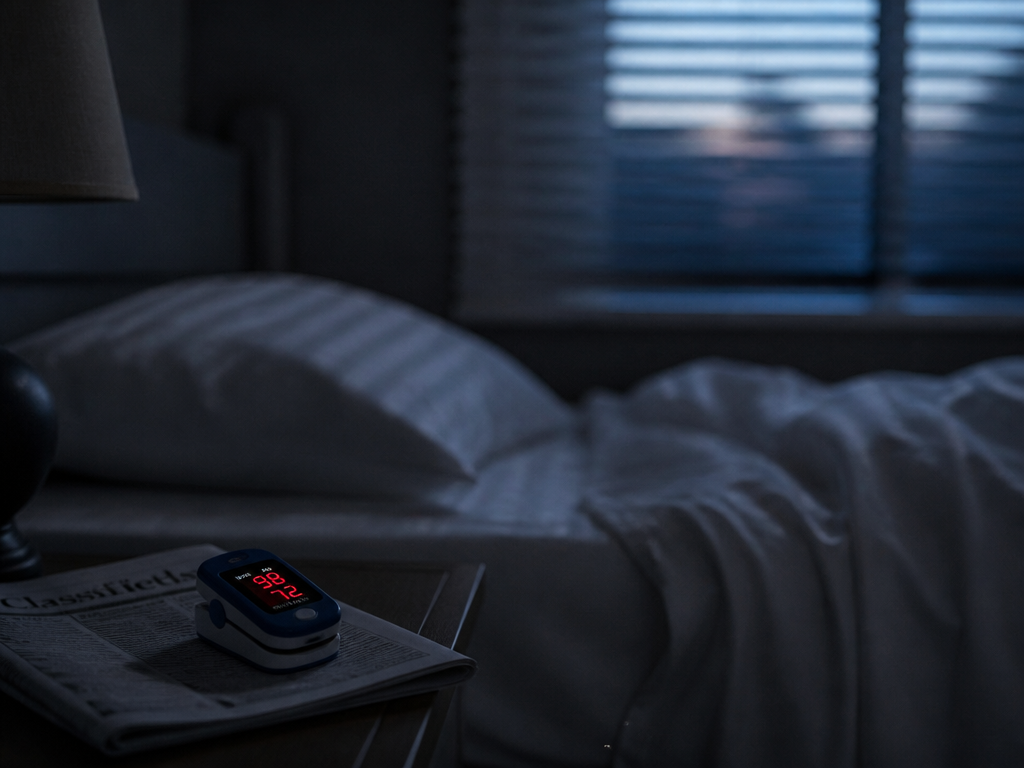
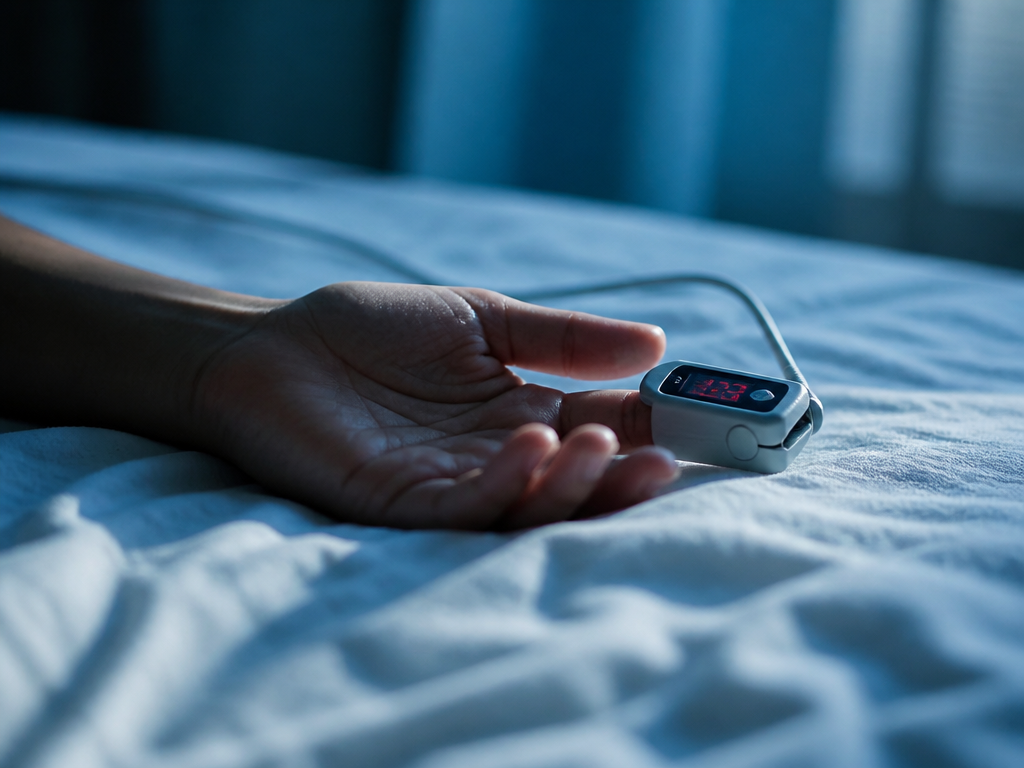
Both tests measured this the same way, with a pulse oximeter clipped to a fingertip — the glowing red clothespin you've seen in every emergency room. A healthy reading sits at 95% or above. During my home study, the data later showed dips into the high 80s. Each dip is the body being briefly, repeatedly starved. Do that hundreds of times a night for years and you understand why untreated apnea is linked to high blood pressure, atrial fibrillation, and stroke — the cardiovascular system never gets to rest because it keeps getting alarmed awake.
Oxygen desaturation is also the second half of the hypopnea definition: a partial airflow drop counts as an event only if it's accompanied by either an oxygen dip or an arousal. The sensors don't trust airflow alone. They want to see harm.
Stage four: the brain reacts

When oxygen falls far enough, the brain does its job and rouses you — usually not to full waking, just a brief surge of alertness that reopens the airway. You gasp, the tissue pulls back, air rushes in, and you sink back under without ever knowing it happened. Then it happens again. This is why apnea patients feel they slept all night and feel nothing for it: the sleep was shredded into hundreds of pieces.
This is the single biggest difference between the two tests. To detect those micro-arousals, you have to watch the brain directly, and that requires EEG — electrodes on the scalp reading electrical activity. The home test has no EEG. It cannot see your brain wake up. It can only infer disruption from oxygen and airflow. The in-lab study had me wired with the full montage: electrodes on the scalp, beside the eyes (to track eye movement and sleep stage), and on the chin (for muscle tone), plus leads on the legs to catch periodic limb movements that masquerade as restlessness.
The lab can therefore tell you not just that you stopped breathing, but what stage of sleep you were in when it happened, and whether your brain registered it. The home test gives you the plumbing report. The lab gives you the plumbing report plus the neurology.
Now the pathway: how you actually get tested
The referral
You don't book a sleep study the way you book a haircut. In most systems a primary care doctor or a sleep specialist has to send you, usually after a short screening conversation and a questionnaire — I filled out the STOP-BANG, which scores snoring, tiredness, observed pauses, blood pressure, BMI, age, neck size, and sex. A high score doesn't diagnose anything; it just says you're worth testing. Mine flagged enough boxes that my doctor ordered the home test first, which is the standard opening move for someone with no major heart or lung disease.
The questionnaire took four minutes. The wait for the device took eleven days.
The home test (HSAT)
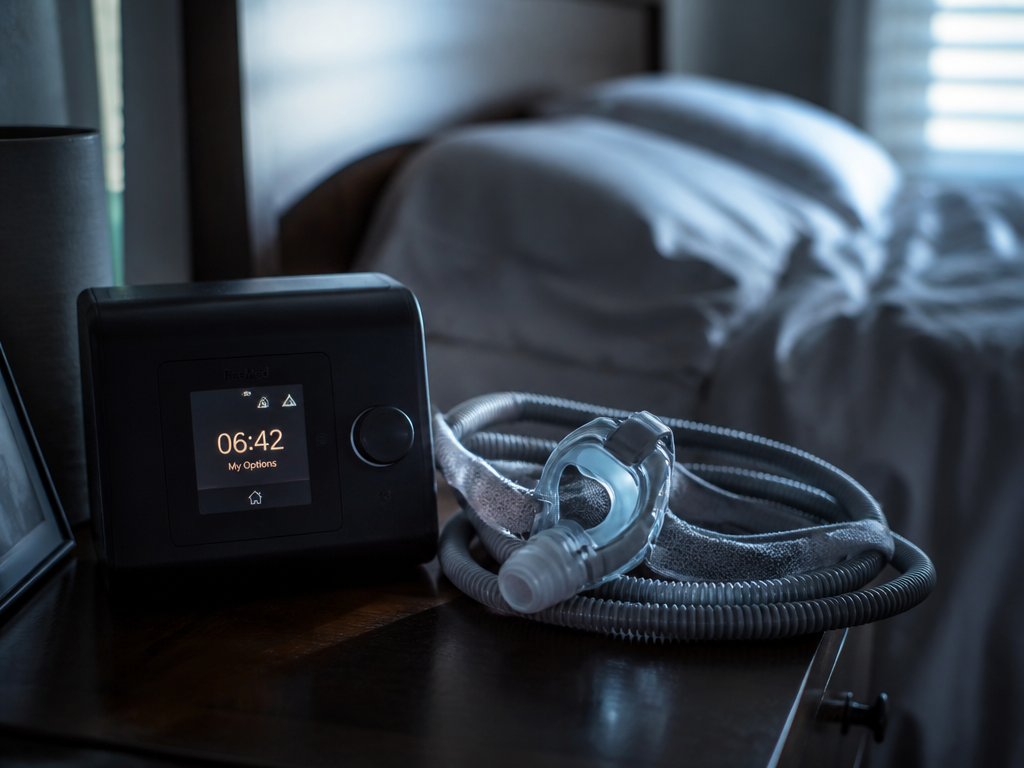
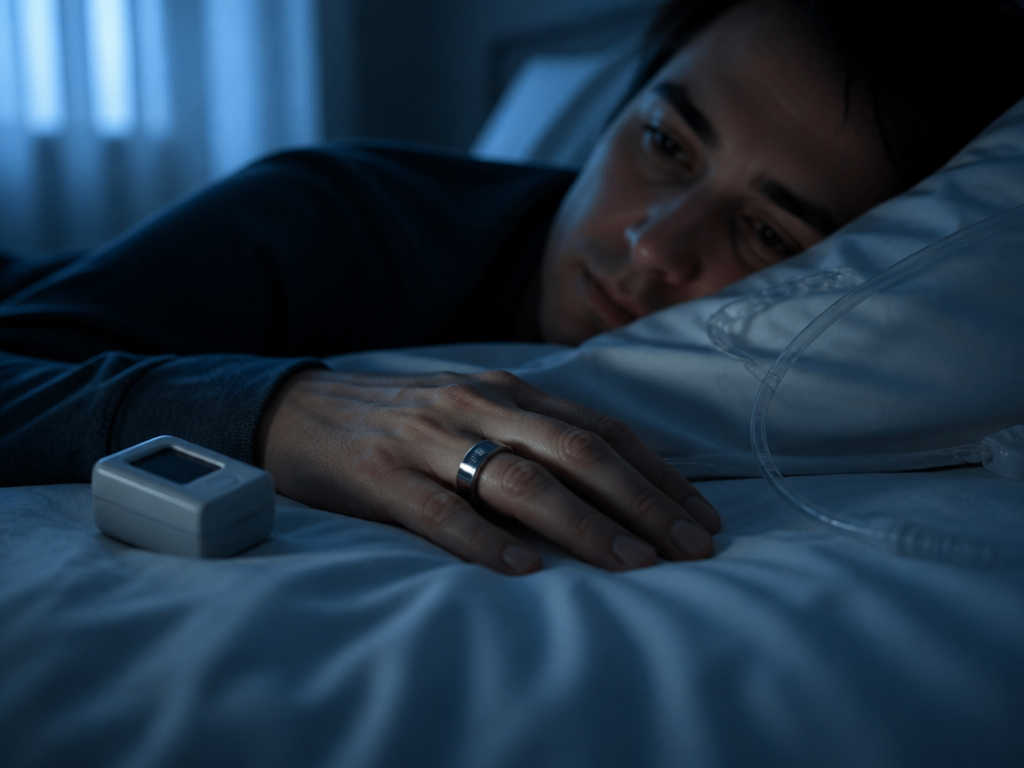
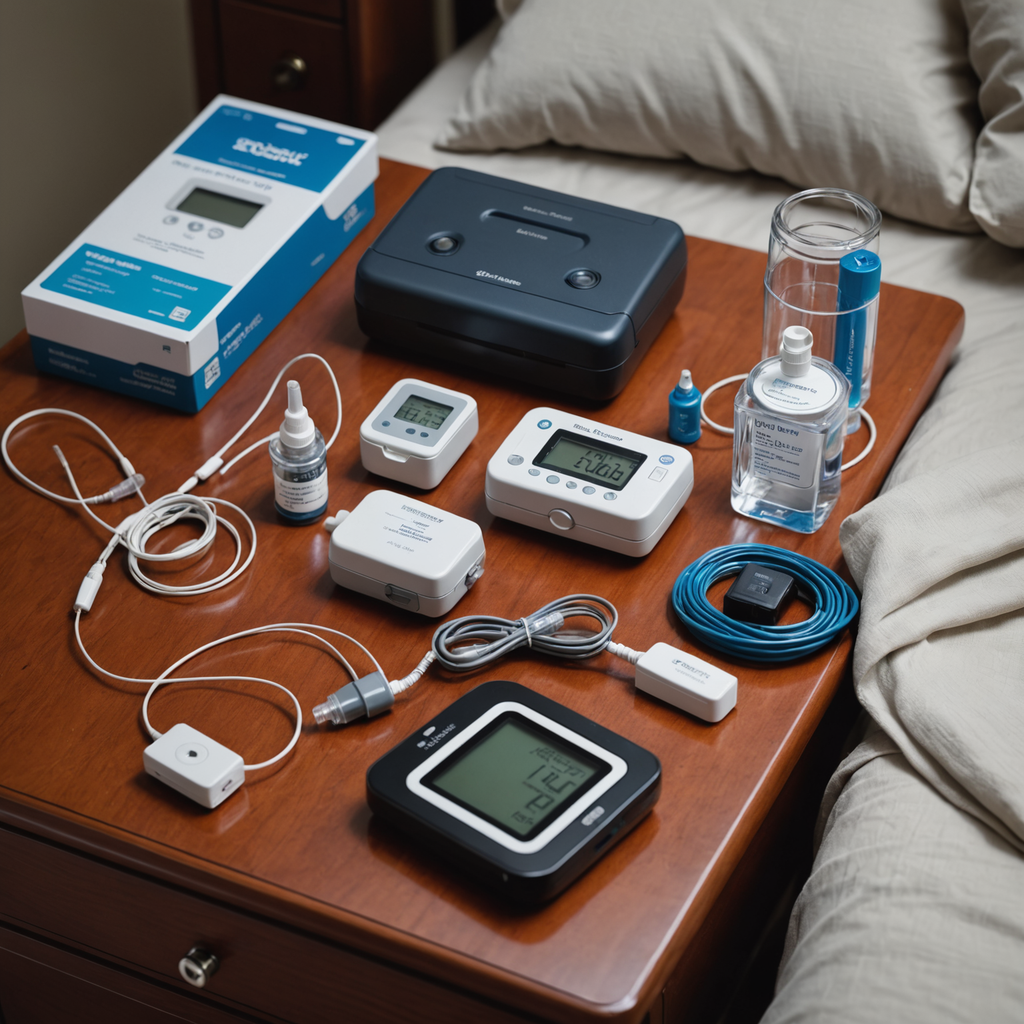
The home device arrived in a padded case the size of a hardback book. Setup instructions, the chest band, the finger probe, the nasal cannula, and a small recording unit that velcros to the chest band. I attached everything in my own bathroom mirror, lay down in my own bed, and slept — or tried to. The first night I was so aware of the cannula that I barely slept four hours, which is a real limitation nobody warns you about: anxiety about the test can ruin the test.
I did two nights. The unit recorded airflow, respiratory effort, oxygen saturation, heart rate, and body position. No technician, no wires to a wall, no one watching. In the morning I packed it back in the case and dropped it at the clinic. A sleep physician scored the data and I had results in under a week.
What it got right: it was genuinely low-friction. My own pillow, my own room, my own bedtime. For a problem that only happens when you're relaxed, removing the strangeness of a lab helps the data look like a normal night.
What it can't do: it cannot rule apnea out. Because it counts events against recording time rather than actual sleep time — it doesn't know when you were truly asleep, having no EEG — it tends to underestimate severity. If a home test comes back negative but your symptoms are loud, the next step is the lab, not relief.
The in-lab test (polysomnography, or PSG)
Three weeks later I checked into a sleep lab at 8:30 p.m. The room was deliberately unremarkable — a bed, a lamp, a private bathroom, a curtain, a camera in the corner with a small red light. A technician spent forty-five minutes attaching electrodes, measuring my scalp with a grease pencil and dabbing each contact point with paste before pressing the leads on. By the end I had wires running from my head, face, chin, chest, belly, fingers, and legs, gathered into a bundle at my shoulder so I could roll over. Then the lights went off and a voice came through a speaker: try to sleep normally.
I did not sleep normally. Who could. But I slept enough — about five and a half hours, the tech told me — and the machine captured everything: brain waves, eye movement, muscle tone, airflow by two sensors, breathing effort, oxygen, heart rhythm, leg movement, snoring volume, and sleeping position, all time-stamped together. A human watched the live feed and could have stepped in if anything went wrong, or — in a split-night study, which mine wasn't — could have fitted a CPAP mask partway through to test treatment on the spot.

What it got right: completeness. Because it knew exactly when I was asleep and in which stage, it counted events against real sleep time. It could separate obstructive from central events with confidence and rule out the imitators — restless legs, narcolepsy, periodic limb movement — that a home test would miss entirely.
What it costs you: a night in a strange bed, the glue still in your hair the next morning, and considerably more money and waiting in most systems.
The comparison, side by side
| Criterion | Home test (HSAT) | In-lab study (PSG) |
|---|---|---|
| What it measures | Airflow, effort, oxygen, heart rate, position | All of that plus brain waves, eye movement, muscle tone, leg movement |
| Can it rule apnea out? | No — only confirm it | Yes |
| Distinguishes obstructive vs. central | Roughly | Clearly |
| Where you sleep | Your own bed | A clinic room with a technician |
| Friction | Low — self-applied, no wires to a wall | High — 45-min hookup, supervised |
| Best for | Uncomplicated, clearly symptomatic cases | Complex history, negative home test, suspected other disorders |
The number it all comes down to: AHI
Both tests produce one headline figure: the Apnea-Hypopnea Index, or AHI — the average number of apneas and hypopneas per hour of sleep. This is the score that gets used to classify severity:
- Under 5: normal
- 5 to 15: mild
- 15 to 30: moderate
- Over 30: severe
The catch I learned the hard way: AHI is only as good as the denominator. The lab divides events by actual sleep hours. The home test divides by total recording time, which is always longer, which mathematically dilutes the score. So a home AHI of 12 might genuinely be a 16 once you subtract the hours you lay awake. This is precisely why a low home number with high symptoms gets escalated to the lab — the math is forgiving in the wrong direction.
I'll be honest about my own limits here: I am one patient with one airway. My two home nights and one lab night are a sample size of, generously, three. I can tell you what the process felt like and what each sensor does; I can't tell you your AHI will behave like mine.
Who each test is for — and who it isn't
The home test is right for you if your symptoms are loud and classic — heavy snoring, witnessed pauses, daytime fatigue — and you have no significant heart failure, chronic lung disease, neuromuscular condition, or history of stroke. It's also the sensible first move if you simply can't face a night in a lab yet and want a fast, low-stakes answer that — if positive — can move you straight to treatment.
The home test is not for you if you have those complicating conditions, if you suspect central rather than obstructive apnea, if you might have another sleep disorder layered on top, or if a previous home test came back clean but you still feel destroyed every morning. In all of those cases the wires are worth it.
The lab study is right for you if you need certainty, you have a complex medical picture, or your case has to be airtight — for a commercial driving license, say, or before surgery. It's also the better choice if you want the option of a split-night, where diagnosis and treatment fitting happen in one visit.
The lab study is overkill if you're a textbook case with no complications and just want to start feeling human again. Starting there means more waiting and more cost for an answer the home test could likely have given you.
If you want one line to screenshot: a positive home test means start treatment; a negative home test with real symptoms means go to the lab.
What I'd tell the version of me from six weeks ago
The fear before testing is mostly fear of the unknown — of wires, of being watched, of being told nothing's wrong when something clearly is. Following the breath through the body fixed that for me. Every sensor I resented at 11 p.m. was just watching one stage of a single failing breath: air in, air down the throat, oxygen out of the blood, brain jolting awake. The tests aren't mysterious. They're a relay, each one timing a leg of the same race.
The rule of thumb I'd hand you tonight: if someone has ever told you that you stop breathing in your sleep, believe them over the way you feel in the morning, and ask your doctor for a test this week — start with the home one.