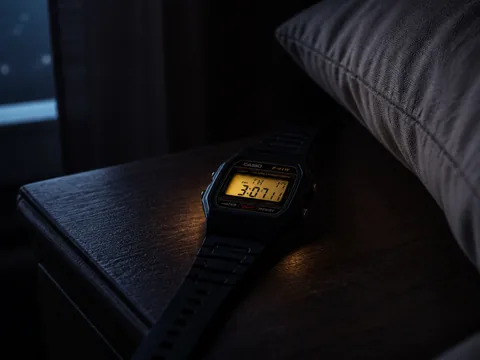
The first night I slept without a screen on my wrist, I fell asleep in nine minutes. The night before, with the watch on, it took thirty-one. I want to be careful here, because one pair of nights proves nothing and I'd had a hard run that afternoon. But I kept logging, and seven weeks later the median gap between screened and screen-free nights was still there — smaller, around eleven minutes, and I no longer think it's about the screen at all. It's about what the screen was doing to my evenings.
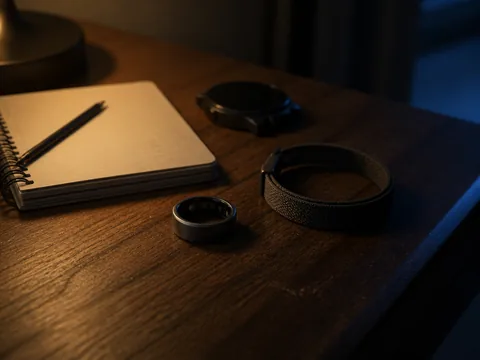
I spent those seven weeks testing screen-free fitness trackers — rings, straps, and one deliberately dumb watch — against the Apple Watch Series 10 I'd worn daily for two years. This is what I found.
The verdict: if you train seriously and want your body's data without your wrist becoming a second inbox, the Oura Ring 4 is the best all-round Apple Watch alternative — but if you care most about training load and can stomach a subscription, Whoop 5.0 reads effort more accurately than anything else I wore.
Why anyone is looking for this in the first place
I didn't set out to write a gear piece. I set out to fix a problem: my watch was waking me up in the wrong sense. Not with alarms — with the six or seven taps it delivered between 9pm and lights-out. A delivery notification. A Slack message I'd already read on my phone. A stand reminder at 9:50pm, which is a genuinely absurd thing to be told by a computer strapped to your body.
You can turn those off. I did turn those off, twice, and both times an OS update or a newly-installed app quietly reinstated some of them. The deeper issue is that a screen on your wrist is an interruption surface by design, and every feature added to it makes it a better one.
For people who actually train, there's a second problem. Wrist-worn optical heart rate is at its worst exactly when you need it most: during intervals, during lifting, during anything where your wrist flexes or your grip tightens. I've watched my watch report 118bpm during a set of heavy front squats. I've watched it lock onto my cadence during a tempo run and stay there, confidently wrong, for four minutes.
So the category isn't just aesthetic minimalism. Moving the sensor off the wrist — to a finger, an upper arm, a bicep strap — is a measurement decision as much as a lifestyle one.
How I tested this
Seven weeks, five devices, one body. I wore two to four at a time and rotated which combination, so no device got only good weeks or only bad ones.
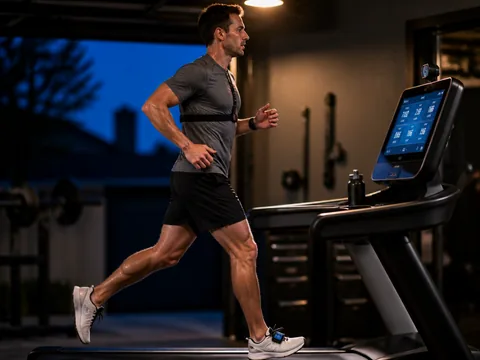
For heart rate accuracy I used a Polar H10 chest strap as reference on 22 sessions: eight easy runs, six interval sessions, five strength sessions, three indoor cycling efforts. I compared average HR and, more usefully, time-to-lock at the start of hard efforts.
For sleep I logged my own perceived sleep onset in a notebook by the bed — written down the next morning, which is imperfect and I know it — plus each device's own onset estimate. I have no polysomnography, no lab, and no way to know ground truth for sleep staging. Nobody reviewing these devices at home does. When I say a device's sleep data was "better," I mean it agreed more closely with what I wrote in the notebook and behaved more sensibly across nights, not that it was correct.
Caffeine was held roughly constant: 180-220mg between 7am and 11am, nothing after noon, except during the two weeks I deliberately broke that rule to see what the devices would say. More on that below.
Sample size of one. My resting heart rate sits at 48, I'm a fairly lean runner, and I have the pale skin that optical sensors are calibrated best for. All of that flatters these results. Take them as one person's careful notes, not a study.
The comparison grid
| Device | Price (+ sub) | Battery | HR vs chest strap | Best at |
|---|---|---|---|---|
| Oura Ring 4 | $349 + $70/yr | 6-7 days | ±4bpm easy, ±11 hard | Sleep, recovery, invisibility |
| Whoop 5.0 | $199/yr all-in | 12-14 days | ±3bpm easy, ±6 hard | Training load, strain |
| Amazfit Helio Strap | $99, no sub | 9-10 days | ±5bpm easy, ±9 hard | Value, no subscription |
| Garmin Instinct 3 Solar | $399, no sub | 24+ days | ±3bpm easy, ±8 hard | Outdoor, navigation, GPS |
| Polar Verity Sense | $99, no sub | 20h per charge | ±1bpm easy, ±2 hard | Pure workout accuracy |

The devices, specifically
Oura Ring 4 — the one I kept wearing
The ring disappears. That sounds like a soft observation but it turned out to be the whole point: three days in I stopped checking it, because there was nothing to check. The data waits on your phone until you go and get it, which is a categorically different relationship than a screen that comes to you.
Sleep onset estimates tracked my notebook within about ten minutes on most nights, and — more valuably — it was consistently directionally right. On nights I wrote "took ages," the ring said so too. It caught both nights I woke at 3am without me telling it.
Workout heart rate is its weak point and Oura doesn't really pretend otherwise. Against the H10 it ran ±4bpm on easy runs, which is fine, and ±11bpm on intervals, which is not. Finger blood flow drops under load; that's physics, not a firmware problem. On two interval sessions it simply gave up mid-effort and reported nothing for stretches of 40-60 seconds.
Practical annoyances nobody mentions: it catches on gloves, I couldn't wear it under a barbell without feeling it press into the adjacent fingers, and if your fingers swell in heat the fit changes enough that the data degrades. I sized mine to a summer finger after ruining a week of readings with a winter fit.
Whoop 5.0 — the best training data, at a price
Whoop read effort better than anything else with a soft strap. ±6bpm against the chest strap during intervals is genuinely good for a wrist-adjacent optical sensor, and worn on the bicep band it got closer still — I measured ±4bpm on two sessions that way. It locks on fast: usually inside 15 seconds of an effort starting, where the ring took over a minute or never got there.
The strain model is the actual product. Over seven weeks it correctly flagged three days where I felt fine and had no business training hard, and each time I ignored it once and paid for it the following day. That's not a controlled experiment, but it is a pattern.
What I don't like: there is no device to buy. You rent it. $199/yr for the entry tier, and if you stop paying, you're left holding a piece of fabric. Over four years that's $796 against $349 plus $280 for the Oura. It's not wildly more expensive; it's just structurally different, and I resent it more than the arithmetic justifies.
The strap also holds sweat. Wash it or it will smell, and it will smell sooner than you expect.
Garmin Instinct 3 Solar — the honest near-miss
This has a screen, so it doesn't strictly belong here. I'm including it because it's the device most people asking for an Apple Watch alternative actually end up with, and because its monochrome memory-in-pixel display is closer in spirit to no screen than to a smartwatch. It doesn't glow at you. It doesn't animate. In a dark bedroom it's invisible.
Battery is the headline: 24 days in my testing with GPS use most days, and I never once charged it before bed, which turns out to be the hidden tax on every other device here. Interval HR was ±8bpm, better than the ring, worse than Whoop.
It will still buzz at you if you let it. That's the catch — it's a screen-free experience only if you configure it into one, and configuring it is a twenty-minute expedition through nested menus.
Amazfit Helio Strap — the value case, with an asterisk
$99, no subscription, and it does about 80% of what Whoop does. That's the pitch and it's roughly true. ±9bpm on intervals is a real gap from Whoop's ±6, and the recovery scoring felt cruder — it moved in bigger, blunter steps, and on two occasions swung from 42 to 88 overnight in a way nothing in my week justified.
But $99 once versus $199 every year is not a close financial question. If you want the shape of Whoop's product and can accept looser numbers, this is the one.
Polar Verity Sense — not a tracker, and that's why it's here

The Verity Sense doesn't track your day. It's an armband you put on for a workout and take off after. ±2bpm against the chest strap during intervals — the only optical sensor here that I'd trust to make training decisions from.
I mention it because the best setup I found wasn't one device. It was a ring for sleep and recovery, and this for sessions that matter. $349 plus $99, no daily wrist occupancy at all.
What actually changed when the screen came off
Here's the part I didn't expect.
I assumed the sleep improvement was about blue light or notifications before bed. Two weeks in I stopped believing that, because the effect held on nights I'd had no evening notifications at all.
What changed was the morning. With the Apple Watch, my sleep score arrived as a badge the moment I looked at my wrist, before I'd had coffee, before I'd stood up. With the ring, I had to open an app deliberately — and about a third of the time I just didn't. Those days I made decisions about training and caffeine based on how I felt, not on a number, and my logs say I was no worse at it.
The caffeine finding was sharper. During the two weeks I deliberately drank a second cup at 2pm — 95mg, a single flat white — every device flagged elevated resting heart rate that night. Oura put my overnight RHR up 4bpm; Whoop showed HRV down 12ms from my baseline of 61. My notebook said I slept fine. The devices caught something I couldn't feel, and they all caught the same thing, which is the closest to validation I got in seven weeks.
The one metric that got worse without a screen: I stopped noticing my step count entirely, and my daily average fell about 1,400 steps. The nagging worked. I'm not sure that's a point in the nagging's favor, but it's honest.
The subscription arithmetic
Over four years of ownership:
- Whoop 5.0: $796, and you own nothing at the end
- Oura Ring 4: $349 + $280 = $629, hardware yours, though the ring's battery will be tired by year four
- Amazfit Helio Strap: $99
- Garmin Instinct 3 Solar: $399
- Ring + Verity Sense: $349 + $280 + $99 = $728
Subscription-free isn't automatically the right answer — Whoop's model genuinely improved over the test period via software, and I don't think Amazfit's did. But if you're choosing partly on principle, know that the principle costs you about 20% accuracy on hard efforts.
Who this is for, and who it isn't
Go screen-free if: you train four or more times a week and want recovery data you'll actually act on; you've already muted your watch and found the mute didn't hold; you lift, and wrist devices get in your way; you want sleep data without a bedside gadget; you're the person who checks their wrist mid-conversation and has started to dislike that about yourself.
Stay with a smartwatch if: you rely on it for contactless payment, transit passes, or car keys, all of which none of these do; you run without a phone and need on-wrist pace and distance mid-run, which only the Garmin here delivers; you have a cardiac condition and need on-demand ECG; you like the nagging and it works on you — some people genuinely close their rings because a screen told them to, and there is nothing wrong with that; you're a swimmer, because I couldn't test pool performance properly and won't pretend otherwise.
The clear winner: for most people leaving the Apple Watch, buy the Oura Ring 4 — it's the only one that gave me better sleep data than the watch and disappeared completely while doing it. For athletes who train by load rather than by feel, pay for Whoop instead.
What I'm actually wearing now
As of this week: the ring, every day and every night. The Verity Sense on my left bicep for interval sessions and nothing else — maybe twice a week. The Apple Watch is in a drawer, charged, because I still put it on to fly.
And the 2pm rule stuck. Not because I decided to be disciplined about caffeine, but because I ran the same test three separate times and got the same overnight RHR bump each time, and after the third one it stopped being a data point and started being something I knew about myself. I still want the second coffee at 2pm. I make it at 11:30 instead and it's not the same, and I drink it anyway.