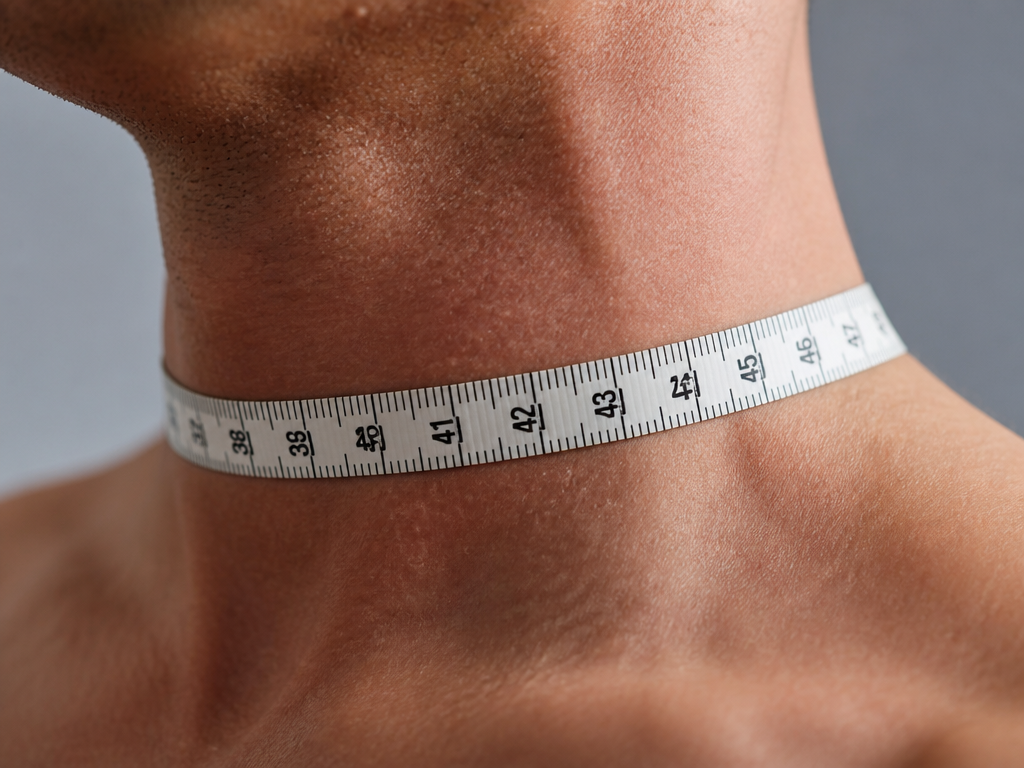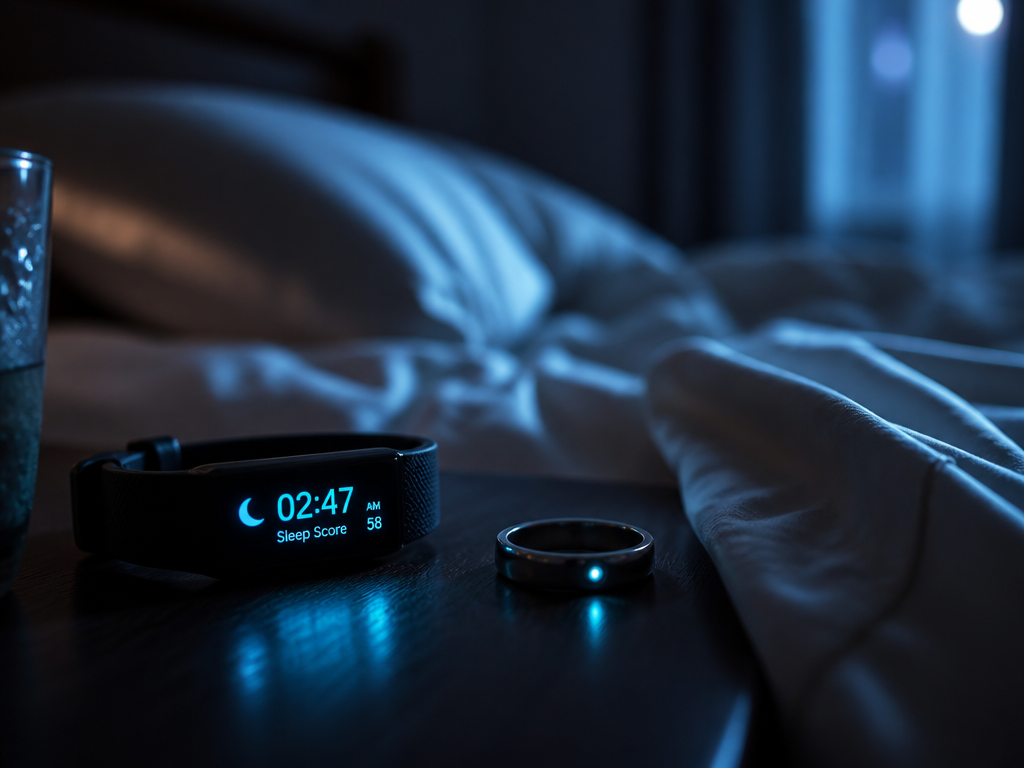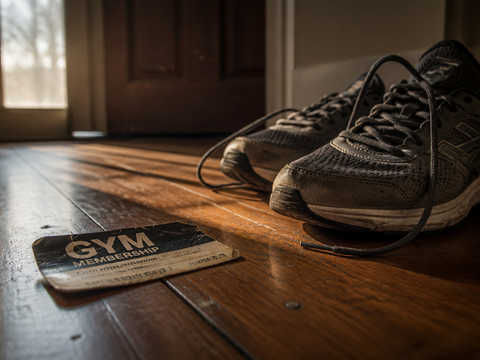
The question I kept circling was narrow and a little humiliating: after fifteen years of joining gyms and quitting them, is my inability to stick with exercise a defect of character I could fix with enough resolve, or something closer to a factory setting I was issued at birth? The literature on neuroticism and exercise offers an uncomfortable third answer — not quite either, and not quite neither.
Here is the verdict before the reasoning, because you deserve to know where this lands: the best genetically informed read of the evidence suggests that neuroticism does causally push people away from vigorous exercise, but the push is small, it targets the hard stuff rather than movement in general, and a second trait — conscientiousness — appears able to absorb most of it. Personality shapes whether you train. On the current evidence, it does not sentence you.
Why this is a public-health question, not a self-help one
Before the personality mechanics, the scale of the problem. In 2024, a WHO-led analysis in The Lancet Global Health estimated that about 31% of adults worldwide did not meet recommended physical-activity levels in 2022 — up from roughly 26% in 2010 — and projected the figure to reach 35% by 2030 if the trend holds. Those are not small numbers dressed up. Inactivity tracks with cardiovascular disease, type 2 diabetes, several cancers, and all-cause mortality, and the curve is bending the wrong way while gym memberships climb. A lot of people sign up. A lot of people stop.
That gap — between intention and adherence — is where personality gets interesting. If the reason people quit were purely situational (time, money, injury, a bad winter), we would expect the quitting to be more or less randomly distributed across temperaments. It isn't. It clusters. And once a behavior clusters by disposition, the natural next question is whether the disposition is causing the behavior or merely traveling alongside it.
The correlation everyone already had
That neurotic people exercise a little less is not news. Decades of survey work — people fill out a Big Five questionnaire, then report their weekly activity — have produced a stable, if modest, pattern. Conscientiousness is the reliable positive: planners move more. Neuroticism is the reliable negative: the anxious, easily-stressed, emotionally reactive end of the scale reports less physical activity, especially the strenuous kind. Extraversion tilts positive; openness and agreeableness sit near zero and wobble by study.
The effects are real but small — correlations in the neighborhood of 0.1, the range where a trait matters for populations and barely predicts any single person. More importantly, correlation of this shape is nearly useless for the question I actually cared about. A neurotic person might exercise less because neuroticism makes vigorous effort feel more threatening. Or the causal arrow could run backward: sedentary living might worsen mood and stir up anxiety, inflating measured neuroticism. Or some third factor — chronic illness, poverty, poor sleep, childhood adversity — could be quietly generating both the trait and the inactivity. Survey correlation cannot referee between these. For years, that is where the topic stalled.
What genes let you ask that a survey can't
The method that broke the stall is called Mendelian randomization, and it is worth understanding rather than nodding past, because it is doing the real work here.
Start with a fact of reproduction: the particular gene variants you inherit are shuffled roughly at random when your parents' DNA recombines. Nobody chose your variants to match your income, your upbringing, or your gym habit. So if researchers can find common genetic variants — single-nucleotide polymorphisms, or SNPs — that are reliably associated with higher neuroticism, they can use those variants as a stand-in for the trait. The technical term is an instrumental variable. People carrying more of the neuroticism-raising variants are, in effect, assigned a nudge toward higher neuroticism at conception, independent of the messy life circumstances that plague ordinary correlation. It approximates a randomized trial that no ethics board would ever run: randomize people to be more neurotic, then watch how much they exercise.

The approximation rests on three assumptions, and honest analyses spend most of their length defending them:
- Relevance — the SNPs are genuinely associated with neuroticism. With large genome-wide association studies now identifying scores of neuroticism-linked variants, this one is on solid ground.
- Independence — the variants aren't correlated with confounders like socioeconomic status. Plausible, but not guaranteed; population structure can sneak in.
- Exclusion restriction — the variants affect exercise only through neuroticism, not by some other biological route. This is the fragile one. A gene nudging neuroticism might also, separately, influence energy metabolism or reward sensitivity, a problem called pleiotropy. Careful studies test for it and discard instruments that misbehave, but no one can fully close the door.
None of this makes Mendelian randomization a truth machine. It makes it a way to ask the causal question with a different, non-overlapping set of weaknesses than surveys have — which is exactly why convergence between the two methods is more persuasive than either alone.
What the causal picture actually shows
When you point this machinery at neuroticism and physical activity, the result is not a dramatic reveal. It is a small, directional confirmation with a crucial wrinkle.
The genetic analyses point to a genuine causal effect of neuroticism reducing vigorous or strenuous exercise — the running, the heavy lifting, the deliberately uncomfortable sessions. The effect on overall movement, or on light activity like walking, is weaker and in places statistically indistinguishable from zero. This distinction matters more than it first appears. It suggests the mechanism isn't a general aversion to motion but something more specific: an aversion to the acute discomfort, elevated heart rate, and bodily alarm signals that vigorous effort produces and that a threat-sensitive nervous system reads as danger. Neuroticism, in other words, may not make you lazy. It may make hard exercise feel worse, moment to moment, than it feels to a calmer person.
The trait that pays the bill
The wrinkle is conscientiousness. Across both correlational and genetically informed work, conscientiousness does more than independently predict activity — it appears to blunt neuroticism's negative pull. A highly neurotic, highly conscientious person often exercises about as much as a low-neuroticism peer. The planning, routine-building, and follow-through bundled into conscientiousness seem to route around the discomfort that neuroticism amplifies. You still feel the alarm; you go anyway, because the calendar said so and you are the sort of person who does what the calendar says.
A rough map of where each Big Five trait sits, drawn from the meta-analytic and causal literature rather than any single study:
| Trait | Direction on activity | Rough strength | How confident |
|---|---|---|---|
| Conscientiousness | Positive | Small–moderate, most reliable | High |
| Neuroticism | Negative (esp. vigorous) | Small, causal signal present | Moderate |
| Extraversion | Positive | Small | Moderate |
| Openness | Mixed / near zero | Negligible | Low |
| Agreeableness | Near zero | Negligible | Low |
Read that table as topography, not fate. "Small" means it shifts population averages and barely moves your personal odds. The two rows doing real work are the top two — and they interact.
Where the answer becomes "it depends"
I promised honesty about the soft spots, and there are several.
It depends on intensity. The causal signal is concentrated in vigorous activity. If your goal is simply to be less sedentary — a walk, a stretch, standing more — the neuroticism headwind may be faint to nonexistent. The trait's grip loosens as the exercise gets gentler.
It depends on how activity was measured. Much of this literature leans on self-reported exercise, and self-report is contaminated in a way that should worry us specifically here: neurotic people may rate their own effort and consistency more harshly, reporting less activity than an accelerometer would record. When objective wearable data enters the picture, some associations shrink. It is possible a slice of the "neurotic people exercise less" finding is partly "neurotic people say they exercise less."

It depends on ancestry — and this is the hard limit. The genome-wide studies that supply the instruments were built overwhelmingly on participants of European descent. The variants that index neuroticism in that population may index it poorly, or differently, elsewhere, and allele frequencies vary across ancestries. Every causal claim above should carry an asterisk: demonstrated primarily in people of European ancestry. Extending it to everyone is an assumption, not a finding, and the field's failure to diversify its genetic samples is a real constraint on what can be said.
It depends on the subgroup, sometimes inconclusively. When analyses slice by sex, age, or baseline activity, the estimates get noisier and the confidence intervals widen. Some subgroups show the effect clearly; others return results too imprecise to interpret. "We don't know yet" is the correct reading of those cells, and it is not a failure of the method — it is the method being honest about its resolution.
What I couldn't test
I want to be clear about my own limits, because this piece began as a personal reckoning and it would be dishonest to let it drift into borrowed authority.
I am one person. I do not have my own polygenic scores for neuroticism or conscientiousness sitting in a spreadsheet, so I cannot check whether my personal genetics match my personal history of quitting. I tracked my own gym attendance across a recent stretch — a modest streak, then the familiar collapse around week six — but that is an anecdote about one moderately neurotic, unreliably conscientious human, and it proves precisely nothing about causality. My sample size is me. My instrument for measuring my own neuroticism is a questionnaire I filled out while, presumably, being neurotic about it. I cannot run a Mendelian randomization study from my kitchen, and neither can anyone selling you a personality-based fitness plan. What I can do is read the causal literature carefully and refuse to inflate it, which is most of what good science writing is.
Who should take this seriously — and who should file it away
Take it seriously if you design interventions or study behavior for a living. The buffering result is the actionable part: if conscientiousness-style scaffolding — fixed schedules, implementation intentions, external accountability, defaults that remove in-the-moment choice — can absorb neuroticism's drag, then interventions might be matched to temperament rather than pushed uniformly. That is a testable, non-trivial idea, and it is where the research earns its keep.
Take it seriously if you have spent years reading your own inconsistency as moral failure. The finding that hard exercise may simply feel worse to a threat-sensitive nervous system is not an excuse, but it is a recalibration. You are not weak for finding the thing hard. You are, possibly, someone for whom the thing is genuinely harder — which changes the design problem from "summon more willpower" to "build a structure that doesn't depend on willpower."
File it away if you want a genetic alibi. The effects are small; "my neuroticism made me skip the gym" is not supported by anything here, because the trait shifts averages, not individuals. And file it away if you want a precise personal prediction. This literature describes populations of European-ancestry adults with wide error bars around the interesting bits. It cannot tell you, specifically, whether you will make it to Friday.
If there is one line to screenshot: neuroticism raises the price of vigorous exercise; conscientiousness quietly pays it. That is the whole finding compressed, hedges included — a price, not a verdict, and a bill someone else in your own personality may already be covering.
The myth, and the more accurate version
The myth: anxious, high-strung people don't exercise because they lack the willpower that steadier people simply have.
The more accurate version: anxious people face a small, real genetic headwind that makes the hardest exercise feel more threatening — and how conscientious they happen to be largely decides whether that headwind ever reaches the shore.