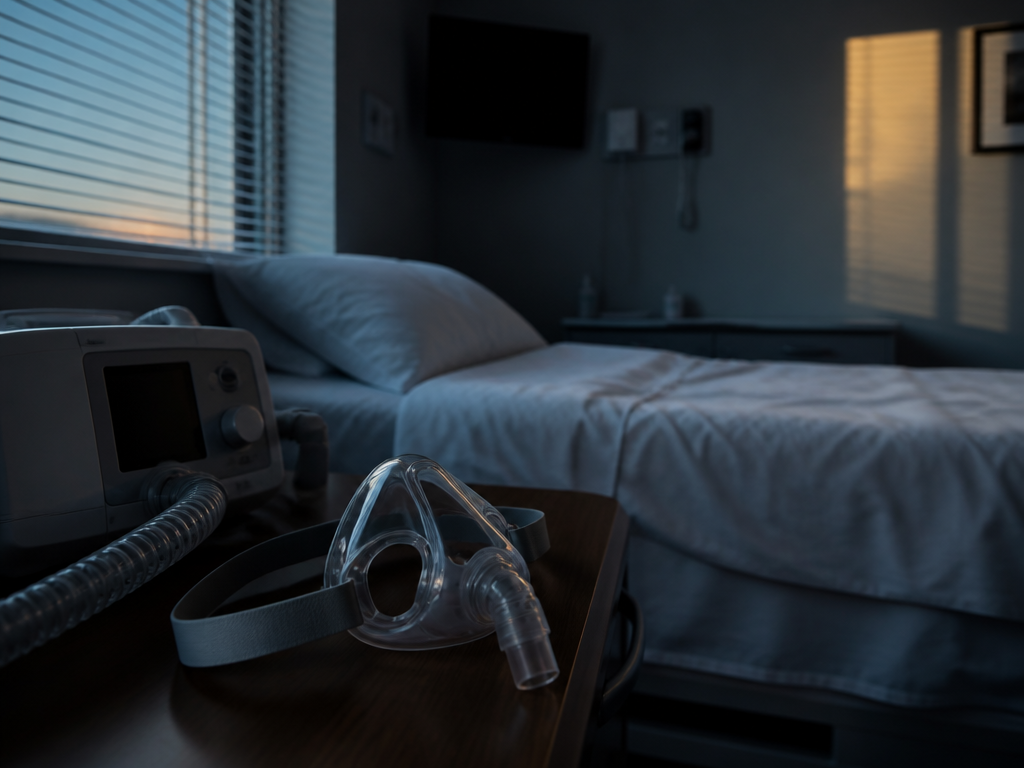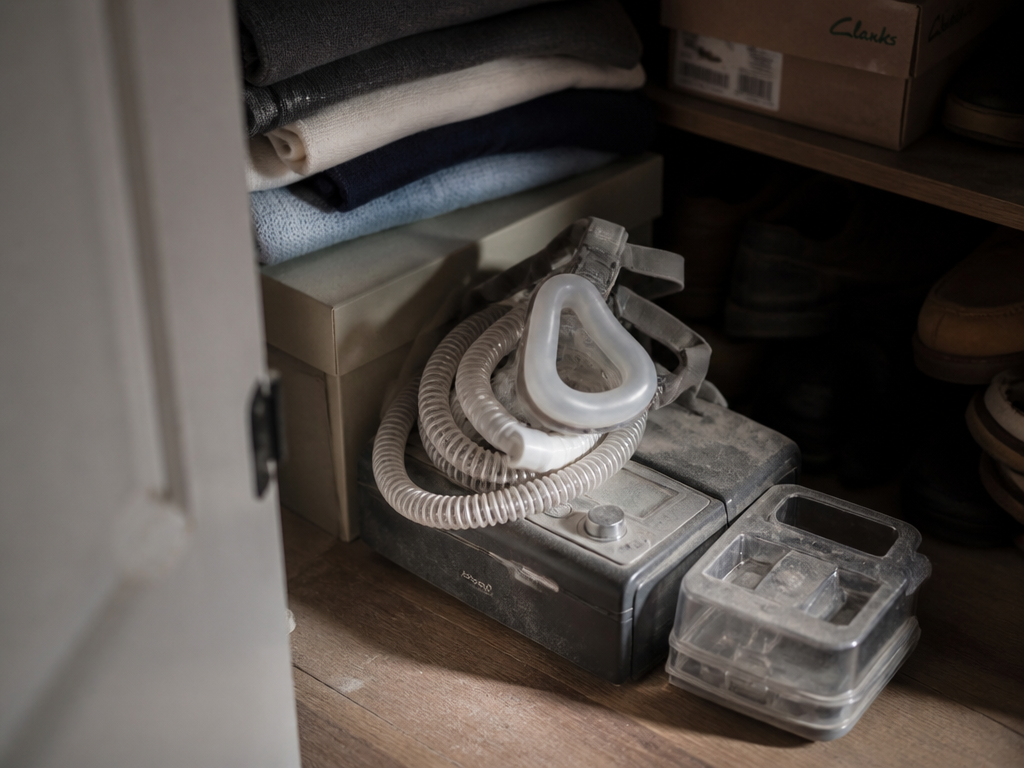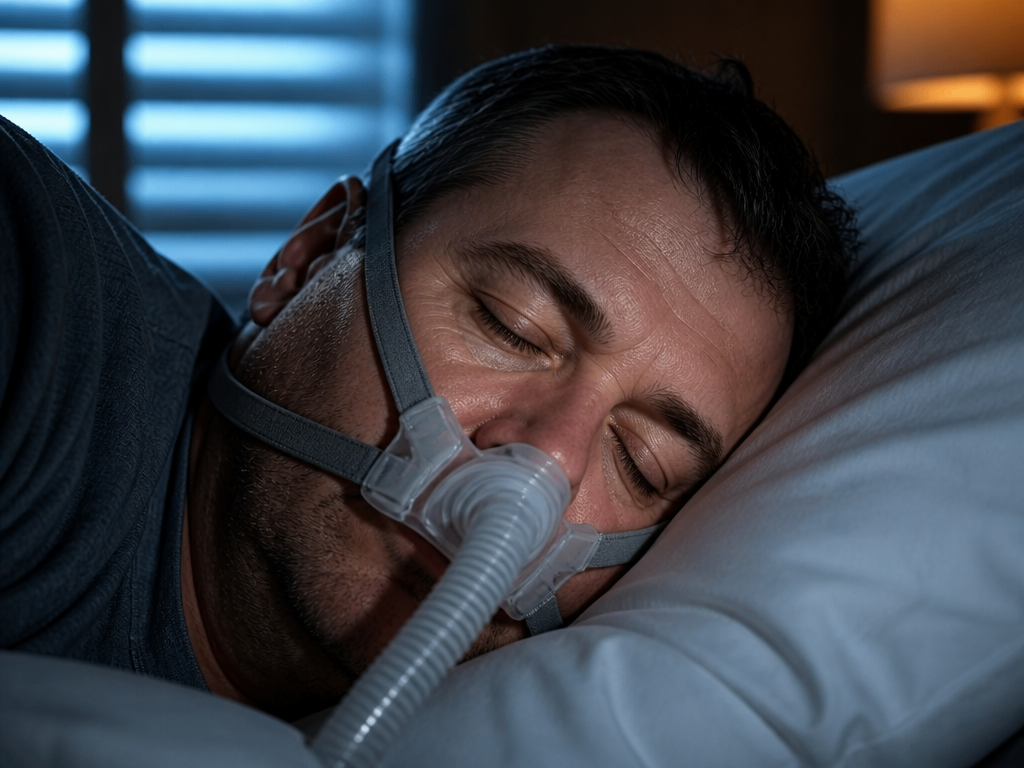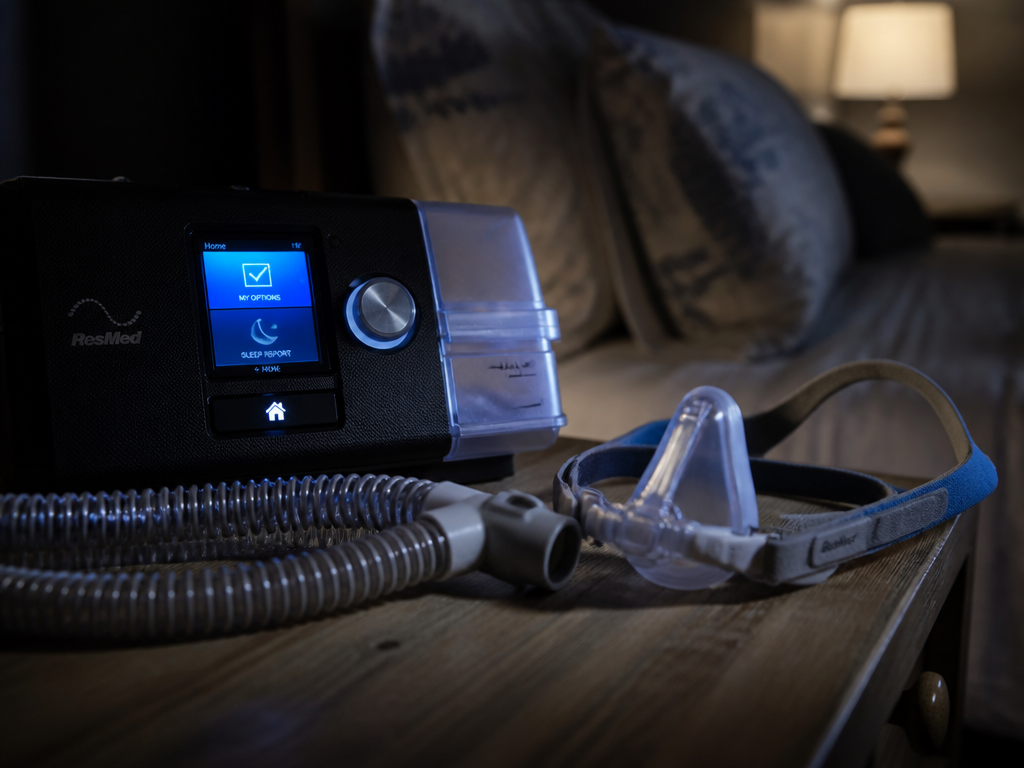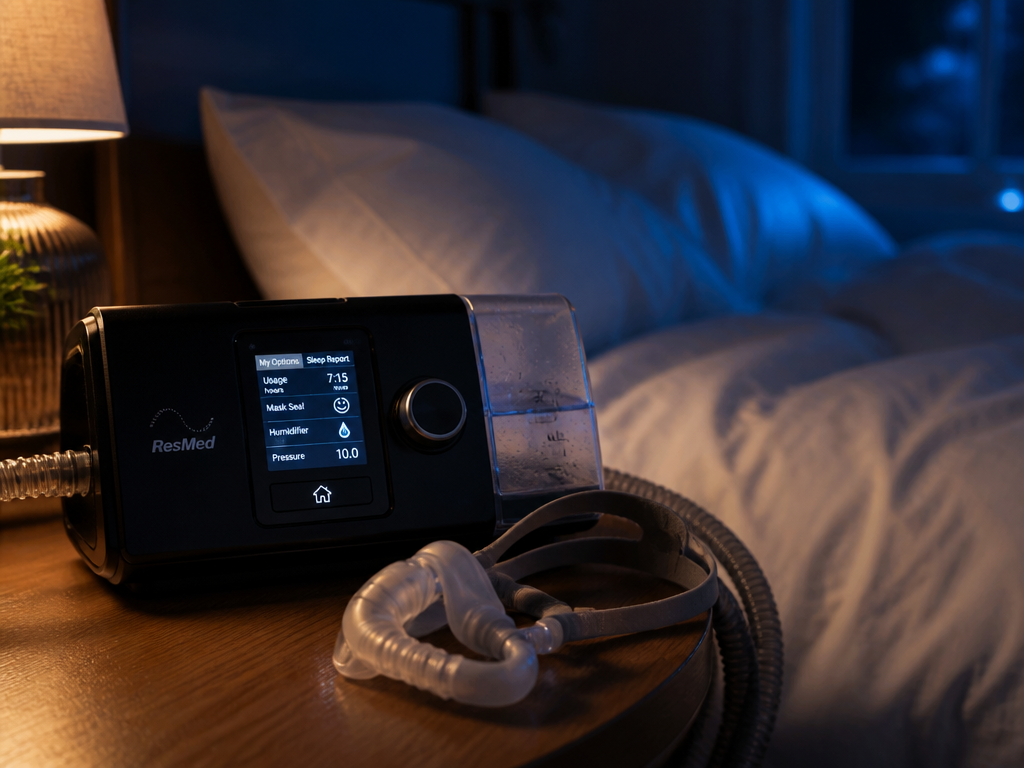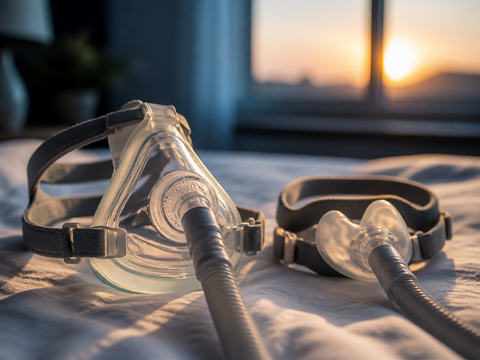
The advice you'll hear in almost every clinic and every forum thread is some version of: find the one mask that works, and stick with it. It's not bad advice. CPAP masks reward familiarity — your face learns the seal, your brain stops registering the headgear, and the hours-on-therapy number that actually predicts whether treatment helps you starts to climb. But the advice contains a quiet assumption: that your face, your sinuses, and your sleep position are the same tonight as they were the night you got fitted. For a lot of people, they aren't.
So here's a less tidy proposition, and one your equipment supplier may not volunteer: there are good reasons to own two.
Why the "one perfect mask" idea exists
The single-mask orthodoxy isn't arbitrary. It's downstream of one number that matters more than any other in apnea therapy: adherence. The standard clinical bar — popularized by the Kribbs criteria and still used by most insurers — is using the device at least four hours a night on 70% of nights. Most people who fail CPAP don't fail because the pressure is wrong. They fail because the interface is uncomfortable, and they quietly stop.
A single, well-fitted mask reduces the number of things that can go wrong. One seal to perfect. One headgear tension to dial in. One cushion to replace on schedule. Fewer variables means fewer leaks, and leaks are the enemy — they drop your effective pressure and, just as importantly, they wake you up. If you've found a mask you forget you're wearing, the case for not touching anything is strong.
That case holds right up until your circumstances stop holding still.
Where the advice breaks down
People are not static. A nasal mask that seals beautifully in July becomes a problem in October when ragweed swells your turbinates and you can't move air through your nose. A cushion that's gentle on the bridge of your nose for six months can, after a stretch of poor cleaning or a few pounds of weight change, start leaving a mark that becomes a sore that becomes a reason to skip a night.
It's worth walking through how that skin breakdown actually happens, because it's mechanical, not mysterious. A mask cushion holds its seal by pressing against your skin with enough force to resist the airflow pushing outward — typically somewhere around 8 to 12 cm H₂O of pressure trying to escape. That contact force, applied to the same few square centimeters of skin night after night, restricts capillary blood flow to the tissue underneath. Reduced perfusion plus shear (the cushion sliding a millimeter each time you turn your head) plus trapped moisture from humidified air is the same recipe that produces pressure injuries in bedridden patients. The nasal bridge is especially vulnerable because the skin there is thin and sits directly over bone. Once that spot is irritated, no amount of strap-tightening fixes it — tightening makes it worse.
This is the crux of it: the "perfect mask" can be perfect and still need a night off.
Can you use two different CPAP masks?
Yes. There is no medical rule against alternating between two masks, and for some people it's the difference between staying on therapy and giving up on it. The main thing to confirm is that your prescribed pressure works with both — more on that below — and that you maintain both on schedule. Using two masks is not a sign you've done something wrong with the first one. It's an acknowledgment that one interface rarely fits every night your body throws at you.
That's the plain answer. The interesting part is knowing when it's worth the trouble.
The cases where a second mask earns its place
The strongest case is the congestion swing. If you run a nasal pillow or nasal mask most nights — and most people sleep better on them, because they're smaller and lighter — you've probably had the experience of a head cold rendering them useless. Air has to go somewhere. When your nose is blocked, a nasal interface either fails to deliver pressure or forces you to mouth-breathe around it. A full-face mask kept in the closet for exactly these weeks keeps you on therapy instead of off it. This is the use case I'd call well-established in practice, even if no one's run a randomized trial on it.
The second is skin rotation. Two different mask styles contact your face in different places. A nasal pillow seals at the nostrils; a nasal cradle sits under the nose; a full-face cushion bridges the nose and chin. Alternating them spreads the mechanical load across different tissue, giving any irritated spot time to recover. Plausible, mechanically sound, and low-risk — though I'd file the specifics under reasoned inference rather than proven.
The third is position. Some masks leak badly when you turn onto your side and the pillow shoves the cushion askew; minimal-contact nasal pillows tend to tolerate side-sleeping better than bulky full-face frames. If you're a back-sleeper who occasionally drifts sideways, a second, side-friendly mask has a real job.
And then there's temporary anatomy. Upcoming jaw surgery, dental work, orthodontics, or a course of facial treatment can change how anything seals for weeks at a time. A backup interface that avoids the affected area is sometimes the only way to keep therapy going through recovery. Talk to your surgeon before assuming any mask is safe over a healing site — this is the one scenario where you should ask first rather than experiment.
Why a full-face mask isn't just a bigger nasal mask
It's tempting to treat the swap as trivial. It isn't, and the reason is pressure distribution. With nasal pillows, the prescribed pressure is delivered into a small sealed volume at the nostrils, and your mouth (if closed) holds it in. With a full-face mask, that same pressure now fills a larger dead space and presses against a bigger, more compliant seal across your nose and chin. The machine compensates, but the felt experience differs, the leak profile differs, and on some auto-titrating machines the algorithm may respond differently to the changed airflow. This is why the same number on the screen can feel like two different therapies.
The honest costs
A second mask doubles some of your work and a little of your expense. You now have two cushions aging on two schedules — nasal cushions typically want replacing monthly, full-face cushions every one to three months, and headgear every six. You have two fit problems to solve instead of one. And if your pressure was titrated on a nasal mask, it's worth asking your clinician whether the full-face mask needs a pressure check; full-face interfaces sometimes require a small bump to compensate for the larger volume and mouth-leak potential. None of this is prohibitive. All of it is real.
An honest rule of thumb
Keep one primary mask you trust completely. Add a second only to solve a specific, recurring problem you can name — congestion, a skin spot, a side-sleeping leak, a coming surgery. Don't collect masks for the sake of it.
| Your situation | Worth a second mask? |
|---|---|
| Stable, comfortable, no recurring issues | No — leave it alone |
| Seasonal congestion knocks you off therapy | Yes — keep a full-face backup |
| Recurring sore on the nasal bridge | Yes — rotate contact points |
| Side-sleeper with position leaks | Maybe — try a low-profile pillow |
| Upcoming facial or dental surgery | Yes — but ask your surgeon first |
Tonight, if your only mask is leaving a mark, sleep in it anyway — then tomorrow, before you tighten it one more notch, ask your supplier about a second style.
The "one perfect mask" was never quite the right goal. The right goal is one mask you can wear every night your face cooperates — and a plan for the nights it doesn't.