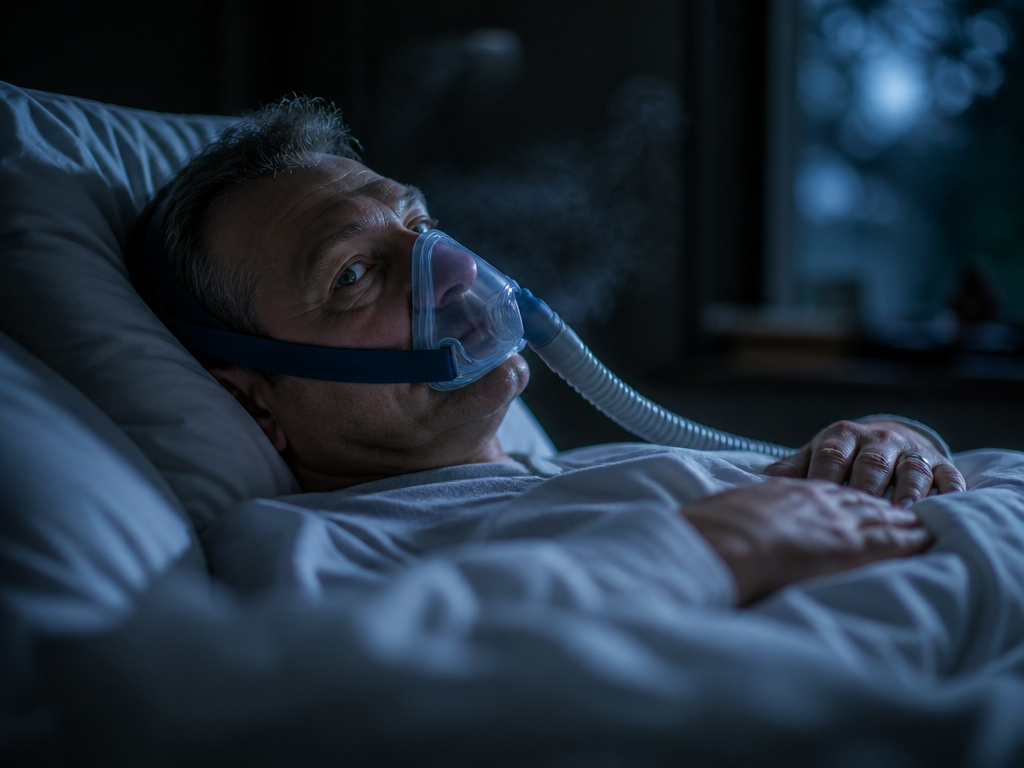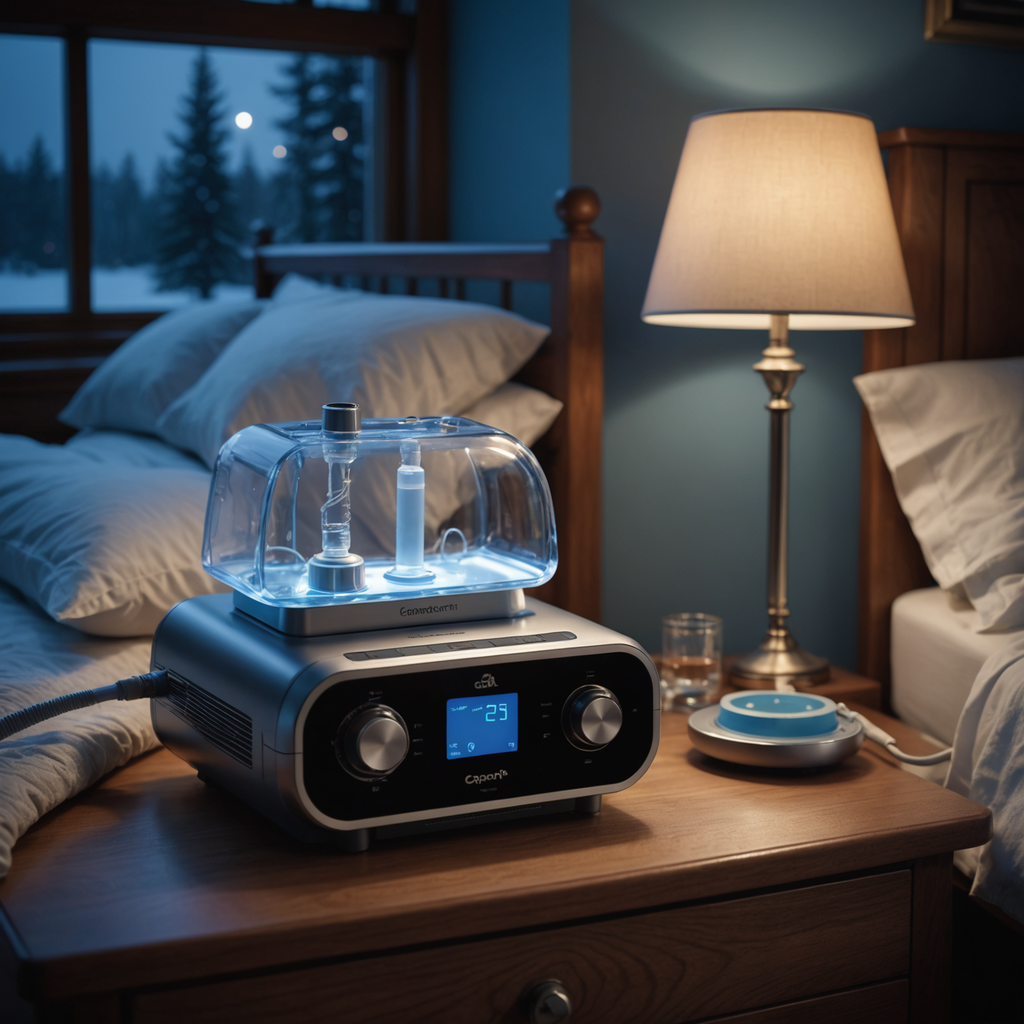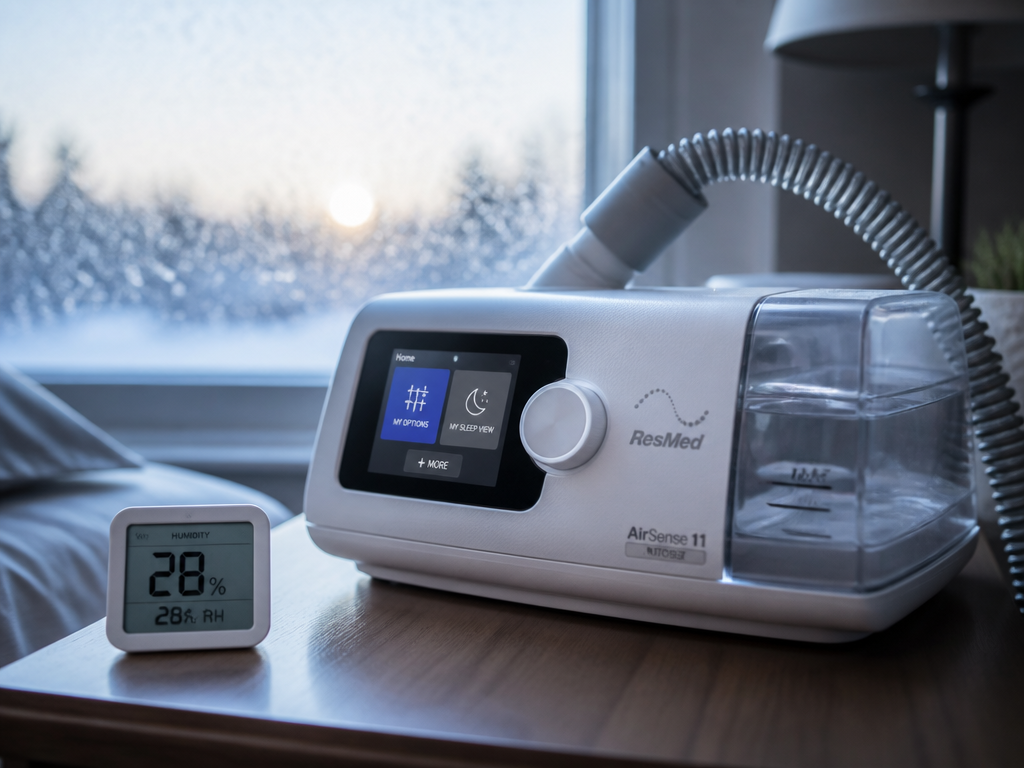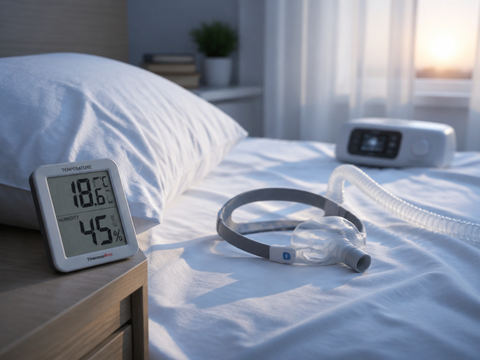
There is a number buried in your ResMed machine that you have probably never seen: 27°C. That is the tube temperature Climate Control Auto holds by default — the air the heated hose tries to deliver to your mask. Most people leave it there forever, and most people should. But understanding what that single number measures, and what it pointedly does not, is the difference between fiddling with your CPAP humidifier settings for a week and actually fixing the dry mouth or rain-out that drove you to the manual in the first place.
So I spent three weeks in manual mode to find out where the default helps and where it quietly fails.
The verdict, up front
Climate Control Auto is the right choice for most users; manual mode earns its keep only if your bedroom runs cold, your nose runs dry, or you wake up with water in your mask — and you can name which one. If you can't name the problem, leave the default alone.
What 27°C is actually controlling
The number is air temperature at the end of the heated tube, measured by a sensor in the ClimateLineAir hose. ResMed picked 27°C because it is warm enough to carry a comfortable amount of moisture without condensing before it reaches your face.
Here is the part the marketing skips: tube temperature is a proxy. What you actually care about is absolute humidity — how many milligrams of water are riding in each litre of air when it hits your airway. Warm air holds more water than cold air. So the machine's logic is indirect: keep the tube warm, and the moisture the humidifier adds will stay suspended instead of falling out as droplets inside the hose. That falling-out is rain-out. The 27°C target exists mostly to prevent it.
In Auto mode, the humidifier and the tube heater talk to each other and to a sensor that estimates your room's humidity. You set nothing. The machine chases a moisture target and adjusts heat to keep it airborne.
What 27°C does not measure
This is where novices burn weeks. The tube-temperature number knows nothing about:
- Your room. The ambient sensor is an estimate, not a thermostat reading from where your head actually is.
- Mask leak. A jaw that drops open at 3 a.m. vents warm wet air to the room and pulls dry air across your tongue. No humidity setting outruns a real leak.
- You. Dehydration, mouth-breathing, and a long list of common medications dry the mouth on their own. The machine cannot add water you didn't drink.
So if you raise humidity to maximum and still wake parched, the setting was never the variable. Roughly two in five CPAP users report dry mouth — and a meaningful share of them are chasing it with a dial that can't reach the cause.
The three-week test
I logged bedroom temperature and relative humidity each night with a cheap hygrometer beside the pillow, kept the mask (an AirFit P30i nasal pillow) and pressure constant, and recorded morning dry mouth on a plain 0–3 scale. Week one: Auto. Weeks two and three: manual, adjusting one variable at a time.
My room ran cold — 17 to 18°C, 45% relative humidity. That detail matters, because cold rooms are exactly where Auto's assumptions strain.
In Auto, the tube reported 27°C and I had occasional rain-out: a gurgle near the mask on the coldest nights, dry-mouth scores averaging 1.3. Switching to manual, I pushed tube temperature to 30°C and set humidity to 5 of 8. Rain-out stopped. Dry mouth dropped to an average 0.6. Raising humidity further, to 7, did nothing for my mouth but did bring back faint condensation on warmer nights — proof that more water is not free.
I could not test high-humidity climates; my three weeks were all dry winter air. A reader in a humid summer would likely find Auto throttling moisture down, and would tune in the opposite direction.
Auto vs Manual, by criterion
| Criterion | Climate Control Auto | Manual mode |
|---|---|---|
| Rain-out protection | Strong, hands-off | As good as your settings |
| Cold-room performance | Can under-heat the tube | You can force it warmer |
| Effort | None | Two dials to learn |
| Best for | Stable rooms, new users | Cold/dry rooms, persistent dryness |
Switching to manual on an AirSense
On the AirSense 11: tap the menu, select Comfort, then Climate Control, switch from Auto to Manual. You'll now see two separate values — Humidity Level (1–8) and Tube Temperature (16–30°C in 0.5° steps).
On the AirSense 10: turn the dial to My Options, push to select, scroll to Climate Control, set it to Manual, then adjust Humidity Level and Tube Temperature as separate entries.
Change one number, sleep two or three nights, then judge. Changing both at once tells you nothing about which one worked.
Which dial to touch, and when
The two controls solve different problems, and confusing them is the most common mistake.
- Dry mouth or dry nose? Raise humidity first. More water in the air, more moisture surviving the trip to your airway.
- Water droplets in the mask or tube, gurgling sounds? Raise tube temperature, or lower humidity. Warmer air holds the water it's already carrying instead of dropping it.
- Cold air on the face? That's temperature, not humidity — raise the tube.
If raising humidity to the top still leaves you dry, stop. The dial has done its job and the answer is elsewhere: check the mask seal, your fluid intake, and any new medication with your clinician before climbing higher.
Who this is for, and who it isn't
Manual mode is for you if your room is reliably cold or dry, you've had repeated rain-out, or dry mouth persists after a few nights on Auto — and you're willing to log a few numbers. It's also genuinely useful if you simply want to understand your own therapy rather than trust a black box.
Skip it if you're in your first month, your room sits comfortably between 20 and 24°C, or you've never had a comfort complaint. Auto exists precisely so you don't have to think about any of this, and for most people it works.
The clear winner for the average user is Auto. The clear winner for a cold, dry bedroom is manual — at 30°C tube temperature and humidity around 5. Screenshot that if your room runs cold.
Where I landed
Three weeks on, my machine still sits in manual: tube at 30°C, humidity at 5. Not because manual is better in principle, but because my bedroom is 17°C and Auto kept guessing it was warmer. The number that fixed my mornings wasn't 27. It was the one I could finally see and change.