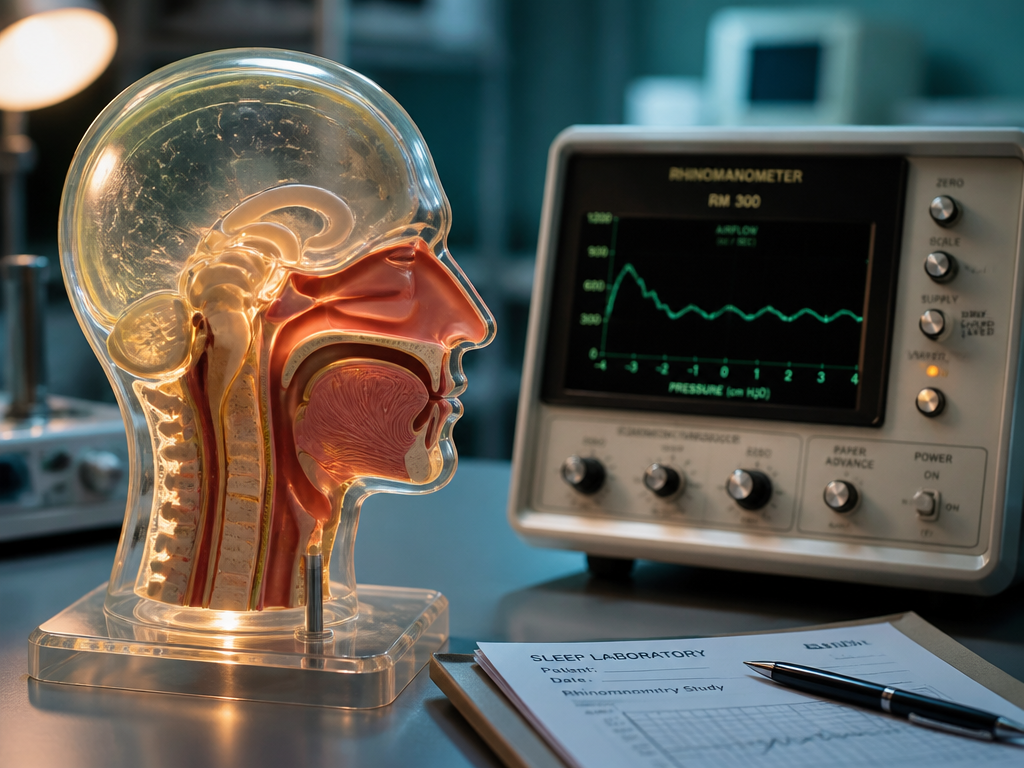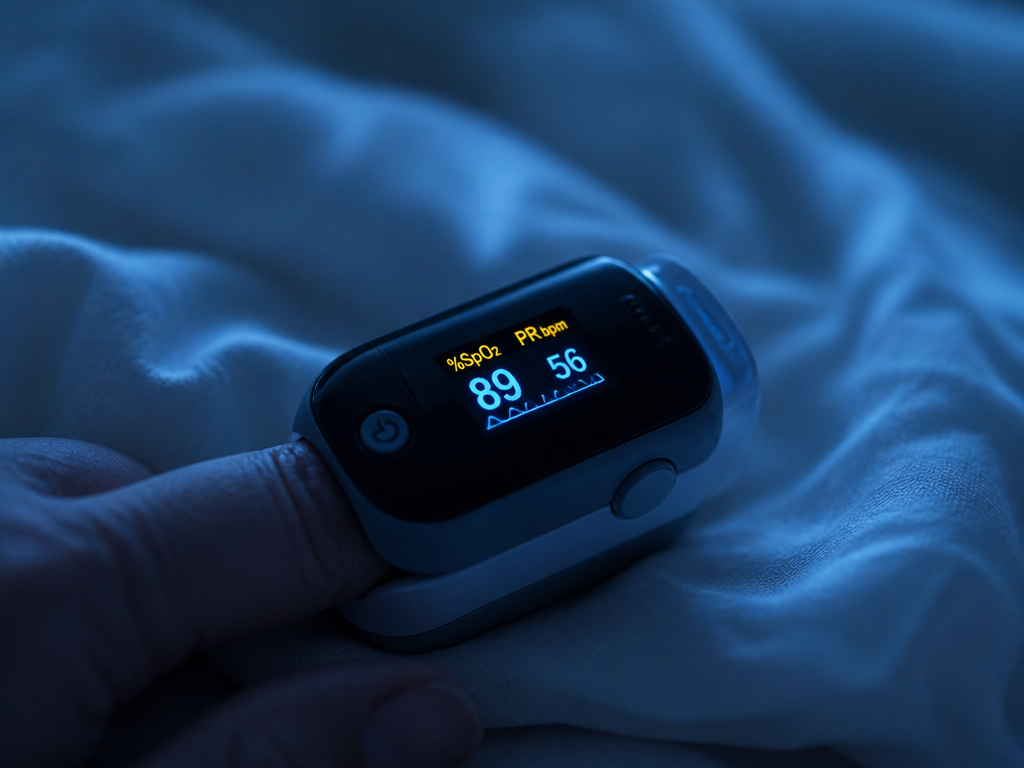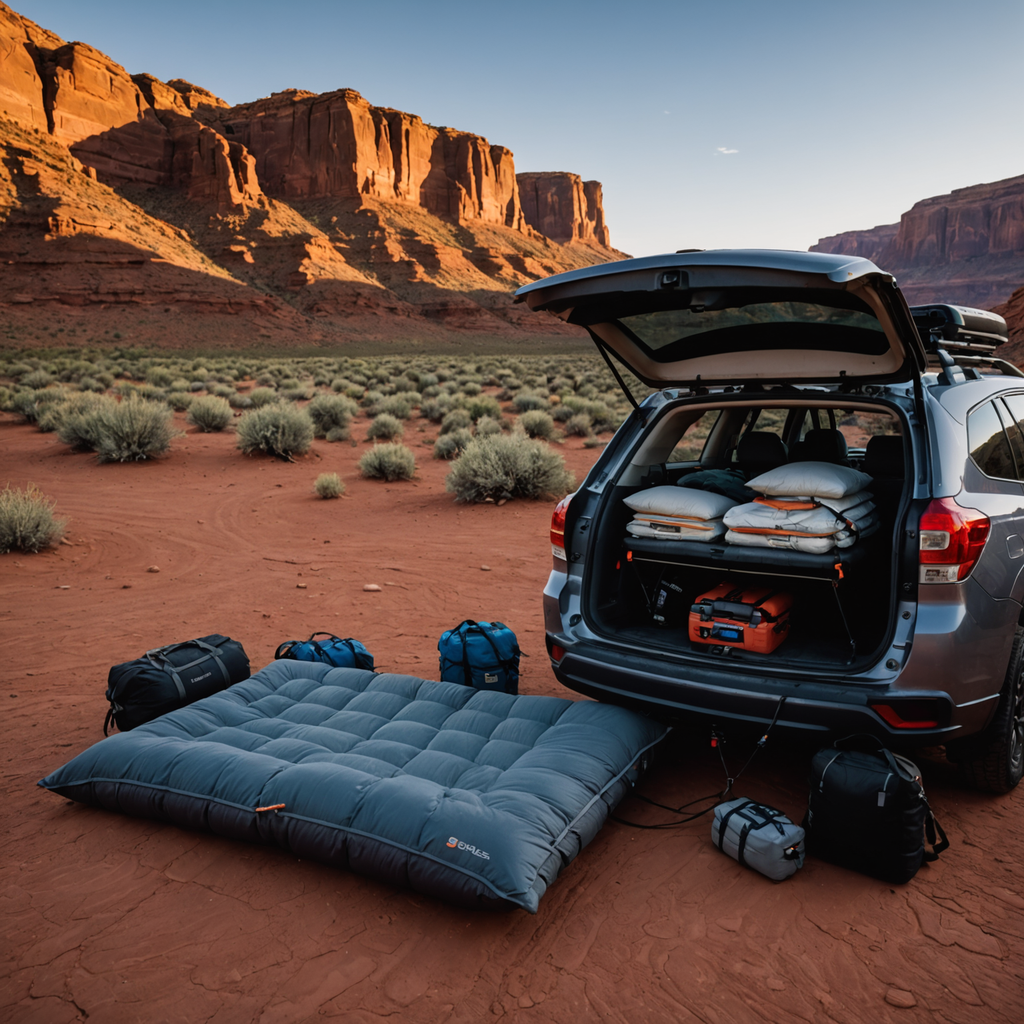
Search any camping forum for sleep apnea and you'll hit the same number within three posts: 100 watt-hours. It's the figure that decides whether your battery flies on a plane, and somewhere along the way it became the figure that decides whether your battery gets you through a night in a tent. Those are not the same question. But the number traveled between them, and most of the advice you'll read tonight treats them as identical.
CPAP batteries are the part of camping with sleep apnea that people overthink and underspecify at the same time. They worry about the wrong failure and ignore the real one. So before you buy a lithium pack rated in numbers you can't intuitively feel, it's worth slowing down and asking what the machine actually does to a battery over eight hours of dark.
Do you actually need a battery to camp with a CPAP?
If your campsite has reliable shore power — an RV hookup, a cabin outlet — you need a cord, not a battery. If you're sleeping somewhere off-grid for one or two nights, you need a battery sized to your specific machine and settings, and that almost always means somewhere between 24 and 100 watt-hours per night, not the round 100 you keep seeing. The honest version of the answer is: most people need less capacity than the forums imply, as long as they turn off the heated humidifier. That single setting changes the answer more than the brand of battery does.
That's the whole piece in one paragraph. The rest is why, and how to be sure.
Where the 100-watt-hour belief came from
The 100Wh figure is real, but it's a regulatory ceiling, not a nightly requirement. The U.S. Department of Transportation and the FAA cap lithium-ion batteries carried in airline cabins at 100 watt-hours without airline approval, and up to 160Wh with approval, limited to two spares.1 That rule was written for fire risk in a pressurized aluminum tube, not for how long a CPAP runs.
Watch what happened next. CPAP battery manufacturers, sensibly, started building packs that landed just under 100Wh so they'd clear the airline desk without a conversation. Marketing followed the manufacturing. "Up to two nights of power," the listings said, anchored to a capacity that existed because of an aviation rule. Campers, reading the same listings, absorbed 100Wh as the amount you need rather than the most you can fly with. A travel constraint quietly became a camping target.
You can trace the drift in the questions people ask. The early CPAP-travel literature — clinical guidance, manufacturer FAQs from the 2010s — is almost entirely about flying: anti-asphyxia valves, breathing room air if power fails, getting the device through security as a medical device that doesn't count against your carry-on. Camping rode in on those coattails. The advice got copied across; the context got dropped. The source was thinner than the belief it produced.
None of this means 100Wh is wrong for you. It means the number arrived in the camping conversation by accident, and a number that arrives by accident deserves to be checked against your own machine.
What a CPAP actually draws, in the order it draws it
Here's the mechanism, walked through one night.
When you switch the machine on, the blower motor spins up. This is the constant, irreducible load. A modern fixed-pressure machine at a moderate setting — say 8 to 10 cm H₂O — pulls roughly 5 to 15 watts running, depending on pressure, leak, and how hard you breathe against it. Higher pressures and bigger air leaks make the motor work harder, so the draw rises through the night if your mask shifts. Over eight hours, blower-only operation lands most users in the 30 to 50 watt-hour range. A 90Wh battery covers that twice over.
Now add the humidifier. The heated water chamber doesn't sip power — it converts electricity into heat, and heating is expensive. A CPAP humidifier on a high setting can pull 10 to 25 watts on its own, sometimes more, often exceeding the blower itself. Run it all night and your total can double, pushing past 80 or 90 watt-hours. That's where the "you need 100Wh" feeling comes from. It's true — for people who don't change anything.
Add a heated hose and the math gets worse again, because now you're warming the air twice. The hose and humidifier together are the two loads you can actually decide about. The blower you cannot turn off; it's the therapy.
So the order matters. Therapy first, comfort second. In a tent, the comfort features are the expensive guests.
The humidifier is the lever
In a cold tent, ambient humidity is often higher and the air is cool, so many people find they can drop the humidifier substantially or switch it off without the dry-mouth misery they'd get in a heated bedroom. Some machines also offer a "no-heat" passover humidification mode, where air picks up moisture from the water chamber without the heater running — that costs almost nothing in watts.
The practical consequence: turning off heated humidification and heated tubing can cut a CPAP's overnight energy use by 40 to 60 percent. A night that needed 90Wh with full heat might need 35Wh dry. That's the difference between hauling a heavy 100Wh brick for a single night and getting two or three nights from the same pack.
This is well-established at the level of physics — heating elements draw more than fans — even if the exact split varies by machine. Where it gets thinner is the comfort side: how much humidification you specifically can give up before your therapy suffers from a dried-out airway is genuinely individual, and not something a forum can answer for you. Test it at home, one cold night with the heat off, before you test it sixty miles from the nearest outlet.
An honest rule of thumb
Before a trip, run your machine at home for one night on the exact settings you'll camp with — humidifier off or low, hose unheated — and read the energy used off the morning report (most ResMed and Philips units log it, or you can estimate from watts × hours). That number, not the forum's number, is your nightly budget. Then buy a battery with roughly 1.5 times that capacity per night you'll be off-grid, so a sagging battery in the cold still clears the bar.
| If your night uses... | One night off-grid | Two nights, no recharge |
|---|---|---|
| ~35 Wh (no heat) | 50–60 Wh pack | ~100 Wh pack |
| ~60 Wh (low heat) | ~90 Wh pack | two packs / solar |
| ~90 Wh (full heat) | ~100 Wh pack | recharge daily |
Two caveats worth holding onto. Lithium batteries lose usable capacity in the cold, so a 100Wh pack at 35°F behaves like a smaller one — keep it in your sleeping bag, not the tent floor. And every CPAP I know of has an anti-asphyxia valve: if power dies mid-night, the mask opens to room air. You don't suffocate. You lose therapy until morning, which matters, but it is not the emergency the dread makes it.
What this didn't answer
A few things this piece deliberately left alone. Altitude: most modern machines auto-adjust pressure for elevation, but the older ones don't, and that's a real consideration above a few thousand feet. Supplemental oxygen, if you use it, changes the whole calculation and isn't a battery question at all — it's a conversation with the prescriber who set your therapy. And solar recharging, which is how serious backcountry users go beyond two nights, has its own arithmetic of panel watts versus cloudy afternoons that deserves its own treatment.
For the parts I left open, start with your own machine's manual and its energy log, then your DME supplier and the battery manufacturer's compatibility chart — they list tested machine-and-pack pairings, which is more reliable than any forum thread. The number that matters is the one your own device tells you, not the one the airline made up.
-
FAA HazMat / DOT 49 CFR rules on portable electronic devices: lithium-ion batteries up to 100Wh in carry-on without approval; 101–160Wh with airline approval, two spares maximum. None permitted in checked baggage. ↩