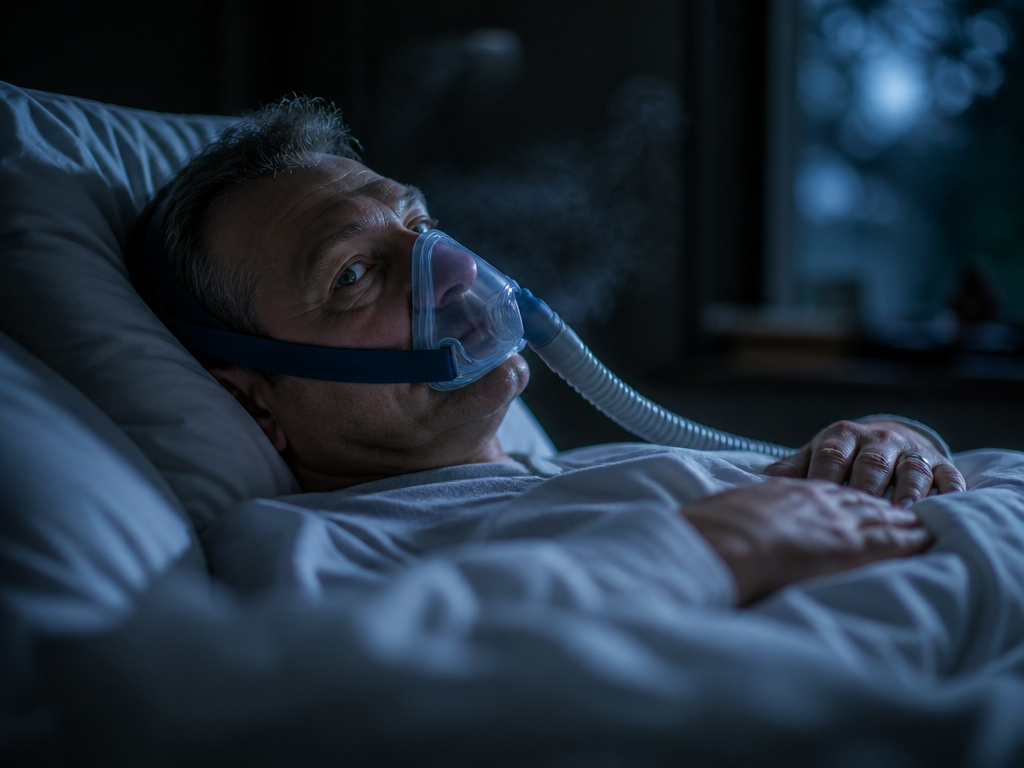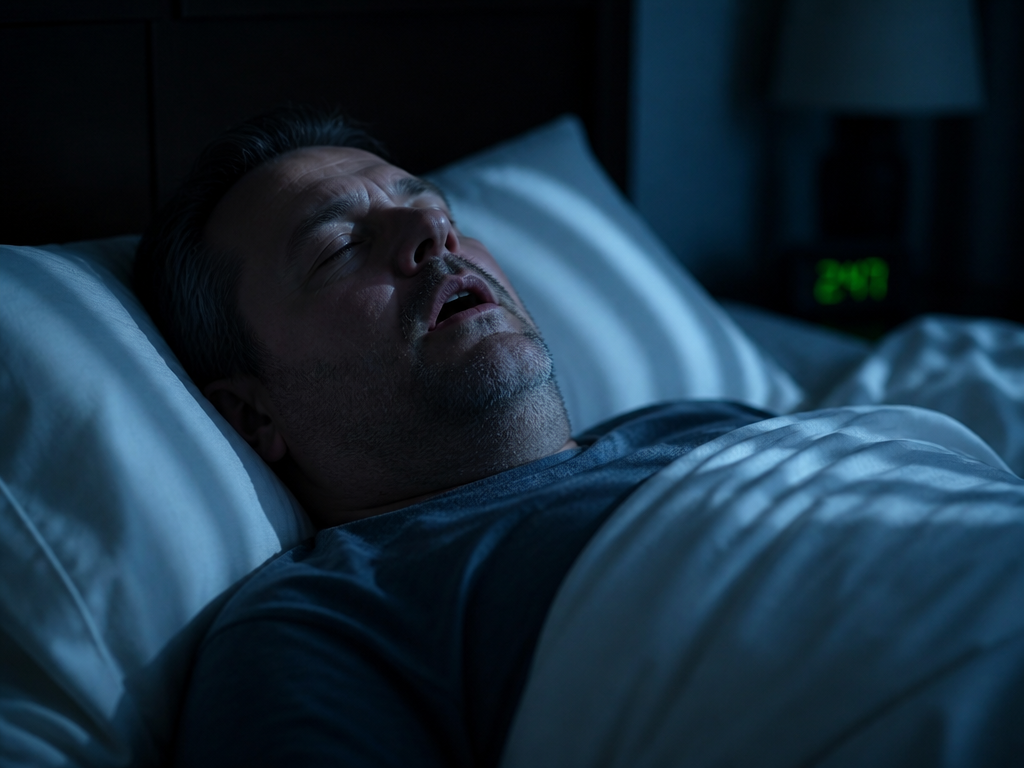
Five events an hour. That is the line a sleep physician draws between "fine" and "you have obstructive sleep apnea" — five breathing interruptions per hour of sleep, each at least ten seconds long, is the floor of the diagnosis. Below five, you snore. At five or above, you have a medical condition. I did not know which side of that line I was on, and like most people researching obstructive sleep apnea before committing to a lab sleep study, I wanted some warning of what was coming.
So before my in-lab polysomnography I ran three home pre-screens against each other: a paper questionnaire, a consumer sleep wearable, and a fingertip pulse oximeter. Then I compared all three against the only result that legally means anything — the lab's. This is what each one got right, what each one got dangerously wrong, and which one I'd hand a worried family member.
The three contenders
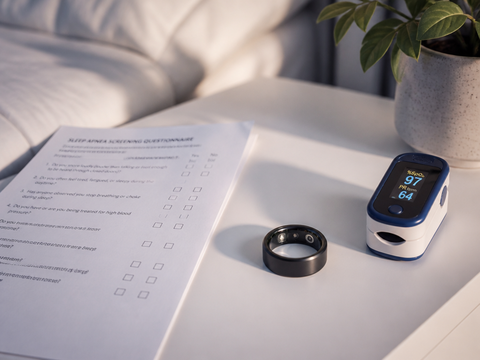
- STOP-BANG — a free eight-item questionnaire (Snoring, Tiredness, Observed apneas, Pressure/blood pressure, BMI over 35, Age over 50, Neck over 40cm, male). Score 0–8.
- A consumer sleep ring — worn nightly, reporting a nightly "breathing regularity" or disturbance index plus blood-oxygen dips. Around $300 plus a subscription.
- A standalone overnight pulse oximeter — a recording fingertip clip that logs SpO2 and pulse all night and exports an oxygen desaturation index (ODI). Around $60–150.
I judged each on four criteria: agreement with my lab AHI, false-reassurance risk (how easily it could tell a sick person they're fine), actionability (would a doctor do anything with the output), and cost.
How they compared
| Criterion | STOP-BANG | Sleep ring | Pulse oximeter |
|---|---|---|---|
| Lab agreement | Flagged me correctly | Underestimated | Close (ODI tracked AHI) |
| False-reassurance risk | Low | High | Moderate |
| Doctor will use it | As triage | Rarely | Sometimes, as supporting data |
| Cost | Free | ~$300 + sub | ~$60–150 |
My lab AHI came back at 22 events per hour — moderate obstructive sleep apnea, well over the threshold of five. With that number as the answer key, the three tools sorted themselves quickly.
STOP-BANG: blunt, free, and right
The questionnaire takes ninety seconds. I scored a 5 of 8 (snoring, tiredness, male, neck circumference, and observed pauses my partner had mentioned for years). A score of 5 to 8 is the "high risk" band, and the tool exists precisely to push that person toward a study.
It told me nothing about severity — STOP-BANG cannot distinguish my 22 from someone's 6 or someone's 60. It is not a measurement; it's a sorting hat. But it sorted me correctly, it cost nothing, and a physician will actually look at it. The mechanism it's leaning on is honest: the features it asks about (a crowded neck, a relaxing airway during sleep, the body's repeated arousals) are the same physiology that produces the events in the first place. It doesn't pretend to see inside your throat. It asks whether you have the shape and the symptoms of someone whose throat closes.
The sleep ring: confident and wrong in the wrong direction
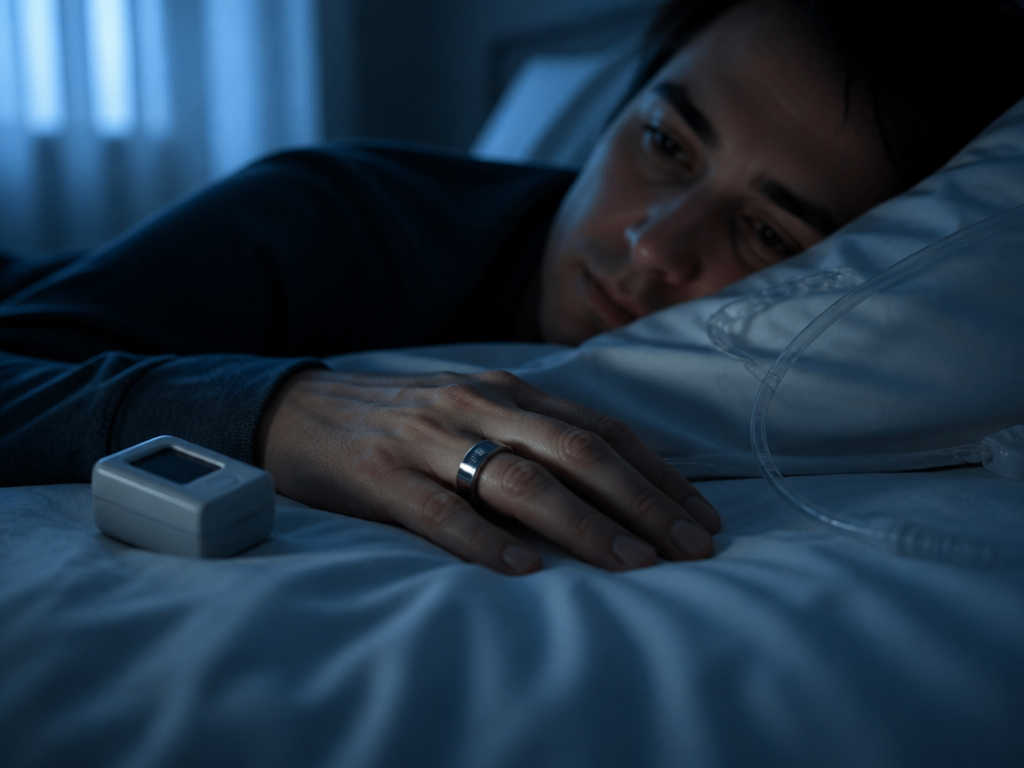
This was the disappointment, and the most instructive failure. Across two weeks the ring reported my "breathing disturbances" as low-to-moderate and gave me reassuring green scores on the nights I felt worst. Its blood-oxygen graph showed gentle dips it labeled "normal variation."
The problem is structural, not a defect in one device. A ring estimates breathing from pulse waveform and peripheral oxygen, sampled and smoothed by an algorithm tuned to avoid alarming a mass-market customer. Apneas that the lab caught — partial airway collapses that fragment sleep without always dropping oxygen far — slid under the ring's threshold. On the night my polysomnography logged my worst hour, the ring gave me an 84 sleep score and a cheerful note about my "restful deep sleep." That is the false-reassurance failure mode, and it's the one that keeps people out of the doctor's office for years. A device that under-calls a real condition is worse than no device, because it answers the question you were anxious about with a confident, friendly lie.
The pulse oximeter: ugly, cheap, surprisingly close
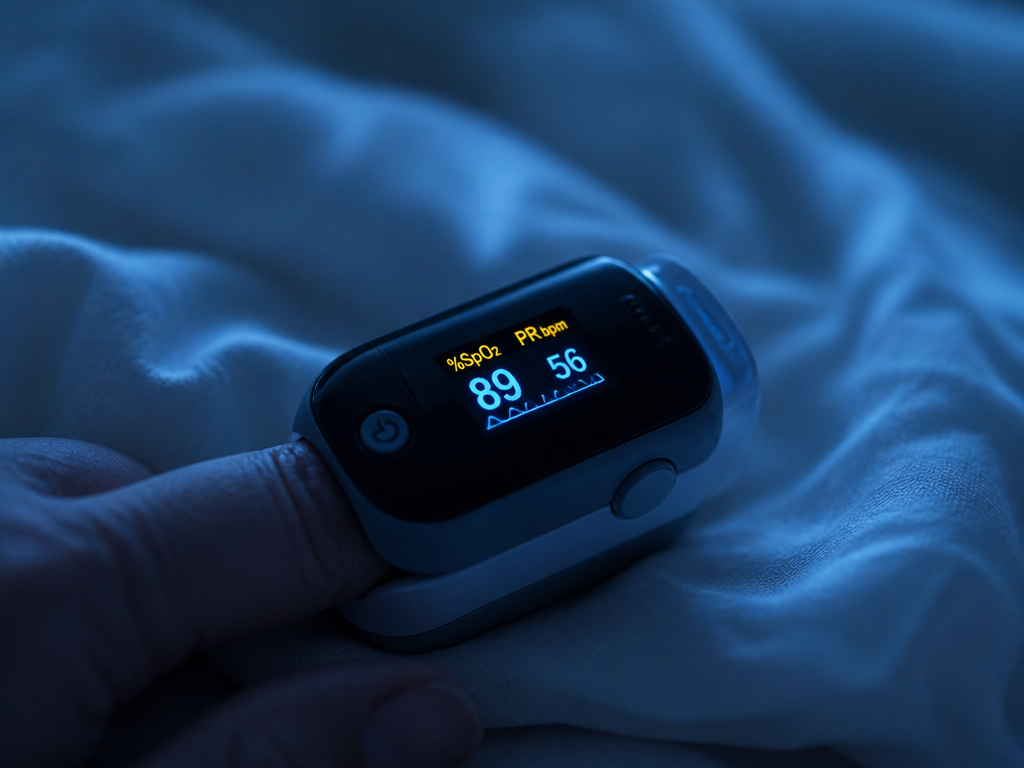
The recording oximeter is the least pleasant to wear — a clip, a wire, a glowing fingertip — and the least polished output: a dense overnight trace and a single number, the oxygen desaturation index. Mine came back with an ODI of roughly 18 dips per hour of 3% or more.
ODI is not AHI; it only catches events that move your oxygen, so it tends to run a little under the true count. Mine did exactly that — 18 against a lab AHI of 22 — which is the right kind of error. It underestimated, but it still planted me firmly above the threshold and in the same severity neighborhood. A sleep physician glanced at the trace and treated it as genuine supporting evidence, not a toy. For under $150, it produced a number that survived contact with the clinic.
What I couldn't test
This is one person's airway over a handful of nights, not a validation trial. I can't tell you how the ring performs on someone with severe oxygen-dropping apnea, where its desaturation graph might actually fire. I tested one model of each category; firmware updates change algorithms monthly. And none of these tools — including the lab — captures the night-to-night variability that makes a single study an imperfect snapshot. Treat my numbers as one data point shaped like a warning, not a study.
Who each tool is for
- STOP-BANG is for everyone, first. If you're reading this because someone said you snore or stop breathing, take it tonight. It's free and it's the version of "should I bother with a sleep study" that doctors respect.
- The recording pulse oximeter is for the person who took STOP-BANG, scored high, and wants a number to bring to the appointment — or who needs to overcome their own denial with a graph.
- The sleep ring is for sleep curiosity and trends. It is not a screening device for obstructive sleep apnea, and I'd actively warn a worried relative against trusting its green scores. It's the wrong tool to answer "do I have a breathing problem at night."
The verdict: start with STOP-BANG, confirm with a $60 oximeter, and ignore the ring for this particular question. None of them diagnose anything — only a sleep specialist reading a full study can do that — but two of them point you at the door, and one of them quietly talks you out of it.
Five events an hour is the line. My lab said 22. The free questionnaire knew something was wrong, the cheap clip nearly counted it, and the expensive thing on my finger told me I slept beautifully every night I was suffocating in my sleep.